



How WCAG 3.0 Will Change Web Accessibility
Web accessibility is in a constant state of motion. For anyone involved in creating or managing digital content, keeping up with the latest guidelines is essential. The next major step in this evolution, WCAG 3.0, is currently in development and promises to reshape how we approach and measure digital inclusion. It’s more than a simple update; it represents a fundamental shift in thinking, moving away from a rigid, technical checklist towards a more flexible, human-centered framework.
This article explores the upcoming changes with WCAG 3.0, what makes it different from the current WCAG 2.2 standard, and what you can do now to ensure your website is ready for the future of accessibility.
WCAG 3.0 vs. WCAG 2.2: A New Direction for Digital Access
The Web Content Accessibility Guidelines (WCAG) have long served as the global benchmark for making the web usable for people with disabilities. The most recent version, WCAG 2.2, added new requirements to address modern user needs, particularly on mobile devices. However, as technology continues to advance into areas like virtual reality and AI-powered interfaces. The W3C (World Wide Web Consortium) recognized the need for a more adaptable set of guidelines.
This is where WCAG 3.0, also known by its project name “Silver,” comes in. It’s being designed from the ground up to be more flexible and better suited for a wide range of digital technologies, not just traditional websites. The core idea is to move beyond simple technical compliance and focus on the actual experience of users with disabilities. It asks not just “Is this website compliant?” but “Is this website truly usable for everyone”? This change signals a more mature approach to accessibility, one that values real-world outcomes over ticking boxes.
Key Differences Between WCAG 3.0 and WCAG 2.2
The transition from WCAG 2.2 to 3.0 will introduce several major changes in how accessibility is structured, measured, and understood. If you are accustomed to the principles and success criteria of the WCAG 2.x series, you will need to adapt to a new way of thinking.
From Success Criteria to Outcomes
WCAG 2.2 is built on a foundation of “success criteria.” These are specific, testable statements that a piece of content must meet to be considered accessible. For example, a criterion might require that all images have a text alternative. This is a binary system; you either meet the criterion or you don’t.
WCAG 3.0 shifts this model to focus on “outcomes”. Instead of just verifying technical requirements, the goal is to determine if a user can successfully achieve their objective. This user-centric approach measures the actual result of your accessibility efforts. For example, while WCAG 2.2 asks if an image has alt text, WCAG 3.0 is more concerned with whether a screen reader user can understand the purpose and meaning of the image, however that is achieved. This allows for greater flexibility and innovation, as different solutions can be used to reach the same positive outcome for the user. It better accommodates new technologies and complex interactions where a simple pass/fail rule might not capture the full picture.
New Scoring System Instead of Pass/Fail
The pass/fail nature of WCAG 2.2 can be rigid. A website could fail an entire conformance level for a single minor issue, even if it is otherwise highly accessible. This doesn’t always reflect the real-world user experience.
WCAG 3.0 plans to replace this binary system with a more nuanced scoring model. Instead of a simple pass or fail, a website will receive a score based on how well it meets the desired outcomes. This could involve rating scales or percentage-based scores, allowing for a more detailed evaluation. This approach acknowledges that accessibility is a spectrum and that partial success is still progress. It helps organizations identify and prioritize improvements more effectively and encourages continuous improvement rather than just aiming for a fixed standard. To balance this flexibility, the model also introduces the idea of “critical errors”; high-impact failures that block a user from completing a core task, which would heavily penalize the overall score regardless of other successes.
Bronze, Silver, and Gold Conformance Levels
To accompany the new scoring system, WCAG 3.0 will replace the familiar A, AA, and AAA conformance levels with a new tiered structure: Bronze, Silver, and Gold. This change is designed to be more intuitive and to provide a clearer path for organizations to improve their accessibility over time.
Bronze will likely represent a foundational level of accessibility, roughly equivalent to what is needed to meet today’s legal requirements (similar to WCAG 2.2 Level AA). Silver and Gold will signify higher levels of accessibility maturity, demonstrating a deeper commitment to inclusive design. This tiered system can act as a roadmap, making accessibility seem less like an all-or-nothing effort. A small business might aim for Bronze first, with a plan to reach Silver later, while a large enterprise could target Gold to position itself as a leader in accessibility.
WCAG 3.0 Timeline: When Will It Be Released?
A common question is when these changes will take effect. It’s important to understand that WCAG 3.0 is still a work in progress and is not expected to be finalized for several years. The W3C is currently in the exploratory and drafting phase, gathering feedback to ensure the new standard is robust and practical.
Current estimates suggest that WCAG 3.0 will not become a formal recommendation before 2028, and some experts believe it could be as late as 2030. This long and deliberate process is necessary to get such a significant overhaul right. Importantly, the W3C has stated that WCAG 2.2 will not be deprecated when WCAG 3.0 is released. The two standards will exist in parallel for several years, giving organizations plenty of time to transition.
New Features and Requirements in WCAG 3.0
WCAG 3.0 is not just restructuring old concepts; it’s expanding the scope of accessibility to address modern digital experiences more effectively.
Enhanced Mobile Accessibility Guidelines
While WCAG 2.2 made strides in mobile accessibility by introducing criteria for touch target size and dragging movements, WCAG 3.0 aims to provide even more comprehensive guidance. It will better address the nuances of mobile-first design, including complex gestures, screen orientation constraints, and the ways content should adapt to various screen sizes. This reflects the reality that for many users, smartphones and tablets are their primary, and sometimes only, way of accessing the web. The new guidelines will push developers to think more deeply about creating mobile experiences that are accessible from the ground up.
Improved Cognitive Accessibility Standards
One of the most significant advancements in WCAG 3.0 is its greatly expanded focus on cognitive and learning disabilities. This has been an area where previous guidelines were less detailed. The new standard will include outcomes related to clear language, simple and predictable navigation, and minimizing cognitive load.
For instance, a proposed outcome suggests that each segment of text, like a sentence or paragraph, should present only a single idea to help users with memory or attention challenges. This focus on making content easier to understand and use will benefit everyone, but it is especially important for users with a wide range of cognitive conditions. This represents a major step toward making the web truly inclusive for all minds.
Voice Interface and AI Accessibility
WCAG 3.0 is being designed with the future in mind, and that includes emerging technologies like voice assistants and artificial intelligence. As more users interact with websites and apps through voice commands or engage with AI-powered chatbots, new accessibility challenges arise.
The new guidelines will address these areas, providing guidance on how to make voice interactions reliable and ensuring that AI-generated content is accessible. For example, a chatbot used for customer support would need to provide clear, understandable responses and offer alternative interaction methods for users who cannot or prefer not to use voice. By thinking about these technologies now, WCAG 3.0 aims to prevent new digital barriers from being built.
How to Prepare Your Website for WCAG 3.0 Now
Even though WCAG 3.0 is years away, you can and should start preparing today. The principles behind it are rooted in good accessibility practices that will benefit your users immediately.
Testing Tools That Support Future Standards
Start by getting a firm handle on your current accessibility posture. Use a combination of automated accessibility testing tools and manual audits. Automated tools are great for catching common, code-level issues like missing alt text or insufficient color contrast, many of which will still be relevant under WCAG 3.0.
However, to align with the user-centric spirit of WCAG 3.0, it is vital to go beyond automated scans. Conduct manual testing and, most importantly, involve real users with disabilities in your testing process. Their feedback provides invaluable insights into real-world usability that no tool can replicate. This human-centered approach is the best way to prepare for a future focused on outcomes.
Building Flexible Accessibility Infrastructure
Rather than treating accessibility as a final-stage compliance check, embed it into your entire product development lifecycle. This means creating a flexible and robust accessibility foundation that can adapt as standards evolve.
This starts with training your designers, developers, and content creators on accessibility principles. It involves building accessibility into your design systems, using semantic HTML correctly, and ensuring that new features are designed with inclusion in mind from the very first sketch. When accessibility is part of your organization’s DNA, adapting to new guidelines like WCAG 3.0 becomes a much smaller lift. It is no longer about remediation, but about continuous improvement.
Should You Wait for WCAG 3.0 or Implement WCAG 2.2?
This is a critical question for many organizations, and the answer is definitive: Do not wait for WCAG 3.0. You should focus on meeting WCAG 2.2 standards now.
WCAG 2.2 is the current, stable, and internationally recognized standard. It is the benchmark referenced in accessibility legislation and legal cases around the world. Failing to comply with WCAG 2.2 today leaves your organization at legal risk and, more importantly, leaves users with disabilities behind. Furthermore, WCAG 2.2 is fully backward-compatible with previous versions, and its principles provide a strong foundation for the future. By mastering WCAG 2.2, you are already taking major steps toward what will be required in WCAG 3.0.
Testing Your Site Against Current and Future Standards
Your accessibility strategy should be two-fold. First, rigorously test your website against the current WCAG 2.2 Level AA success criteria. Use a mix of automated tools, manual checklists, and usability testing with people with disabilities to ensure you meet today’s compliance requirements.
Second, begin to adopt the mindset of WCAG 3.0. As you review your site, go beyond the technical checklist. Ask questions that reflect a focus on outcomes. Can a user with a cognitive disability easily navigate your checkout process? Is the mobile experience seamless for someone using only a keyboard or voice commands? By evaluating your site through this user-centric lens, you will not only improve your accessibility today but also build a culture that is ready for the next generation of digital inclusion.
Using Automated Tools for Quick Insights (Accessibility-Test.org Scanner)
Automated testing tools provide a fast way to identify many common accessibility issues. They can quickly scan your website and point out problems that might be difficult for people with disabilities to overcome.
Visit Our Tools Comparison Page!
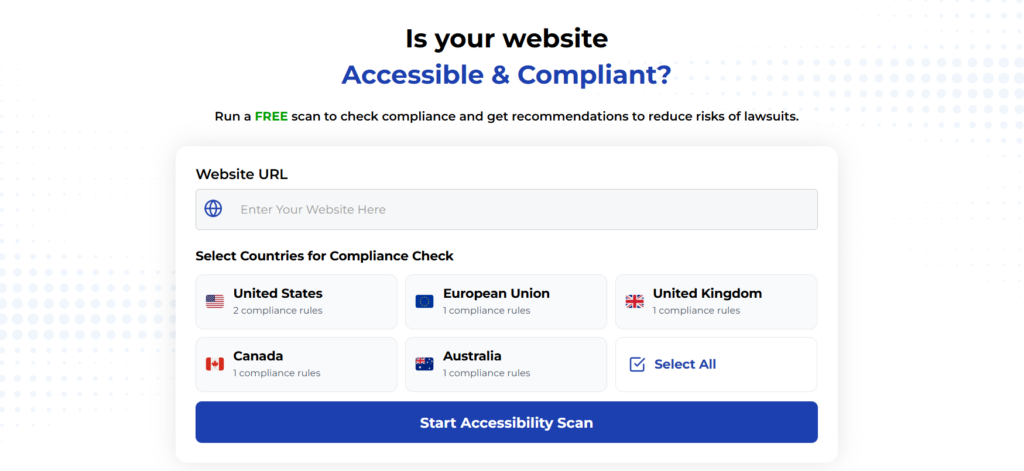
Run a FREE scan to check compliance and get recommendations to reduce risks of lawsuits
Final Thoughts
Ready to see where you stand? Use the free EAA compliance checker on Accessibility-Test.org, or reach out to our team for a quick review. Don’t put your business at risk; make accessibility part of your brand advantage today.
Start your compliance journey, update your accessibility statement, and keep EAA top of mind in every project going forward.
Commit to accessibility testing today. The sooner you start, the sooner everyone can benefit from your content and services; no exceptions.
Run a Free Scan to Find E-commerce Accessibility Barriers
Want More Help?
Try our free website accessibility scanner to identify heading structure issues and other accessibility problems on your site. Our tool provides clear recommendations for fixes that can be implemented quickly.
Join our community of developers committed to accessibility. Share your experiences, ask questions, and learn from others who are working to make the web more accessible.