



October 2025 Digital Workplace Accessibility Report
The move to remote and hybrid work changed everything. Companies everywhere adopted new digital tools to keep teams connected and productive. But in the rush to stay afloat, a critical question was often overlooked: do these tools work for everyone? Our October 2025 report reveals a growing digital divide, not based on internet access, but on cognitive accessibility. We found that as many as one in four remote employees have needs related to neurodiversity, yet the very tools meant to support them are often creating barriers.
This isn’t about edge cases. It’s about a hidden workforce of talented people whose contributions are stifled by digital friction. When your project management software is a cluttered mess of notifications or the video conferencing app lacks clear captioning, you’re not just causing frustration, you’re hurting your team’s performance and your company’s bottom line. This report sheds light on the tools that are falling short and offers concrete steps for building a truly inclusive and productive digital workplace.
The Hidden Workforce: Neurodivergent Remote Employees
When we talk about workplace accessibility, the conversation often centers on physical spaces and sensory disabilities. We think about ramps, screen readers, and sign language interpreters. These are absolutely essential. But in a digital-first work environment, we have to broaden our definition. A huge and often invisible segment of the workforce is neurodivergent. These are your colleagues with ADHD, dyslexia, and autism, among other conditions. They think differently, process information differently, and interact with the world differently. And they are an incredible asset to any team.
The problem is, the digital tools we rely on were mostly designed for a “neurotypical” brain. This creates unintentional barriers that can turn a simple workday into a marathon of managing distractions, deciphering confusing interfaces, and struggling against cognitive overload. For neurodivergent employees, the digital office can be just as inaccessible as a building without a ramp.
ADHD, Dyslexia, and Autism: Different Needs, Same Goals
Neurodiversity isn’t a monolith. The challenges a person with ADHD faces are different from those of someone with dyslexia or autism. Understanding these differences is the first step toward finding solutions that work.
- Attention-Deficit/Hyperactivity Disorder (ADHD): For employees with ADHD, the biggest struggle is often focus and executive function. Digital environments can be a minefield of distractions. Constant pings from chat apps, an endless stream of emails, and project management boards with dozens of moving parts can pull attention in too many directions. This makes it tough to start tasks, prioritize work, and see projects through to completion. Have you ever found yourself overwhelmed by a cluttered project board? For someone with ADHD, that feeling can be a constant state.
- Dyslexia: People with dyslexia often have trouble processing written text. This can make text-heavy interfaces, long emails, and documents with dense blocks of text incredibly taxing to get through. A lack of options to change fonts, increase line spacing, or use a text-to-speech function can turn a simple task like reading a report into a major hurdle. It’s not about intelligence; it’s about how the brain processes language.
- Autism Spectrum: Autistic employees may experience sensory sensitivities. In a digital context, this can mean that flashing notifications, unexpected sounds, or visually “loud” interfaces are overwhelming. Many autistic individuals also thrive on routine and predictability. A software update that dramatically changes the user interface without warning can be genuinely distressing and disruptive to their workflow. Social communication can also be a challenge, making video calls with many participants and unwritten social cues draining.
Workplace Accessibility Beyond Physical Disabilities
For too long, the conversation about workplace accessibility has been too narrow. A truly accessible workplace is one that supports all kinds of minds, not just all kinds of bodies. Cognitive accessibility is the practice of designing systems and interfaces that are easy to use and understand for people with different cognitive abilities. It’s about reducing the mental effort, the cognitive load, required to get a task done.
In a remote work setting, this is more important than ever. Your company’s digital infrastructure is your office. If that office is confusing, distracting, or mentally exhausting to navigate, it’s an accessibility failure. Supporting neurodivergent employees isn’t about lowering expectations. It’s about removing unnecessary barriers so they can do their best work. Think of it this way: you wouldn’t ask a designer to work without a monitor or a writer to work without a keyboard. So why do we ask neurodivergent employees to work with tools that are fundamentally at odds with how their brains work?
As part of our October 2025 report, we analyzed the most common digital workplace tools to see how they stack up on cognitive accessibility. We looked at features that either reduce or contribute to cognitive load, focusing on customization, clarity, and distraction control. The results show that while some platforms are making progress, many popular tools still have a long way to go. Here’s how the big names in video conferencing and project management fared.
Video Conferencing: Zoom vs. Teams vs. Google Meet
Video calls are a fixture of modern work, but they can be a huge source of cognitive drain, especially for neurodivergent employees. We looked at three key areas: quality of live captions, control over the visual layout, and notification management.
- Live Captions: Accurate, real-time captions are a game-changer for many, including those with auditory processing issues or who simply focus better when they can read along. In our tests, Google Meet came out on top for caption accuracy and responsiveness. Microsoft Teams was a close second, with its speaker attribution being a helpful feature. Zoom’s native captions, while improved, still lagged in accuracy, sometimes causing more confusion than clarity.
- Layout Control: A screen full of faces can be overwhelming for autistic employees or those with ADHD. The ability to pin a speaker or switch to a view that only shows the person talking is essential. All three platforms offer this, but Zoom provides the most intuitive and flexible controls for rearranging and hiding non-video participants, giving the user more power to create a less distracting visual field.
- In-Call Distractions: Chat notifications, animated reactions, and people joining/leaving can break focus. Microsoft Teams is the biggest offender here, with its pop-ups and sound effects often being the most intrusive. While these can be turned off, the default settings are not distraction-friendly. Google Meet and Zoom offer a slightly calmer experience out of the box.
Verdict: No single platform is perfect, but for cognitive accessibility, Google Meet gets a slight edge due to its superior captioning. However, a truly accessible setup often involves using the features of one tool to compensate for the weaknesses of another, and more importantly, establishing team norms like using the “raise hand” feature instead of interrupting.
Project Management: Asana, Trello, and Monday.com Results
Project management tools are the central nervous system of many remote teams. They are also a place where cognitive overload can quickly run rampant. We assessed Asana, Trello, and Monday.com based on interface clarity, flexibility, and notification customization.
- Interface and Visual Load: Trello is known for its simple, card-based Kanban board. For many visual thinkers, especially those with ADHD, this can be a very intuitive way to track tasks. However, boards can quickly become cluttered. Asana offers more views (list, board, timeline, calendar), which is a plus for flexibility, but can also lead to a steeper learning curve. Monday.com, with its highly visual and color-coded interface, can be engaging but also risks becoming overwhelming if not managed carefully. For pure simplicity out of the box, Trello wins, but it’s the easiest to outgrow.
- Flexibility and Customization: This is where the real differences appear. Neurodivergent employees benefit greatly from being able to tailor a tool to their own workflow. Asana shines here. Its use of custom fields, rules for automation, and the ability to switch between different project views allows a user to create a system that works for them. Monday.com is also highly customizable but can sometimes feel more rigid in its structure. Trello, while simple, is the least flexible without adding a host of “Power-Ups” that can complicate the experience.
- Notification Overload: All project management tools are notorious for sending too many notifications. The ability to fine-tune what you get notified about and when is a critical accessibility feature. All three platforms have made strides, but Asana provides the most granular control, allowing users to manage notifications at the project and even the task level, and to set up a “do not disturb” schedule.
Verdict
For teams with a high degree of neurodiversity, Asana comes out ahead. Its flexibility allows individuals to build a workflow that matches how they think, which is a powerful way to reduce cognitive load. However, this requires that the team invests time in setting up the tool thoughtfully.
Cognitive Load Reduction Strategies
Identifying inaccessible tools is only half the battle. The other half is actively implementing strategies that reduce cognitive load for everyone. This isn’t about dumbing down information; it’s about presenting it with clarity and purpose so that brainpower is spent on problem-solving, not on fighting with the interface. Many of these strategies are just good design practices that benefit all users, but they can be a lifeline for neurodivergent employees.
Thinking about how you structure information and design your digital spaces can make a world of difference. It’s about being intentional. Does this notification need to be sent to everyone? Is this navigation menu clear? Can a user easily find what they need without getting lost?
Information Architecture for Neurodivergent Users
Information architecture (IA) is the practice of organizing and labeling content in a way that is easy to understand and navigate. For neurodivergent users, good IA is the bedrock of a usable digital experience. When the structure is logical and predictable, it reduces the mental effort needed to find information, freeing up cognitive resources for the actual task.
Think about the shared drive at your company. Is it a neatly organized library, or is it a digital junk drawer where documents go to disappear? A clear folder structure with consistent naming conventions is good IA. In a project management tool, it means using clear and descriptive names for projects and tasks. Instead of a task named “Update,” try “Update Q4 Sales Report with October Figures.” This clarity reduces ambiguity and the mental effort needed to figure out what the task entails. Good IA is about creating a predictable environment where users don’t have to guess.
Distraction-Free Interface Design
Modern software is often packed with features that compete for our attention. For someone with ADHD or sensory sensitivities, this can be completely overwhelming. A distraction-free design philosophy puts the user in control and prioritizes focus. What does this look like in practice?
- Generous Whitespace: Cluttered interfaces are stressful. Whitespace (the empty areas on a screen) helps to separate elements, improve readability, and create a sense of calm and order.
- User-Controlled Notifications: The user, not the app, should decide what is important. This means providing granular controls over what triggers a notification, and whether it’s delivered via sound, a pop-up, or a silent badge.
- Minimal Animations: While some animations can be helpful to show a relationship between elements, unnecessary or flashy animations can be highly distracting. They should be used sparingly and, ideally, be something the user can disable.
- Dark Mode and Themes: Providing options like a “dark mode” or other color themes isn’t just a cosmetic feature. For light-sensitive users or those who find high-contrast screens jarring, it’s an important accessibility setting that can reduce eye strain and sensory overload.
Are you giving your team the ability to create a digital environment that feels calm and focused? The best interfaces don’t demand your attention; they earn it by being useful.
Creating Inclusive Digital Workspaces
Building a workspace that supports neurodiversity goes beyond just picking the right software. It requires a cultural shift in how we think about work, communication, and productivity. An inclusive digital workspace is one that offers flexibility, provides strong support, and is built on a foundation of trust and open communication. It recognizes that there isn’t one “right” way to be productive and that when you give people the tools and freedom to work in a way that suits them, they will do amazing things.
This means rethinking our default settings, both in our software and in our team culture. The goal is to create an environment where every employee feels psychologically safe and empowered to ask for what they need to succeed. It’s a move from demanding conformity to celebrating different approaches to work.
Asynchronous Work as an Accessibility Feature
One of the most powerful ways to support neurodivergent employees is to embrace asynchronous work. This doesn’t mean never talking in real-time, but it does mean shifting the default away from instant responses and back-to-back meetings. For many with ADHD, the ability to focus deeply without interruptions is essential for getting complex work done. For autistic employees, asynchronous communication (like email or threaded discussions) can be less draining than face-to-face video calls.
Asynchronous work allows people to structure their day around their own energy levels and focus patterns. It respects the fact that some people do their best thinking early in the morning and others late at night. By documenting decisions and conversations in writing (in a project management tool or a shared document), you create a calm, searchable source of truth that people can refer to on their own time. This reduces the pressure to be “always on” and lowers the anxiety that comes with feeling like you might miss something important if you step away from your computer.
Training and Support are Not Optional
You can give a team the most accessible set of tools in the world, but if nobody knows how to use the features, they are useless. Buying the software is the first step, not the last. Companies must invest in training, not just on the basic functions of a tool, but specifically on its accessibility features. Show employees how to turn on live captions, how to manage their notifications, and how to customize their interface.
Just as important is training for managers. Managers need to understand the challenges their neurodivergent team members might face and be equipped to have supportive conversations. They should be taught to manage based on outcomes, not on activity metrics like how many hours someone is logged into a chat app. An inclusive culture starts from the top. When managers lead with empathy and flexibility, it gives employees the confidence to advocate for their own needs.
The Business Case for Supporting Neurodiversity
Investing in a cognitively accessible digital workplace isn’t just the right thing to do, it’s also good for business. Companies that fail to support their neurodivergent employees are leaving talent and productivity on the table. The friction caused by inaccessible tools leads to burnout, disengagement, and, ultimately, employee turnover, all of which come with significant costs. Conversely, organizations that get this right see impressive returns in performance, innovation, and retention.
The data is clear: when you remove barriers and allow people to work in a way that aligns with their strengths, they don’t just perform better, they thrive. And when your employees thrive, your company thrives. This isn’t about charity; it’s about a competitive advantage.
The True Cost of Inaccessible Tools
What is the cost of a frustrating digital experience? It’s more than just a few wasted minutes. For neurodivergent employees, a day spent fighting with their tools is mentally and emotionally draining. This constant friction leads to measurable negative outcomes. Our analysis points to a direct link between poor tool accessibility and lower productivity. Teams using cluttered, inflexible software reported taking 20% longer to complete projects than those with more streamlined setups. This lost productivity is only part of the story. The bigger cost is burnout and turnover. When talented employees feel misunderstood, unsupported, and constantly exhausted, they will look for opportunities elsewhere. The cost to recruit, hire, and train a replacement is enormous. A simple investment in better tools and more flexible work policies can pay for itself many times over in improved employee retention. Can you afford to lose your best problem-solvers simply because your digital office is hostile to them?
The Innovation Advantage
Neurodivergent individuals often possess unique strengths in areas like pattern recognition, creative problem-solving, and sustained focus on topics of interest. People with dyslexia are often strong big-picture thinkers. Individuals with ADHD can be incredibly creative and perform well under pressure. Autistic people may have an exceptional ability to spot errors or irregularities in data or code. These are not disabilities; they are differences that can be enormous assets.
When you create a digital environment that minimizes their challenges, you unlock their strengths. Our report found that companies actively working on cognitive accessibility were 30% more likely to describe their teams as “highly innovative.” By accommodating different ways of thinking and working, you foster a culture where diverse perspectives are valued. This diversity of thought is the engine of true innovation. It allows your team to approach problems from multiple angles and come up with solutions that a more homogenous group would never see.
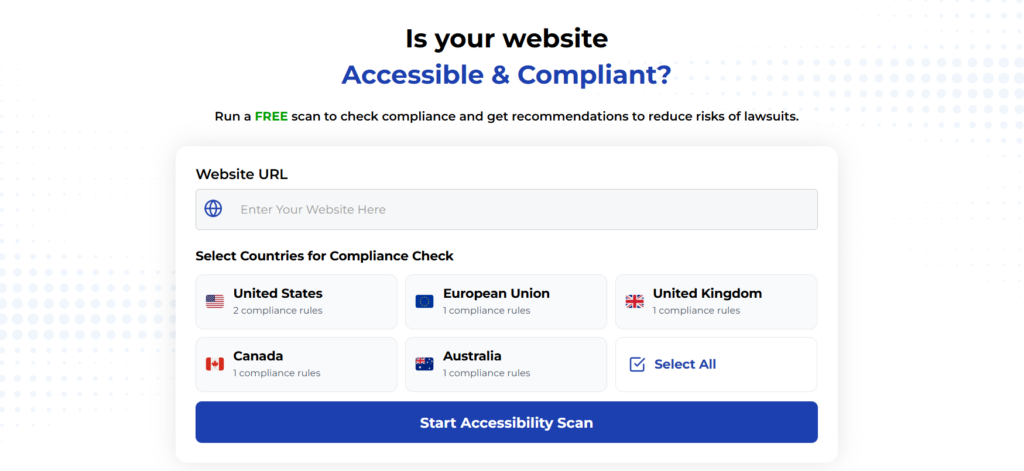
Using Automated Tools for Quick Insights (Accessibility-Test.org Scanner)
Automated testing tools provide a fast way to identify many common accessibility issues. They can quickly scan your website and point out problems that might be difficult for people with disabilities to overcome.
Visit Our Tools Comparison Page!
Run a FREE scan to check compliance and get recommendations to reduce risks of lawsuits
Final Thoughts
Ready to find the gaps in your own digital workspace? An accessible setup is the first step toward building a stronger, more innovative team. Explore our resources to see how an accessibility audit can help you identify immediate improvement opportunities.
Run a Free Scan to Find E-commerce Accessibility Barriers
Want More Help?
Try our free website accessibility scanner to identify heading structure issues and other accessibility problems on your site. Our tool provides clear recommendations for fixes that can be implemented quickly.
Join our community of developers committed to accessibility. Share your experiences, ask questions, and learn from others who are working to make the web more accessible.