



OS & Mobile Accessibility Link Explained
New operating system updates often create unexpected problems for mobile apps, and the recent releases of iOS 18 and Android 15 are no exception. For app developers and website owners, these updates introduce a fresh set of accessibility challenges that can leave users with disabilities behind. If your app isn’t ready, it might not work correctly with the new versions of VoiceOver and TalkBack, the screen readers that millions of people depend on.
This article breaks down the important accessibility changes in iOS 18 and Android 15. We’ll look at what’s different, what might break, and how you can adapt your testing methods to catch these issues before they affect your users. From updated screen reader behaviors to new AI-powered features, you’ll get the information you need to keep your mobile apps usable for everyone.
Mobile Accessibility: How iOS 18 and Android 15 Will Break Your App
Every year, Apple and Google roll out new versions of their mobile operating systems, bringing new features and refinements. But for developers, these updates can feel like a moving target. The changes in iOS 18 and Android 15 are not just cosmetic; they go deep into the accessibility layers of the devices. Features that worked perfectly yesterday might become buggy or completely unusable tomorrow. This isn’t just a technical problem; it’s a people problem. When an app fails, it can prevent someone from ordering groceries, managing their bank account, or connecting with friends.
The urgency to get this right is greater than ever. Legal standards like the Americans with Disabilities Act (ADA) and the European Accessibility Act (EAA) now hold digital properties, including mobile apps, to a higher standard. The EAA, with its June 2025 deadline, puts direct pressure on businesses to ensure their apps work with assistive technologies. Ignoring these changes isn’t just bad for users, it’s a real business risk. The good news is that by understanding the changes and updating your testing, you can stay ahead of the curve.
iOS 18 Accessibility: What Changed and What Broke
Apple has a reputation for strong accessibility features, and iOS 18 continues that trend with several updates to its screen reader, VoiceOver. But new features, no matter how well-intentioned, can introduce new conflicts. Your app’s custom controls or unique interface elements might not interact with the updated VoiceOver as expected. That’s why testers need to look closely at what’s new and how it affects their apps.
VoiceOver Updates That Affect Your App
In iOS 18, VoiceOver gets more customization options and smarter recognition abilities, which directly impacts how a person with a visual disability navigates an app. One of the biggest changes is the introduction of a “Voices” rotor item. This allows users to switch between different voices, including a personal one they can create. For testers, this means you now need to check if your app’s content is read clearly by multiple voices, not just the default one. Custom fonts or oddly formatted text could cause pronunciation issues.
Another update is to Audio Ducking, which lowers other audio when VoiceOver speaks. Users now have three choices: “Off,” “When Speaking,” and “Always”. You’ll need to test this in your app. Does your background music or video audio lower correctly when VoiceOver is active and return to normal afterward? It seems small, but it’s part of a seamless user experience.
Perhaps the most significant change is “Live Recognition,” which combines several detection features into one. It can now identify text, people, and objects in the camera’s view or on-screen, all at once. While this is a powerful tool for filling in accessibility gaps, it’s not a substitute for good development. An automatically generated description of an image is never as good as a well-written alt text from someone who knows the image’s context. Your testing should include using Live Recognition to see what it detects in your app. It’s a great way to find images or controls that are missing proper labels.
Touch Accommodations and Target Size Issues
Have you ever tried to tap a small button on a mobile screen and hit the wrong one? It’s a common frustration, and for users with motor impairments, it can make an app impossible to use. The Web Content Accessibility Guidelines (WCAG) recommend a minimum touch target size of 44 by 44 pixels for this reason.
With iOS 18, it’s important to re-verify that all your app’s interactive elements meet this standard. A new setting that adds a delay before an item is selected can also affect custom gestures or controls. You need to test your app to make sure this delay doesn’t cause unexpected behavior. For example, if you have a custom swipe-to-delete function, does it still work smoothly with this setting enabled? Don’t just look at the visible icon; the entire tappable area should be generous. A little extra spacing between buttons can make a big difference in usability.
Android 15 TalkBack Evolution
On the Android side, Google is also making strides with its accessibility tools, particularly with updates to its screen reader, TalkBack. Android’s open nature means accessibility can sometimes be inconsistent across different devices, especially with manufacturer-specific skins like Samsung’s One UI. However, the latest updates show a push toward more intelligent and useful features.
New Gesture Controls Impact on Web Apps
Many mobile apps use gestures, like swiping to delete an email or pinching to zoom. But for someone who can’t perform these movements, these features can be a dead end. That’s why any action that relies on a gesture must have a simple alternative, like a visible button.
While Android 15 doesn’t introduce a specific set of new gestures that will universally break web apps, any change to the system’s gesture navigation can potentially conflict with custom gestures in your app, especially if your app uses web views. Testers need to identify every gesture-based action in the app and confirm that a non-gesture alternative exists. This ensures that everyone can access the same functions, regardless of their physical abilities.
Voice Access Integration Changes
Beyond TalkBack, Android offers other accessibility services, like Voice Access, which allows for hands-free control through voice commands. Voice Access depends on clear, visible labels on buttons and other controls. If a button’s label is “Submit,” a user should be able to say “Tap Submit” to activate it. If the accessible name is missing or different from the visible label, these commands will fail.
Your testing process should include a review of all interactive elements to ensure their accessible names match their visual labels. It’s an often-overlooked area but is essential for a hands-free experience. Similarly, testing with Switch Access, a service for users with significant motor impairments, is also important. This means making sure every single interactive element in your app can receive focus and be activated without using the touchscreen.
TalkBack 15’s AI-Powered Descriptions
The main new feature in TalkBack 15.0 is the integration of Gemini, Google’s AI, to provide detailed image descriptions. When a TalkBack user encounters an image that a developer forgot to label, they can now ask for an AI-generated description. This is a significant improvement over older, less reliable on-device descriptions.
As a tester, you should view this as a safety net, not a free pass to skip adding alt text. Your first goal is to ensure all meaningful images have human-written descriptions. But you can use this new TalkBack feature to your advantage. Navigate your app with TalkBack and find any unlabeled images. Then, use the “Describe image” feature to see what Gemini comes up with. Is it accurate? Does it make sense? Even if the AI does a good job, you should still add your own alt text. An AI doesn’t understand your app’s purpose or the specific context of an image within a user’s journey.
The Business Side: Why Mobile Accessibility is Non-Negotiable
Thinking about accessibility as just a line item for your development team is a mistake. It’s a business issue that affects your bottom line, your brand reputation, and your legal standing. In 2025, ignoring mobile accessibility isn’t just bad practice; it’s a risky business decision.
Legal Risks and the EAA Deadline
The legal requirements around digital accessibility are getting stricter. In the United States, lawsuits under the ADA citing inaccessible websites and mobile apps continue to rise. Companies are finding themselves in court, facing expensive legal battles and settlements. But the even bigger story for many businesses is the European Accessibility Act (EAA).
The EAA is a set of common accessibility rules for certain products and services in the EU, and the deadline for compliance is June 28, 2025. This isn’t a suggestion; it’s a legal requirement. If your app is available in the EU market, it must be accessible. Non-compliance can lead to fines and, even worse, your app could be blocked from the market. Have you checked if your app falls under the EAA’s scope? If it does, time is running out to get your accessibility in order.
Expanding Your Market Reach
Beyond the legal threats, there’s a huge opportunity. The World Health Organization reports that over a billion people live with some form of disability. This is a massive, often overlooked, market segment with considerable spending power. When your app is inaccessible, you’re shutting the door on these potential customers.
Think about it from a user’s point of view. If a person with a disability tries your app and finds it unusable, they’re not just going to give up. They’re going to find a competitor’s app that does work for them. You don’t just lose a single sale; you lose a loyal customer. On the other hand, an accessible app builds goodwill and brand loyalty. The disability community is well-connected, and word spreads quickly about which companies are getting it right.
Cross-Platform Testing Strategy for 2025
To keep up with the changes in iOS and Android, you need a solid testing strategy. This isn’t about running a few checks right before a release. It’s about integrating accessibility testing into your entire development process. A good strategy combines automated tools to catch common problems with manual testing to understand the real user experience.
Essential Mobile Accessibility Testing Tools
No single tool can find every accessibility issue. A good testing plan uses a mix of automated and manual approaches.
- Automated Tools: These are great for quickly finding common problems.
- Google’s Accessibility Scanner: A free Android app that scans your screen and suggests improvements for things like small touch targets and missing labels.
- Manual Testing: This is where you find the issues that automated tools miss.
- VoiceOver: Apple’s built-in screen reader. If you’re testing an iOS app, learning to use VoiceOver is not optional.
Real Device vs. Simulator: When Each Matters
Your testing strategy should also decide when to use real devices and when to use simulators.
- Simulators: These are great for the early stages of development. You can quickly check different screen sizes and layouts without needing a pile of physical devices. They are good for functional checks, but they can’t fully replicate the experience of using assistive technology.
- Real Devices: For accessibility testing, real devices are a must. It’s the only way to accurately test screen readers like VoiceOver and TalkBack, gesture interactions, and real-world performance. The physical interaction of using a touch screen with a screen reader running is something a simulator just can’t capture. You’ll uncover issues on a real device that you would never find on a simulator.
A Practical Workflow for Mobile App Teams
Making accessibility happen requires teamwork. It’s not just a job for the QA department. Everyone, from designers to developers to project managers, has a part to play. Here’s how different team members can contribute.
For Designers: Prototyping with Accessibility in Mind
Accessibility starts with design. Long before a single line of code is written, designers can make choices that will either help or hinder users with disabilities.
- Color and Contrast: Don’t just pick colors that look good. Use a contrast checker tool to ensure that your text and background colors meet at least the WCAG AA standard of 4.5:1. This helps people with low vision and color blindness.
- Logical Reading Order: How would someone using a screen reader move through your design? Make sure the flow of information is logical and intuitive.
- Interactive States: How do buttons look when they are in focus, hovered over, or pressed? These visual cues are important for sighted users, and they must have non-visual equivalents for screen reader users.
For Developers: Building It Right from the Start
Developers are responsible for turning a design into a functional product. By keeping accessibility in mind during development, they can avoid creating barriers.
* **Semantic HTML**: If you’re building a web app or using web views, use the correct HTML elements for the job. Use `<button>` for buttons and `<a>` for links. This provides a solid foundation for screen readers.
- ARIA Attributes: When native HTML isn’t enough, Accessible Rich Internet Applications (ARIA) attributes can fill in the gaps. But use them with care. Incorrect ARIA is worse than no ARIA at all.
- Keyboard Accessibility: Can you use every feature of your app with just a keyboard? This is a must for many users with motor impairments. Test it yourself by unplugging your mouse.
For QA Testers: Beyond the Checklist
QA testers are the last line of defense before an app reaches the user. An effective accessibility tester goes beyond a simple checklist.
- Think Like a User: Don’t just test if a feature “works.” Ask if it’s “usable.” Is it efficient? Is it frustrating? The user experience is what really matters.
- Use Assistive Technologies: Get comfortable with VoiceOver, TalkBack, and other assistive technologies. You can’t test what you don’t understand.
- Test with Real Users: If possible, involve people with disabilities in your testing process. Their lived experience will provide feedback that you can’t get anywhere else.
Mobile-First Accessibility Design Principles
The best way to handle accessibility is to think about it from the very beginning. Instead of waiting until the end to test for problems, you can design your app to be accessible from the start. This approach saves time and results in a better product for everyone.
A logical layout is the foundation of an accessible app. Information should flow in an order that makes sense, and you should use headings to structure your content, even within an app. This helps screen reader users understand the hierarchy of the information and navigate it more easily.
Color contrast is another area where many apps fail. Text that doesn’t have enough contrast with its background can be difficult or impossible to read for people with low vision or color blindness. Use a contrast checking tool to make sure your colors meet the WCAG standard of at least a 4.5:1 ratio for normal text. Finally, your app should be flexible. It needs to work in both portrait and landscape mode, and text should resize based on the user’s system settings without breaking the layout.

App Store Review Guidelines: Accessibility Requirements
Both Apple and Google are paying more attention to accessibility in their app store review processes. While they may not catch every violation, an obviously inaccessible app can be rejected. Apple’s Human Interface Guidelines have long included sections on accessibility, and failing to meet basic standards can delay your app’s approval.
On the Google Play Store, the pre-launch report in the developer console automatically scans for some common accessibility issues. Fixing these problems before you submit your app can smooth out the review process. Thinking about accessibility isn’t just about doing the right thing for users; it’s also a practical step to avoid release delays. Providing a document that outlines your app’s accessibility features, known as a VPAT, can also be helpful.
It’s clear that with the release of iOS 18 and Android 15, mobile accessibility can no longer be an afterthought. The changes these updates bring require a proactive and consistent testing approach. By combining automated tools with manual testing on real devices, you can catch issues before they affect your users. And by designing with accessibility in mind from the start, you can create apps that are not only compliant but truly usable by everyone.
Using Automated Tools for Quick Insights (Accessibility-Test.org Scanner)
Automated testing tools provide a fast way to identify many common accessibility issues. They can quickly scan your website and point out problems that might be difficult for people with disabilities to overcome.
Visit Our Tools Comparison Page!
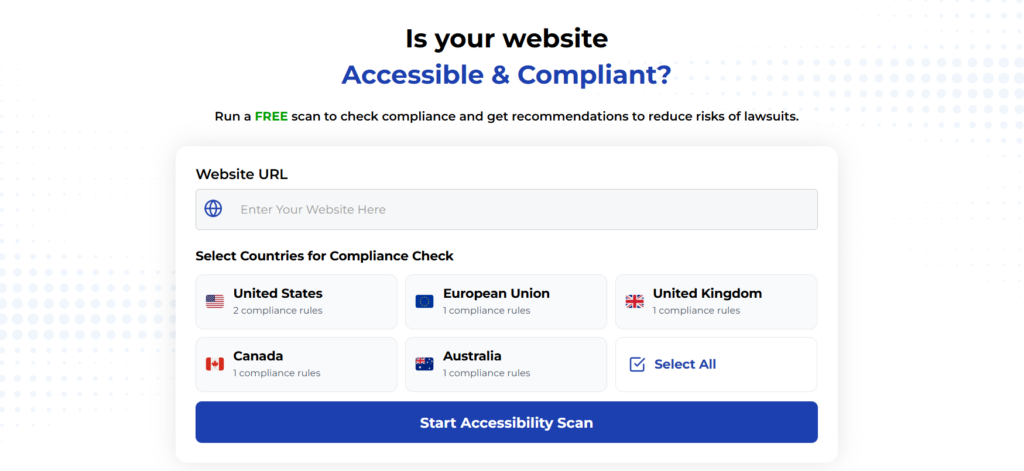
Run a FREE scan to check compliance and get recommendations to reduce risks of lawsuits
Final Thoughts
Ready to find out where your app stands? A good first step is to run an accessibility check to identify the most pressing issues. From there, you can begin the important work of making your digital world open to all.
Run a Free Scan to Find E-commerce Accessibility Barriers
Want More Help?
Try our free website accessibility scanner to identify heading structure issues and other accessibility problems on your site. Our tool provides clear recommendations for fixes that can be implemented quickly.
Join our community of developers committed to accessibility. Share your experiences, ask questions, and learn from others who are working to make the web more accessible.