



E-commerce Accessibility Audit | Converting Barriers into Sales Opportunities
Online stores are missing out on massive revenue by creating barriers that prevent millions of customers from shopping. Recent studies show that 94% of the largest e-commerce websites fail basic accessibility standards, while 69.82% of shoppers abandon their carts before checking out. This isn’t just about compliance—it’s about capturing a market worth over $1.2 trillion in spending power. When you remove accessibility barriers from your e-commerce site, you don’t just meet legal requirements; you create shopping experiences that work better for everyone and directly boost your conversion rates.
The Real Financial Impact of E-commerce Accessibility Barriers
Let’s talk numbers that matter to your bottom line. When accessibility barriers block customers from completing purchases, you’re not just losing individual sales—you’re missing entire market segments. People with disabilities control over $1.2 trillion in spending power globally, yet most online stores make it nearly impossible for these customers to shop.
Cart abandonment tells an even more striking story. While the average abandonment rate sits at 69.82%, accessibility barriers push this number even higher for customers using assistive technologies. Think about it: if someone can’t find your “Add to Cart” button because it doesn’t work with their screen reader, that’s guaranteed lost revenue.
The legal landscape adds another layer of urgency. Since 2018, web accessibility lawsuits have increased 300%, with e-commerce platforms accounting for over 32% of these legal cases. But here’s what many business owners don’t realize—fixing accessibility issues often improves your search rankings too. Google’s algorithms favor many of the same features that make sites accessible, like proper heading structures, descriptive link text, and fast loading times.
Companies that prioritize accessibility see measurable returns. A Forrester Research study found that businesses with accessible websites witness conversion rate increases as high as 200%. This happens because accessible design principles create clearer, more intuitive shopping experiences that benefit all users, not just those with disabilities.
Product Page Accessibility That Actually Sells
Your product pages are where browsers become buyers—or where they get frustrated and leave. Making these pages accessible isn’t about adding extra features; it’s about making the features you already have work for everyone.
Start with your product images, which are often the biggest accessibility failure point. Alt text for product photos needs to do more than just describe what’s visible. Instead of writing “blue handbag,” try “navy blue leather crossbody bag with gold hardware and adjustable strap.” This detailed description helps screen reader users understand exactly what they’re considering, just like sighted customers can see.
Product descriptions need the same attention to detail. Customers using screen readers rely heavily on these descriptions to understand size, materials, and functionality. Break information into clear sections with descriptive headings. Instead of cramming everything into one paragraph, use headings like “Materials and Care,” “Size and Fit,” and “What’s Included.”
Color and contrast play massive roles in accessibility, especially for customers with visual impairments or color blindness. Don’t rely solely on color to convey information about product variants. If you’re showing different colors of a shirt, include the color name in text, not just in a color swatch. Price information, sale badges, and stock status all need sufficient contrast against their backgrounds to be readable.
The product review section often gets overlooked in accessibility audits, but it’s where many customers make final purchase decisions. Make sure review ratings are readable by screen readers—don’t just use star graphics without proper labels. Reviews themselves should be easy to navigate with keyboard-only controls, and any filtering options need proper form labels.
Shopping Cart and Checkout Accessibility That Converts
Your shopping cart and checkout process represent the final hurdle between interest and purchase. This is where accessibility barriers hurt most because customers have already invested time in selecting products. Losing them here means losing sales you’ve already earned.
Shopping cart accessibility starts with clear labeling of every interactive element. Quantity selectors, remove buttons, and promo code fields all need descriptive labels that screen readers can understand. Don’t just label a button “X”—use “Remove [product name] from cart.” These details make the difference between a smooth checkout and an abandoned cart.
Checkout forms present unique challenges because they require customers to enter sensitive information quickly and accurately. Each form field needs a clear label that stays visible even when the field is filled. Error messages must be specific and helpful—instead of “Invalid input,” explain “Credit card number must be 16 digits without spaces or dashes.”
Progress indicators during checkout help all customers understand where they are in the process, but they’re especially important for users with cognitive disabilities who might need extra time or reassurance. Use clear, descriptive steps like “Shipping Information,” “Payment Details,” and “Order Review” rather than generic numbers.
Guest checkout options aren’t just about convenience—they’re about accessibility. Forcing customers to create accounts can create additional barriers, especially for users who struggle with complex password requirements or CAPTCHA systems. When you do require accounts, make the registration process as simple as possible.
Payment Accessibility and Security Without Compromise
Payment processing is where accessibility concerns meet security requirements, and finding the right balance matters for both customer trust and conversion rates. Customers need to feel confident that their information is secure while still being able to complete transactions independently.
Multiple payment options provide both convenience and accessibility benefits . Some customers find mobile wallets easier to use than traditional credit card forms, while others prefer PayPal or buy-now-pay-later services. The more options you provide, the more likely customers are to find a payment method that works with their assistive technology setup .
Security features like CAPTCHA systems often create insurmountable barriers for customers with disabilities. When you must use these systems, provide audio alternatives for visual CAPTCHAs and ensure that any security challenges are solvable without perfect vision or fine motor control. Better yet, consider modern security approaches that don’t require customer interaction, like behavioral analysis or device fingerprinting.
Credit card form design directly impacts both accessibility and security. Each field needs clear labels that don’t disappear when customers start typing. Autofill features help customers with motor disabilities who might struggle with precise typing. Real-time validation can catch errors as they happen rather than forcing customers to submit and then fix problems.
Payment error handling requires special attention because customers are entering sensitive financial information. Errors should be specific and actionable without revealing security vulnerabilities. Instead of “Payment failed,” try “The expiration date format should be MM/YY” or “The billing address doesn’t match the card information.”
Search and Filter Functionality for All Shoppers
Search and filtering features can make or break the shopping experience, especially for customers who rely on assistive technologies to find products. When these features work well, they help customers find exactly what they need quickly. When they don’t, they create frustration that leads to abandoned shopping sessions.
Search functionality needs to be forgiving and helpful. Autocomplete suggestions should be accessible to keyboard users and screen readers. If someone searches for “running shoes” but you categorize them as “athletic footwear,” your search should still return relevant results. Spell-check and suggestion features help customers with dyslexia or other learning differences.
Filter controls present specific accessibility challenges because they’re essentially forms that update content dynamically. Each filter option needs proper labeling, and checkbox or radio button groups need to be contained in fieldsets with clear legends. When customers apply filters, screen reader users need to know that content has changed and how many results remain.
Faceted navigation, where multiple filters can be applied simultaneously, requires careful attention to accessibility. Customers need to understand which filters are active and how to remove them. Filter tags or breadcrumbs that show applied filters help everyone, but they’re especially important for screen reader users who might not see visual changes to the page.
Search results presentation affects how quickly customers can evaluate options. Product grids need logical tab order for keyboard navigation. Each product listing should include essential information like name, price, and key features in a predictable order. If you’re using lazy loading for large result sets, make sure it works properly with assistive technologies.
Customer Support That Actually Supports Everyone
Customer support accessibility often gets overlooked, but it’s where many customers with disabilities first interact with your business. When your website creates barriers, your support team becomes the bridge between frustration and successful shopping. Making support channels accessible can turn problem customers into loyal advocates .
Multiple communication channels serve different accessibility needs. Some customers prefer phone support, while others find email or chat easier to use. Text messaging and social media support can work better for customers with hearing impairments. Live video support helps when complex visual issues need explanation.
Chat widgets and support forms need the same accessibility attention as your main website features. Make sure chat windows are keyboard accessible and work properly with screen readers . File upload features for support tickets should handle various file formats and provide clear instructions about size limits and accepted types.
FAQ sections can prevent many support requests if they’re designed accessibly. Use clear headings to organize topics logically. Write questions in plain language that matches how customers actually think about problems. Include search functionality within your FAQ section so customers can find answers quickly.
Support documentation like user manuals or setup instructions should follow the same accessibility principles as your main content. Use proper heading structures, include alt text for any images, and write in clear, simple language . Video tutorials should include captions and audio descriptions when visual elements are important.
Testing Your E-commerce Accessibility Changes
Real accessibility testing goes beyond automated tools, though those provide a good starting point. Manual testing with actual assistive technologies reveals problems that automated scans miss. Try shopping on your own site using only keyboard navigation—can you complete a purchase without touching your mouse?
Screen reader testing provides the most accurate picture of how customers with visual impairments experience your site. Popular screen readers like NVDA, JAWS, and VoiceOver each work slightly differently, so testing with multiple options gives you broader coverage. Focus on critical shopping paths: searching for products, reading product information, adding items to cart, and completing checkout.
Mobile accessibility testing deserves special attention because many customers with disabilities rely heavily on mobile devices. Touch target sizes need to meet minimum requirements—interactive elements should be at least 44 x 44 pixels. Test with actual mobile devices rather than browser simulation tools when possible.
User testing with people who have disabilities provides the most valuable feedback about your accessibility efforts. This testing reveals real-world usage patterns that you might not anticipate. Many accessibility consulting firms can help arrange these testing sessions, or you can work with local disability organizations.
Performance testing becomes more important when you add accessibility features. Accessibility widgets and additional form labels shouldn’t slow down your site significantly. Page speed affects all users, but it’s especially important for customers using older assistive technologies or slower internet connections.
Building Long-term Accessibility Success
Sustainable e-commerce accessibility requires more than fixing current problems—it means building systems that prevent new barriers from appearing. This starts with training your development team on accessibility principles and making accessibility testing part of your regular QA process.
Vendor selection affects your long-term accessibility success. When choosing e-commerce platforms, payment processors, or third-party integrations, evaluate their accessibility features upfront. It’s much easier to start with accessible tools than to retrofit accessibility into platforms that weren’t designed with these principles in mind.
Content creation processes should include accessibility checkpoints from the beginning. Train content creators to write descriptive alt text, use proper heading structures, and choose images with sufficient contrast. These practices become automatic with training and prevent most common accessibility problems.
Customer feedback loops help you identify emerging accessibility issues before they become major problems. Make it easy for customers to report accessibility barriers and respond quickly when they do. This responsiveness builds customer loyalty and provides valuable insights about real-world usage patterns.
Budget planning for accessibility should treat it as an ongoing operational expense rather than a one-time project cost. Regular audits, training updates, and technology upgrades all require consistent investment. However, this investment pays for itself through increased conversion rates, reduced legal risk, and expanded market reach.
Converting Accessibility Barriers
Converting accessibility barriers into sales opportunities isn’t about adding complicated features to your e-commerce site—it’s about making sure the features you already have work for everyone who wants to shop with you . The statistics don’t lie: businesses that prioritize accessibility see higher conversion rates, better customer satisfaction, and reduced legal risk.

Start The Process Today!
Starting your e-commerce accessibility improvements doesn’t require a complete site redesign. Begin with high-impact changes like improving form labels, adding descriptive alt text to product images, and ensuring keyboard navigation works throughout your checkout process. These foundational improvements benefit all customers while creating a more inclusive shopping experience.
Using Automated Tools for Quick Insights (Accessibility-Test.org Scanner)
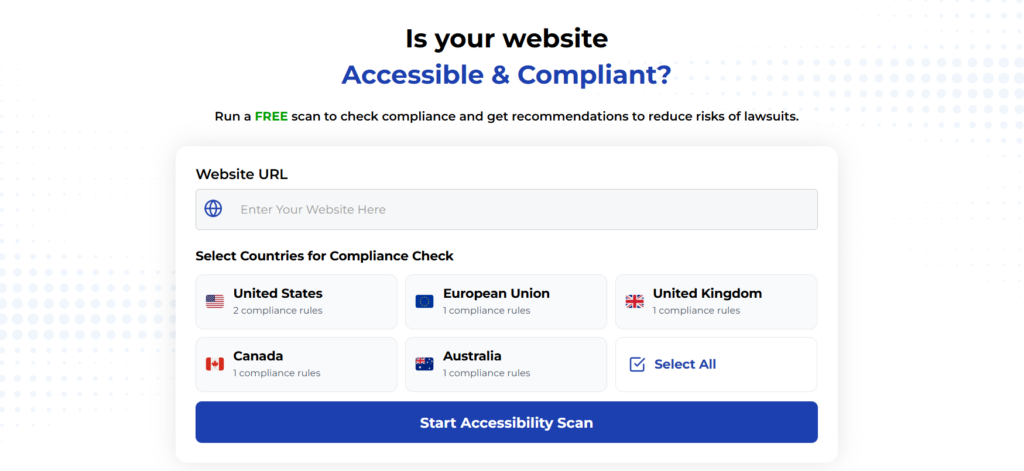
Automated testing tools provide a fast way to identify many common accessibility issues. They can quickly scan your website and point out problems that might be difficult for people with disabilities to overcome.
Visit Our Tools Comparison Page!
Run a FREE scan to check compliance and get recommendations to reduce risks of lawsuits
Final Thoughts
The investment in accessibility pays dividends beyond compliance. When you make your site easier to use for customers with disabilities, you create shopping experiences that work better for everyone. Clear navigation helps all customers find products faster . Descriptive content helps everyone make informed purchase decisions. Accessible checkout processes reduce cart abandonment across all customer segments.
Ready to turn accessibility barriers into conversion opportunities? Start with a basic accessibility audit using free tools like WAVE or Lighthouse, then prioritize fixes based on their impact on your checkout conversion funnel. Your customers—and your sales numbers—will thank you for it.
Want More Help?
Try our free website accessibility scanner to identify heading structure issues and other accessibility problems on your site. Our tool provides clear recommendations for fixes that can be implemented quickly.
Join our community of developers committed to accessibility. Share your experiences, ask questions, and learn from others who are working to make the web more accessible.