



Document Accessibility Remediation | PDF, Word, and PowerPoint Compliance
Making your documents accessible isn’t just about legal compliance—it’s about creating equal access to information for everyone, including the millions of people who rely on assistive technologies . Whether you’re working with PDFs, Word documents, or PowerPoint presentations, proper accessibility remediation ensures your content reaches its intended audience while meeting WCAG 2 .2 standards and ADA compliance requirements .
Document Accessibility Legal Requirements
Document accessibility requirements have become increasingly stringent across multiple jurisdictions, with legal frameworks that affect businesses of all sizes. The Americans with Disabilities Act (ADA) Title III applies to private sector organizations, while Section 508 compliance governs federal agencies and their contractors. These regulations don’t just apply to websites—they extend to all digital content, including downloadable documents and presentation materials.
The legal implications of inaccessible documents can be severe. Courts have consistently held that PDF documents, Word files, and presentations must meet the same accessibility standards as web content. This means your employee handbook, training materials, product documentation, and marketing collateral all need to comply with WCAG standards. Organizations that ignore these requirements face potential lawsuits, with settlements often reaching tens of thousands of dollars.
Understanding WCAG Compliance for Documents
WCAG 2.2 guidelines apply directly to document accessibility, establishing four main principles that your files must follow. Documents need to be perceivable, meaning users with visual impairments can access the content through screen readers or other assistive technologies. They must be operable, allowing users to interact with forms, navigation elements, and interactive features using keyboards or alternative input devices.
The understandable principle requires clear language, logical structure, and predictable behavior throughout your documents. Finally, documents must be robust enough to work reliably across different assistive technologies and devices. These principles translate into specific technical requirements that affect how you structure headings, add alternative text, and format interactive elements.
Section 508 and Federal Document Requirements
Section 508 compliance creates additional obligations for government agencies and their contractors. These requirements closely mirror WCAG standards but include specific technical specifications for federal documents. Organizations working with government clients must ensure their documents meet these enhanced standards, which often require more detailed documentation and testing procedures.
Federal contractors face particular challenges because Section 508 requirements apply not just to deliverables but to all documents used in the contract performance process. This means internal training materials, project documentation, and communication templates all need to meet accessibility standards. The documentation requirements for Section 508 compliance also tend to be more stringent than general ADA requirements.
PDF Accessibility Remediation Techniques
PDF accessibility remediation presents unique challenges because many PDFs start as inaccessible image files or poorly structured documents. The remediation process involves adding proper tagging, structure, and metadata to make the content readable by assistive technologies. This work requires specialized knowledge of PDF structure and accessibility standards.
Professional PDF remediation services typically follow a systematic approach that begins with document assessment. The process evaluates the current structure, identifies accessibility barriers, and determines whether optical character recognition (OCR) processing is needed for image-based PDFs. Many organizations underestimate the complexity of this work, leading to inadequate remediation that fails to meet legal requirements.
Essential PDF Accessibility Elements
Proper PDF accessibility starts with document structure and tagging. Every PDF needs a logical heading hierarchy that allows screen reader users to understand content organization and skip to relevant sections. This means your document outline should use proper H1, H2, and H3 tags in sequential order, just like web content. Without this structure, users with disabilities can’t efficiently locate information in longer documents.
Alternative text for images represents another critical element that’s often overlooked or poorly executed. Generic descriptions like “image” or “figure 1” don’t provide meaningful information to users who can’t see the visual content. Effective alt text describes the purpose and content of images in sufficient detail for users to understand their relevance to the surrounding text .
Form accessibility in PDFs requires particular attention to field labels and instructions . Interactive PDF forms need properly associated labels, clear error messages, and logical tab order for keyboard navigation. Many organizations create visually appealing forms that are completely unusable for people who rely on screen readers or keyboard navigation.
PDF Remediation Process and Tools
The PDF remediation process typically begins with automated scanning using tools like Adobe Acrobat’s accessibility checker or PAC 2024. These tools identify technical violations but can’t evaluate the quality of alternative text or the logical flow of content. Human review remains essential for ensuring truly accessible PDF documents.
Professional remediation services use a combination of automated tools and expert manual review to address accessibility barriers. This hybrid approach ensures technical compliance while maintaining document usability for people with disabilities. The process includes testing with actual screen readers to verify that the remediated document works as intended.
Quality assurance for PDF accessibility involves multiple validation steps. Documents undergo automated testing with tools like PAC 2024, which checks PDF/UA conformance and WCAG requirements. Manual testing with screen readers like NVDA or JAWS verifies the actual user experience, ensuring that technical compliance translates to practical accessibility.
Creating Accessible Word Documents from Start
Microsoft Word includes built-in accessibility features that make creating accessible documents straightforward when you know how to use them properly. The accessibility checker in Word identifies common issues like missing alt text, improper heading structure, and insufficient color contrast. However, relying solely on automated checking isn’t enough—you need to understand the principles behind accessible document creation.
Starting with accessible document creation is far more efficient than retrofitting inaccessible content later. When you establish proper heading structure from the beginning, add alt text as you insert images, and use built-in styles consistently, your documents maintain accessibility throughout the editing process. This proactive approach saves time and ensures better results than attempting remediation after the fact.
Word Document Structure and Navigation
Proper heading structure forms the foundation of accessible Word documents. Screen reader users rely on headings to understand document organization and move quickly between sections . Your document should start with a single H1 heading for the title, followed by H2 headings for major sections, and H3 headings for subsections . Skipping heading levels confuses assistive technology users and makes your document harder to understand .
Word’s built-in styles automatically create proper heading structure when used correctly. The Navigation Pane shows your document outline, allowing you to verify that headings appear in logical order. If sections don’t appear in the Navigation Pane, they won’t be accessible to screen reader users who rely on heading navigation.
Lists in Word documents need proper formatting to be accessible. Use the built-in bullet and numbering features rather than manually typing dashes or numbers. Properly formatted lists announce their structure to screen readers, helping users understand the relationships between items. This attention to structural details makes your content more usable for everyone.
Alternative Text and Image Accessibility
Adding meaningful alternative text to images in Word requires more thought than many people realize. The alt text should convey the same information that sighted users get from the image . For charts and graphs, this might mean describing the trend or key data points rather than just identifying the image type .
Decorative images that don’t add informational content should be marked as decorative in Word’s alt text settings . This tells screen readers to skip the image entirely, avoiding unnecessary interruptions to the reading flow . Many documents include logos, decorative borders, or background images that serve no informational purpose and should be marked accordingly.
Complex images like flowcharts or detailed diagrams might need longer descriptions in the document text itself, with the alt text providing a brief summary and reference to the longer description. This approach ensures that all users receive equivalent information while maintaining document readability.
Word Document Forms and Interactive Elements
Creating accessible forms in Word requires attention to field labels, instructions, and logical tab order. Form fields need descriptive labels that clearly explain what information to enter. Generic labels like “Name” might be insufficient if the form includes multiple name fields for different people or purposes.
Tables in Word documents present particular accessibility challenges. Screen readers interpret tables by reading across rows and down columns, so the structure needs to be logical and consistent. Use table headers to identify what each column contains, and avoid merged cells or complex layouts that disrupt the reading flow.
Hyperlinks in Word documents should use descriptive text rather than generic phrases like “click here” or bare URLs. Link text should clearly indicate the destination or purpose of the link. This practice benefits all users by making links more meaningful while meeting accessibility requirements for screen reader users.

PowerPoint Accessibility Best Practices
PowerPoint presentations often overlook accessibility considerations, creating barriers for audience members with disabilities. Accessible presentations require attention to slide structure, alternative text, reading order, and color contrast. These elements ensure that your message reaches all audience members, whether they’re viewing slides on screen or accessing them through assistive technology.
The built-in accessibility checker in PowerPoint identifies many common issues, but it can’t evaluate the quality of your content or the logical flow of information . Understanding the principles behind accessible presentation design helps you create slides that work for everyone while maintaining visual appeal and professional appearance .
PowerPoint Slide Structure and Design
Each PowerPoint slide needs a unique, descriptive title that helps users understand the slide’s purpose. Generic titles like “Slide 1” or repeated titles across multiple slides make navigation difficult for screen reader users. Slide titles should be specific enough to distinguish one slide from another while remaining concise.
Reading order becomes particularly important in PowerPoint when slides contain multiple text boxes, images, and other elements. The default reading order might not match your intended presentation sequence, confusing users who rely on screen readers. PowerPoint’s Selection Pane allows you to adjust reading order to match your intended flow.
Color contrast requirements apply to PowerPoint presentations just as they do to web content. Text and background combinations need sufficient contrast for users with visual impairments or color vision differences. This requirement affects not just slide backgrounds but also chart colors, diagram elements, and highlighted text.
PowerPoint Alternative Text and Media
Images in PowerPoint presentations need alternative text that explains their relevance to the presentation content. Screenshots should describe what the image shows and why it’s relevant to your point. Charts and graphs need alt text that summarizes the key information or trends being illustrated.
Video and audio content in presentations creates additional accessibility considerations. Videos need captions for users with hearing impairments, while audio clips might need transcripts or descriptions. If you’re embedding multimedia content, ensure it meets accessibility standards before including it in your presentation.
Animations and transitions in PowerPoint can create accessibility problems for users with vestibular disorders or attention difficulties. Complex animations might also not be conveyed to screen reader users, making important information inaccessible. Consider whether animations add real value to your presentation or create unnecessary barriers.
Presentation Delivery and Accessibility
Accessible presentation delivery extends beyond slide design to include your speaking approach and interaction with the audience. Describing visual content aloud helps audience members who can’t see the slides clearly or at all . This practice benefits everyone by reinforcing your key points while ensuring accessibility.
When sharing presentation materials, consider providing them in multiple formats. Some audience members might prefer Word documents for screen reader compatibility, while others need PDF versions for consistent formatting. Making materials available in advance allows people to prepare and follow along more effectively.
Automated Document Accessibility Testing Tools
Automated accessibility testing tools provide valuable first-pass evaluation of document accessibility, but they can’t replace human judgment and testing. These tools excel at identifying technical violations like missing alt text, improper heading structure, and color contrast issues. However, they can’t evaluate whether alt text is meaningful or if document structure makes logical sense.
The accessibility checkers built into Microsoft Office applications catch many common issues during document creation. Word, PowerPoint, and Excel all include accessibility checkers that flag potential problems as you work. Using these tools during document creation is far more efficient than trying to fix accessibility issues after completion.
Document Testing Tool Capabilities
Adobe Acrobat includes accessibility checking features that identify PDF accessibility violations according to WCAG and Section 508 standards. The tool can detect missing tags, improper structure, and other technical issues. However, it requires human interpretation to determine whether flagged issues actually create accessibility barriers.
PAC 2024 provides comprehensive PDF accessibility testing that checks both PDF/UA and WCAG conformance. This free tool offers detailed reporting on accessibility violations and includes visual previews that show how screen readers interpret document content. The tool has become a standard for PDF accessibility validation in many organizations.
Third-party accessibility testing services often provide more thorough evaluation than standalone tools. These services combine automated scanning with expert human review to identify accessibility barriers that automated tools miss. The resulting reports typically include specific remediation recommendations and priority levels for different types of issues.
Limitations of Automated Tools
Automated testing tools can identify technical accessibility violations but can’t evaluate the user experience quality. A document might pass all automated tests while still being difficult or impossible to use for people with disabilities. This limitation makes human testing with assistive technologies essential for thorough accessibility evaluation.
The quality of alternative text represents a common area where automated tools fall short. These tools can detect missing alt text but can’t determine whether existing alt text provides meaningful information. Generic or unhelpful alt text passes automated checks while failing to serve users who need that information.
Document structure and reading order present similar challenges for automated evaluation. Tools can verify that heading tags are present but can’t determine whether the heading hierarchy makes logical sense or supports effective navigation. These qualitative aspects of accessibility require human evaluation and testing .
Document Accessibility Workflow Integration
Integrating accessibility considerations into your document creation workflow prevents most accessibility issues while reducing the time and cost associated with remediation . This approach requires training team members on accessibility best practices and establishing quality checkpoints throughout the content development process .
Organizations that wait until the end of the document creation process to address accessibility often face significant delays and additional costs . Retrofitting accessibility into completed documents takes more time than creating accessible content from the start. Early intervention also produces better results because accessibility considerations influence design decisions rather than constraining them.

Staff Training and Awareness
Effective document accessibility requires training content creators on both the technical requirements and the human impact of accessibility barriers. Staff need to understand not just how to add alt text or use heading styles, but why these elements matter for users with disabilities. This understanding motivates more careful attention to accessibility details.
Training programs should include hands-on experience with assistive technologies like screen readers. When content creators experience their own documents through a screen reader, they gain appreciation for proper structure and meaningful alt text. This experiential learning often proves more effective than abstract discussions of accessibility requirements.
Different roles within your organization need different levels of accessibility training. Content creators need detailed technical knowledge, while managers might need broader understanding of legal requirements and business impact. Tailoring training to specific roles ensures that everyone has the information they need without overwhelming people with irrelevant details.
Using Automated Tools for Quick Insights (Accessibility-Test.org Scanner)
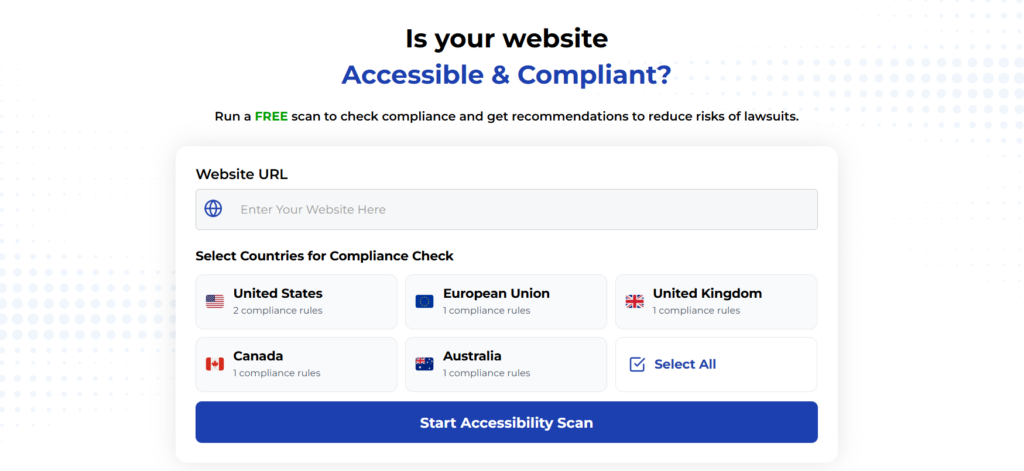
Automated testing tools provide a fast way to identify many common accessibility issues. They can quickly scan your website and point out problems that might be difficult for people with disabilities to overcome.
Visit Our Tools Comparison Page!
Run a FREE scan to check compliance and get recommendations to reduce risks of lawsuits
Final Thoughts
Document accessibility quality assurance should include both automated testing and human evaluation. Automated tools provide consistent checking for technical compliance, while human testing evaluates the actual user experience. This two-stage approach catches both technical violations and usability problems.
Testing procedures should include validation with actual assistive technologies, not just accessibility checking tools. Screen reader testing reveals problems that automated tools miss, such as confusing reading order or unhelpful alt text. Regular testing with different assistive technologies ensures compatibility across the range of tools your audience might use.
Documentation of accessibility testing and remediation efforts provides important legal protection while supporting continuous process improvement. Recording what was tested, what issues were found, and how they were addressed demonstrates good faith efforts to provide accessible content. This documentation also helps identify recurring problems that might indicate training needs or process improvements.
Your organization’s commitment to document accessibility directly impacts millions of people who rely on assistive technologies to access information. The techniques and processes outlined here don’t just ensure legal compliance—they create genuinely usable content that serves your entire audience effectively. Whether you’re creating PDFs, Word documents, or PowerPoint presentations, starting with accessibility in mind produces better results than trying to fix problems after the fact.
Ready to make your documents truly accessible? Start by conducting an accessibility audit of your current document library using our free accessibility scanner, then work with your team to establish document accessibility standards that support both compliance and usability goals.
Want More Help?
Try our free website accessibility scanner to identify heading structure issues and other accessibility problems on your site. Our tool provides clear recommendations for fixes that can be implemented quickly.
Join our community of developers committed to accessibility. Share your experiences, ask questions, and learn from others who are working to make the web more accessible.