



Video Accessibility Implementation | Captions, Transcripts, and Audio Descriptions
Making videos accessible isn’t just about following rules—it’s about creating content that everyone can enjoy and learn from. Whether you run a business website, educational platform, or streaming service, accessible video content opens doors for millions of people with disabilities while often improving the experience for everyone else too.
Video accessibility has become more important than ever in 2025. The European Accessibility Act takes effect June 28, 2025, making web accessibility a legal requirement for many organizations. This law joins existing regulations like the Americans with Disabilities Act (ADA) and Section 508, pushing more website owners to make their sites work for everyone.
Video Accessibility Requirements Under WCAG 2.2
WCAG 2.2 establishes clear standards for making video content accessible to people with different disabilities. These standards aren’t just suggestions—they’re the foundation that courts often reference in accessibility lawsuits.
Success Criteria for Video Content
WCAG 2.2 Success Criterion 1.2.1 addresses audio-only and video-only content, requiring that prerecorded audio or video be made accessible by providing alternatives that present essentially the same information to people who cannot access the original content. For visually impaired persons who cannot access video, alternative formats like transcripts become essential.
Success Criterion 1.2.2 focuses on captions for prerecorded content. All prerecorded videos must have captions that are accurate and synchronized with the video, identify speakers whose identities aren’t apparent visually, and describe important music and sound effects.
The standards also require audio descriptions or media alternatives for prerecorded video content under Success Criterion 1.2.3. Videos containing visual-only information must have either an audio description (a synchronized soundtrack conveying all essential visual-only content) or a full-text transcript that includes important details about changes in scenery, expressions, or other essential visual information.
Live Video Requirements
Live video streams present unique challenges. WCAG 2.2 requires that all live videos have captions that are accurate and synchronized with the video, identify speakers whose identity isn’t apparent visually, and describe important music and sound effects.
The accuracy requirements for live captions can be more flexible than prerecorded content, but they still need to provide meaningful access to the audio content. Under ideal conditions, automatic captions in spoken languages can achieve up to 98% accuracy as assessed by Word Error Rate (WER), though real-world conditions often produce lower accuracy rates.
New WCAG 2.2 Considerations
WCAG 2.2 introduced several new success criteria that accessibility tools must address to provide current compliance. These include requirements for better focus visibility, improved touch target sizing, and enhanced cognitive accessibility features that can affect how video players and controls are designed.
Caption Quality Standards and Best Practices
Caption quality makes the difference between accessible content and content that frustrates users. The Federal Communications Commission (FCC) has established four essential components for quality captions: accuracy, synchronicity, program completeness, and placement.
Accuracy Requirements
The FCC closed captioning standards state that captions must match the spoken words in the dialogue, in their original language (English or Spanish), to the fullest extent possible and include full lyrics when provided on the audio track. This standard applies beyond just television—it has become the benchmark for online video accessibility as well.
Accuracy becomes particularly challenging with technical content, specialized terminology, and speakers with accents or speech patterns that differ from standard recognition models. Amazon’s automatic captioning system delivers approximately 80% accuracy under ideal conditions, which means one in five words could be incorrect—potentially creating barriers to understanding during technical discussions or important communications.
Several factors significantly impact caption accuracy:
- Speaker voice characteristics: Lower-pitched voices typically achieve better accuracy than higher-pitched voices
- Background noise levels: Even minor background sounds can reduce accuracy by up to 30%
- Speaking pace: Fast speech reduces caption quality substantially
- Technical terminology: Specialized terms often appear incorrectly transcribed
- Accents and dialects: Non-native English speakers may experience lower accuracy rates
Synchronization and Timing
Captions must appear at the same time as the corresponding audio and remain on screen long enough for users to read them comfortably. The timing becomes especially important for educational content where students need to process both visual and textual information simultaneously.
Professional captioning services typically maintain stricter timing standards than automated systems. They ensure that captions don’t appear too early or too late, and they break caption text at natural linguistic boundaries rather than arbitrary character limits.
Speaker Identification
When multiple people speak in a video, captions must identify who is speaking. This identification becomes particularly important in interviews, panel discussions, or educational content where different speakers present different viewpoints or expertise.
Webex automatically identifies speakers and includes their names at the beginning of captions in version 42.3 and later, helping participants track who is speaking during multi-person discussions. This feature proves particularly valuable for users who rely on captions to follow conversations.
Transcript Creation and Formatting Standards
Video transcripts serve a different purpose than captions—they provide a complete text alternative that users can read independently of the video. A transcript typically includes three main components: all spoken dialogue, background noises or sound effects, and additional relevant audio information.
Types of Transcripts
Verbatim transcription captures every spoken word, along with any sounds, pauses, or non-verbal noises. This detailed approach works well for legal or research purposes but can be overwhelming for general accessibility needs.
Clean read transcription presents a more polished version by removing filler words, unnecessary pauses, and irrelevant sounds while maintaining the meaning and flow of the content. This approach often provides better accessibility for users who prefer reading transcripts.
Time-indexed transcription includes timestamps at regular intervals, allowing users to easily find specific moments or sections within the recording. This format works particularly well for long-form content like webinars or educational videos.
Formatting Best Practices
Clear and consistent formatting makes transcripts more accessible. Transcripts should be saved in plain text or HTML format, with consistent labeling of speakers and non-verbal cues to help users follow the content flow.
For multiple speakers, it’s best to use the speakers’ full names the first time, then only their first names thereafter. Every time there is a change in speaker, the speaker’s name needs to be added to the transcript. When the speaker’s identity isn’t known, descriptive labels work well:
- Male Voice or Female Voice
- Interviewer and Respondent
- Narrator
- Facilitator (for focus groups)
Including Visual Information
For video transcripts, including important visual information makes the content accessible to users with vision disabilities. The transcript should include a description of all non-speech information needed to understand the content.
Some practical examples include:
- An interview that begins with a slide identifying the speakers and discussion topic—the transcript should include all text from the slide
- A video showing a babbling brook while a narrator discusses clean energy—the transcript should briefly describe the babbling brook
- A video podcast where one speaker mimics a batter’s swing—that visual action would be relevant information to add to the transcript
However, not every visual element needs description. A video showing two people sitting in a room discussing baseball doesn’t require description of the people or room unless those details are relevant to understanding the content.
Text on Screen Handling
When text appears in the video, it needs to be included in the transcript. The exception is when the speaker reads aloud everything that’s written in the video—adding redundant text would interrupt the flow and confuse users.
For text that functions as headings or subtitles, structure it as proper headings within the transcript based on the webpage layout (H2, H3, etc.). When announcing text that appears on screen, use brackets with the leading phrase “text on screen”: [Text on screen: Gina Wilson, former Deputy Minister for Women and Gender Equality].
Audio Description Implementation Strategies
Audio description fills the gaps that transcripts and captions can’t address—it provides spoken narration of visual elements for users who are blind or have low vision. The process involves more than just describing what’s happening; it requires strategic timing and selective description of the most important visual information.
Standard vs Extended Audio Descriptions
Standard audio description fits within the natural gaps in the existing audio track. A voice artist records descriptions that slip between dialogue and sound effects without extending the video’s length. This approach works well for content that already has sufficient pauses for description.
Extended audio descriptions are used when the video doesn’t have enough natural gaps for adequate description. The video gets edited to pause at certain points, allowing time for more detailed descriptions. While this increases the final video length, it provides more thorough access to visual information.
Implementation Methods
The World Wide Web Consortium (W3C) lists several sufficient techniques for publishing audio description to meet WCAG 2.1 success criteria. The most user-friendly option is adding a secondary, user-selectable soundtrack that allows viewers to toggle between the original soundtrack and a version with audio descriptions.
This secondary track approach depends heavily on media player capabilities, since most devices can’t merge multiple audio streams on their own. Video platforms need to support this functionality for users to access audio descriptions effectively.
Alternative approaches include creating separate versions of videos with audio descriptions built into the main audio track, or providing detailed text descriptions alongside the video that screen readers can access.
What to Describe
Effective audio description focuses on visual information that’s essential for understanding the content. Description should cover:
- Actions and movements that affect the story or information
- Scene changes and setting details when relevant
- Text that appears on screen (if not read aloud)
- Facial expressions and gestures that convey meaning
- Visual elements that support the audio content
The key is being selective—too much description can overwhelm users, while too little leaves important gaps in understanding.
Automated vs Manual Video Accessibility Solutions
The choice between automated and manual accessibility solutions often comes down to balancing cost, accuracy, and time constraints. Each approach has distinct advantages and limitations that affect their suitability for different types of content and organizations.
Automated Accessibility Tools
Automated tools have made significant progress in recent years. Modern platforms can automatically generate captions, create basic transcripts, and even attempt audio descriptions. These tools work by analyzing video content frame by frame, detecting accessibility issues and delivering reports on what needs fixing.
Automated systems excel at:
- Speed: Processing large volumes of content quickly
- Consistency: Applying the same standards across all content
- Cost efficiency: Lower per-video costs for high-volume producers
- Immediate availability: Captions and transcripts available as soon as processing completes
However, automated solutions have notable limitations. They struggle with technical terminology, multiple speakers, background noise, and contextual understanding. Automated caption accuracy varies significantly based on audio quality, speaker characteristics, and content complexity.
Manual Accessibility Services
Manual services involve human experts who create captions, transcripts, and audio descriptions by hand. This approach typically produces higher accuracy and better contextual understanding, especially for complex or technical content.
Professional services offer:
- Higher accuracy: Human captioners can achieve 99%+ accuracy compared to 80-95% for automated systems
- Better speaker identification: Humans can distinguish between speakers more reliably
- Contextual understanding: Manual services better handle technical terms, proper names, and cultural references
- Quality control: Human review catches errors that automated systems miss
The main drawbacks of manual services are higher costs and longer turnaround times. For organizations with large content libraries or tight deadlines, manual processing may not be practical for all content.
Hybrid Approaches
Many organizations find success with hybrid models that combine automated and manual processes. These approaches might use automated tools for initial processing, then have human editors review and correct the output. This balance can provide better accuracy than pure automation while maintaining reasonable costs and turnaround times.
Some platforms offer graduated service levels, from basic automation to full manual processing, allowing organizations to choose the right level of service for different types of content.
Choosing the Right Approach
The decision between automated and manual accessibility services depends on several factors:
Content volume: High-volume producers often benefit from automated solutions for routine content, reserving manual services for high-priority materials.
Accuracy requirements: Legal, medical, or educational content may require the higher accuracy that manual services provide.
Budget constraints: Automated tools offer lower per-unit costs but may require additional editing time to achieve acceptable quality.
Timeline needs: Automated solutions provide faster turnaround for time-sensitive content.
Technical complexity: Content with specialized terminology, multiple speakers, or poor audio quality benefits from human expertise.
Legal Compliance for Video Content Platforms
Video accessibility isn’t just good practice—it’s increasingly a legal requirement. Understanding the legal landscape helps organizations make informed decisions about their accessibility investments and avoid potential litigation.
ADA Requirements
The Americans with Disabilities Act (ADA) doesn’t explicitly address online video accessibility, but Titles II and III require “auxiliary aids” that courts have interpreted to include accessible video content. ADA regulations stipulate that videos must include closed captions, audio descriptions, accurate captions, and transcripts to ensure equal access for people with disabilities.
The legal implications of inaccessible content can be severe. Organizations face potential lawsuits, large settlements, and brand damage when their video content doesn’t meet accessibility standards. Courts have consistently held that digital content, including videos, must meet the same accessibility standards as physical accommodations.
Section 508 Compliance
Section 508 applies to federal agencies and organizations that receive federal funding, with requirements that incorporate WCAG 2.0 Level AA standards. These requirements are more specific and technically detailed than general ADA compliance, making them both easier to test and more challenging to implement properly.
Section 508 standards cover not just video content but also the platforms and players used to deliver that content. This means organizations need to consider accessibility throughout their entire video delivery system, from content creation to user interface design.
European Accessibility Act Impact
The European Accessibility Act (EAA) takes effect June 28, 2025, creating new requirements for video accessibility across European markets. The EAA mandates accessibility for content distributed over the internet, including websites, apps, media players, streaming services, and connected TV services.
To comply with the EAA, video content should include closed captions, audio description, transcripts, and sign language interpretation. These features should be accurate, time-synchronized, and allow users to control their display and use. The EAA also provides a five-year transitional period for audiovisual media services to make content published before June 2025 accessible.
Compliance Strategies
Proactive compliance with video accessibility legislation can significantly reduce legal risks. Lawsuits related to non-compliance are common, with organizations facing hefty penalties and reputational damage. By prioritizing accessibility, companies can avoid costly legal challenges while demonstrating commitment to social responsibility.
Organizations should consider:
- Documentation: Maintaining records of accessibility efforts for legal protection
- Regular accessibility audits: Testing content against current WCAG standards
- Staff training: Ensuring content creators understand accessibility requirements
- Policy development: Creating clear guidelines for accessible video production
- Vendor evaluation: Choosing accessibility-aware platforms and service providers
Platform-Specific Accessibility Features
Different video platforms offer varying levels of built-in accessibility support. Understanding these differences helps organizations choose platforms that align with their accessibility goals and compliance requirements.
Video Player Accessibility
Not just the content of video recording needs to be accessible—the video player itself must also meet accessibility standards. Accessible media players provide keyboard navigation, screen reader compatibility, and proper focus management for users with disabilities.
Screen reader compatibility varies significantly between platforms and players. Testing with actual screen readers reveals that video elements with aria-label attributes can cause problems in 56 screen reader/browser combinations, highlighting the importance of thorough testing across different assistive technologies.
Mobile Accessibility Considerations
WCAG 2.2 includes new success criteria specifically related to mobile accessibility, such as touch target size requirements. These standards require interactive elements to be large enough for people with motor disabilities to activate reliably. Video player controls must meet these size requirements while remaining functional across different device types.
Mobile video accessibility also involves considerations about data usage, battery life, and screen size constraints that can affect how accessibility features are implemented and used.
Testing and Validation Methods
Manual testing plays a crucial role in video accessibility, as it complements automated testing by capturing user experiences that machines cannot replicate. Effective testing involves checking videos with actual screen readers, testing keyboard navigation, and verifying that accessibility features work across different browsers and devices.
Testing should include:
- Screen reader compatibility: Testing with NVDA, JAWS, and VoiceOver
- Keyboard navigation: Ensuring all controls are accessible without a mouse
- Caption accuracy: Reviewing automated captions for errors
- Audio description functionality: Verifying that audio descriptions work properly
- Mobile accessibility: Testing on various mobile devices and orientations
Budget-Friendly Accessibility Solutions
Organizations facing budget constraints don’t have to compromise on video accessibility. Several strategies can help create accessible content without breaking the budget while maintaining quality and compliance.
Free and Low-Cost Tools
YouTube’s automatic captions provide a starting point for accessibility, though they require editing for accuracy. Platforms like Otter.ai offer transcription services at lower costs than traditional professional services. These tools can handle basic accessibility needs while organizations build their capacity for more sophisticated solutions.
Community resources and volunteer networks sometimes provide captioning and transcription services for non-profit organizations or educational institutions. These partnerships can help organizations access professional-quality accessibility services at reduced costs.
Content Prioritization Strategies
When budgets are limited, prioritizing key content for professional accessibility treatment makes sense. Organizations should focus their accessibility investments on:
- High-traffic content that reaches the largest audiences
- Legal or compliance-critical materials
- Educational content where accuracy is essential
- Customer-facing materials that affect business relationships
Less critical content can use automated tools with manual review for accuracy, balancing cost control with accessibility needs.
Using Automated Tools for Quick Insights (Accessibility-Test.org Scanner)
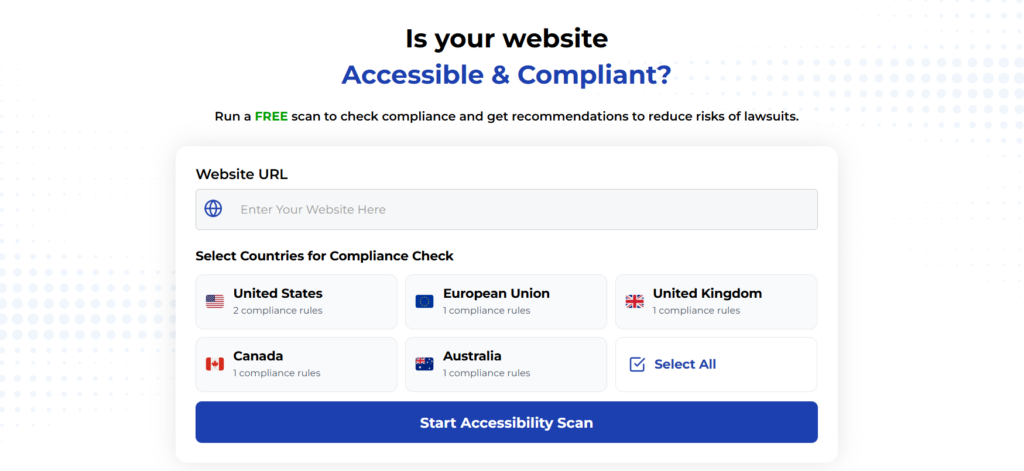
Automated testing tools provide a fast way to identify many common accessibility issues. They can quickly scan your website and point out problems that might be difficult for people with disabilities to overcome.
Visit Our Tools Comparison Page!
Run a FREE scan to check compliance and get recommendations to reduce risks of lawsuits
Final Thoughts
Training staff to handle basic accessibility tasks can reduce long-term costs while improving overall accessibility awareness. Content creators who understand accessibility principles can produce more accessible content from the start, reducing the need for extensive remediation later.
Simple practices like writing clear scripts, using good lighting, and speaking clearly can improve the effectiveness of automated accessibility tools, reducing the need for manual correction.
Are you ready to make your video content accessible to everyone? The investment in video accessibility pays dividends through expanded audience reach, improved user experience, and legal compliance. Start by auditing your current video content to identify accessibility gaps, then choose the combination of automated and manual solutions that fits your budget and quality requirements.
Remember that accessibility isn’t a one-time project—it’s an ongoing commitment that becomes easier and more cost-effective as you build the right processes and partnerships. Your audience will thank you for making content that everyone can enjoy and learn from.
Ready to get started with video accessibility? Try our free accessibility checker to scan your current content and identify areas for improvement. You can also download our video accessibility checklist to ensure you’re covering all the essential elements for compliant, accessible video content.
Want More Help?
Try our free website accessibility scanner to identify heading structure issues and other accessibility problems on your site. Our tool provides clear recommendations for fixes that can be implemented quickly.
Join our community of developers committed to accessibility. Share your experiences, ask questions, and learn from others who are working to make the web more accessible.