



The Future of Web Accessibility
The internet has become a part of our daily lives, from how we shop and learn to how we connect with others. But for many people with disabilities, the web is still full of barriers. The good news is that things are changing. Web accessibility is no longer a niche topic; it’s becoming a central part of how we build websites and apps. As we look to 2025 and beyond, several important trends are shaping a more inclusive digital world for everyone.
It’s about more than just avoiding lawsuits or checking off a list of requirements. It’s about making sure that everyone, regardless of their ability, can participate fully in the online world. This means thinking about people with visual, auditory, motor, and cognitive disabilities from the very beginning of the design process. The coming years will see big shifts in technology, legal standards, and our overall approach to making the web work for everyone.
AI’s Growing Role in Making the Web Usable for Everyone
Artificial intelligence is starting to play a bigger part in making websites more accessible, but it’s not a magic bullet. While AI-powered tools can help automate some tasks, they still need a human touch to be truly effective. It’s important to understand what AI can and can’t do when it comes to accessibility.
Smarter Alt Text: AI That Sees and Describes
One of the most promising uses of AI is for generating alternative text (alt text) for images. For people who use screen readers, alt text is what tells them what an image is about. Manually writing descriptions for every image on a large website can be a huge task. AI can now analyze an image and generate a description automatically, which is a big help.
However, AI-generated alt text isn’t perfect. It might miss important context or misinterpret an image entirely. For example, an AI might describe a picture of a service dog as just a “dog,” missing the point of why the image is there. That’s why it’s so important to have a person review and edit AI-generated alt text to make sure it’s accurate and meaningful. Think of AI as a helpful assistant, not a replacement for human judgment.
Voice Commands That Actually Work
Voice navigation is another area where AI is making a difference. People with motor impairments often rely on their voice to get around a website. Thanks to improvements in natural language processing, voice assistants are getting much better at understanding commands and helping users find what they need. You can see this with the rise of voice search and smart speakers in our homes.
For websites, this means making sure your site is set up to work with these voice technologies. This includes using clear and simple language for your headings and links, as well as making sure your site has a logical structure. As voice commands become more common, websites that are easy to use with your voice will have a big advantage.
Where AI Still Falls Short
Despite these advances, AI can’t solve all of our accessibility problems. Many accessibility issues require a deep understanding of how people with different disabilities use the web, and AI just isn’t there yet. For example, AI can’t tell you if your website’s workflow is confusing for someone with a cognitive disability or if your color choices make it hard for a colorblind person to read your text.
Automated tools, including those that use AI, can only catch a certain percentage of accessibility issues. Some estimates say they can find up to 57% of problems, but that still leaves a lot of barriers that can only be found through manual testing by people who know what to look for. That’s why a mix of automated and human testing is so important for making a website truly accessible.
New Laws, New Standards: What You Need to Know
The legal side of web accessibility is also changing quickly. Governments around the world are passing new laws and updating old ones to make sure that digital services are open to everyone. For businesses, this means that web accessibility is no longer just a good idea; it’s a legal requirement.
The European Accessibility Act (EAA)
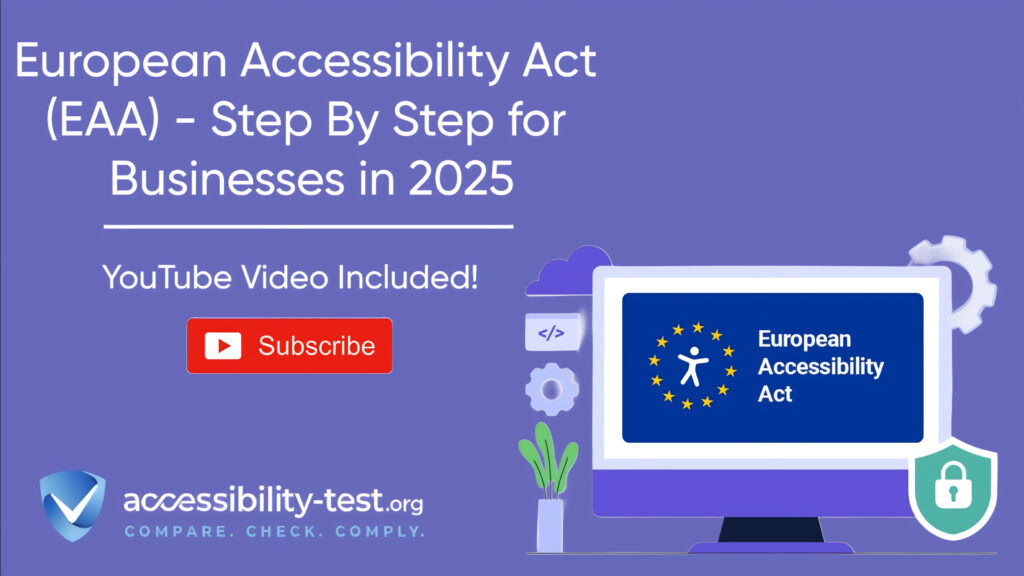
One of the biggest changes is the European Accessibility Act (EAA), which came into effect in June 2025. This law sets a common set of accessibility rules for a wide range of digital products and services in the European Union, including e-commerce sites, banking services, and mobile apps. If you do business in Europe, you need to make sure your website follows these rules.
The EAA is based on the Web Content Accessibility Guidelines (WCAG), which are the international standard for web accessibility. This means that if you’re already following WCAG, you’re on the right track to being compliant with the EAA. But the EAA also has its own specific requirements, so it’s important to understand what the law says and how it applies to your business.
ADA Lawsuits are on the Rise
In the United States, there has been a steady increase in lawsuits related to the Americans with Disabilities Act (ADA). These lawsuits claim that websites that are not accessible to people with disabilities are a form of discrimination. While the ADA doesn’t have specific rules for websites like the EAA does, courts have consistently ruled that the ADA does apply to the online world.
These lawsuits can be expensive and damaging to a company’s reputation. Small businesses are often targeted because they may not have the resources to make their websites accessible. This makes it even more important for businesses of all sizes to take web accessibility seriously. Getting ahead of the problem by making your website accessible now can save you a lot of trouble down the road.
Mobile First, Accessibility Always
More people are using their phones to go online than ever before. This means that if your website doesn’t work well on a small screen, you’re missing out on a huge audience. But mobile accessibility is about more than just making your site look good on a phone. It’s about making sure th/s
Designing for Touch
One of the biggest differences between a desktop and a mobile device is how you interact with it. On a desktop, you use a mouse and keyboard, but on a phone, you use your fingers to tap and swipe. This creates new challenges for accessibility. For example, buttons and links need to be big enough to be easily tapped, and there needs to be enough space between them to avoid accidental clicks.
You also need to think about people who use assistive technologies on their phones, like screen readers or switch controls. This means making sure that your website’s code is set up correctly so that these technologies can understand your content. For example, all of your interactive elements, like buttons and forms, should be properly labeled so that a screen reader can tell the user what they do.
The Human and Business Cost of Inaccessible WCAG 3.0 is on the Horizon
The Web Content Accessibility Guidelines (WCAG) are also being updated. WCAG 3.0 is currently in development and is expected to bring some big changes to how we think about web accessibility. While WCAG 2.x focuses on technical rules, WCAG 3.0 is expected to be more focused on the user’s experience and making sure that people with a wide range of disabilities can successfully use a website.
Some of the things we might see in WCAG 3.0 include new guidelines for cognitive accessibility, which is an area that has often been overlooked. There may also be a new rating system that goes beyond the simple pass/fail model of WCAG 2.x. While WCAG 3.0 is still a few years away, it’s a good idea to start learning about what’s coming so you can be prepared for the future of web accessibility.
Performance Matters
Website performance is another big part of mobile accessibility. People are often using their phones on slower internet connections, so if your website takes a long time to load, they’re likely to give up and go somewhere else. This is especially true for people who are using assistive technologies, which can sometimes slow down a website even more.
To make sure your website performs well on mobile, you should focus on things like optimizing your images, reducing the amount of code your site has to load, and making sure your server is fast and responsive. A fast website is a better experience for everyone, but it’s especially important for people with disabilities who may be facing other barriers as well.
The Benefits of an Inclusive Approach
Thinking inclusively doesn’t just benefit people with disabilities. It often leads to a better experience for all of your users. For example, a website with clear and simple language is easier for everyone to understand, not just people with cognitive disabilities. A website that works well on a slow internet connection is better for someone in a rural area, not just someone using assistive technology.
By making your website accessible, you’re also opening up your business to a wider audience. There are over a billion people in the world with some form of disability, and they have a lot of buying power. By making your website easy for them to use, you’re not just doing the right thing, you’re also making a smart business decision.
Using Automated Tools for Quick Insights (Accessibility-Test.org Scanner)
Automated testing tools provide a fast way to identify many common accessibility issues. They can quickly scan your website and point out problems that might be difficult for people with disabilities to overcome.
Visit Our Tools Comparison Page!
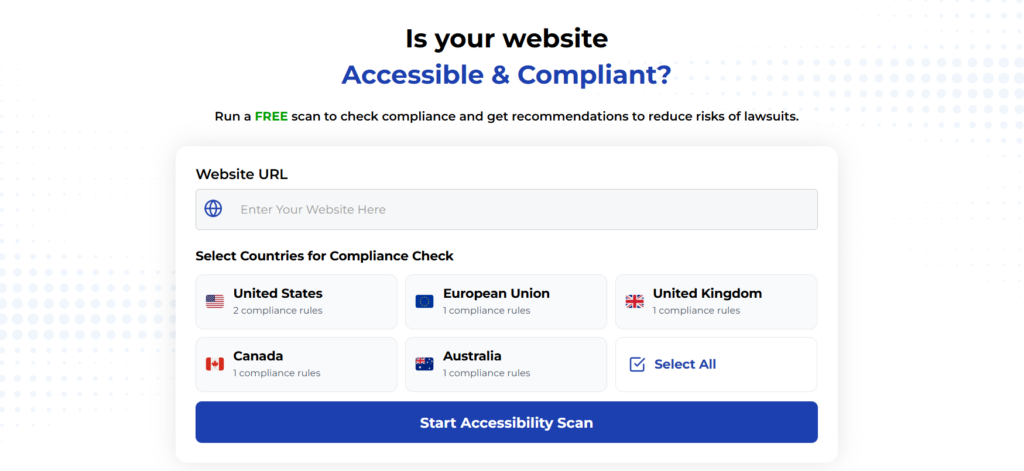
Run a FREE scan to check compliance and get recommendations to reduce risks of lawsuits
Final Thoughts
As we move into 2025 and beyond, web accessibility will continue to be a major focus for businesses, developers, and designers. By keeping up with the latest trends and making accessibility a central part of your work, you can help create a web that is truly open to everyone.
Ready to find out how accessible your website is? Try our free accessibility testing tool to get a quick analysis and see where you can make improvements.
Run a Free Scan to Find E-commerce Accessibility Barriers
Curious about where your site stands? An automated scan is a great first step to identify potential accessibility issues on your e-commerce platform. Run a free scan on our website today to get an initial report on your site’s accessibility health.
Want More Help?
Try our free website accessibility scanner to identify heading structure issues and other accessibility problems on your site. Our tool provides clear recommendations for fixes that can be implemented quickly.
Join our community of developers committed to accessibility. Share your experiences, ask questions, and learn from others who are working to make the web more accessible.