



How Better Accessibility Can Seriously Lift Your SEO
It’s a fact: a more accessible website performs better in search results. For a long time, search engine optimization and web accessibility were treated as separate disciplines. But that’s changed. In 2025, Google’s algorithm increasingly rewards websites that offer a great experience for all users, including those with disabilities .
This isn’t just about being inclusive; it’s a direct path to better rankings, more traffic, and stronger user engagement. Data shows that websites with strong accessibility features can see up to 37% more organic traffic . This happens because the very things that make a site easy for people with disabilities to use also make it easier for Google’s crawlers to understand.
Think about it: clear structure, descriptive text for images, and fast load times are good for everyone. They help a person using a screen reader, and they also help a search engine bot trying to index your content. As we step through how this works, you’ll see that making your site accessible isn’t a technical chore; it’s one of the smartest SEO moves you can make today.
Google’s 2025 Algorithm: Why Accessibility Now Affects Rankings
Google’s core mission is to make information universally accessible, and its 2025 algorithm updates reflect that more than ever . The search engine now directly rewards websites that are built for everyone. This shift means that technical accessibility features are no longer just a matter of compliance; they are direct signals of a high-quality user experience, which is a major factor in how Google ranks pages .
A key driver behind this trend is the enforcement of regulations like the European Accessibility Act (EAA), which comes into full effect in June 2025 . As these standards become legal requirements, Google’s algorithm has evolved to favor sites that are already compliant, seeing them as more authoritative and user-friendly . Sites that don’t meet these standards may see ranking penalties .
This alignment between legal standards and search engine priorities means that investing in accessibility has a twofold benefit: it reduces legal risk and actively improves your visibility in search results.
The 37% Traffic Increase for Accessible Sites
One of the most compelling figures to emerge is that accessible websites can attract up to 37% more traffic from search engines . But where does this number come from? It’s the result of several interconnected factors. When a website is accessible, it’s inherently easier to use for a wider range of people. This leads to better engagement signals; users stay longer, bounce less, and interact more with the content. Google picks up on these behaviors and rewards the site with higher rankings, which in turn drives more organic traffic .
Another study further supports this connection, finding that 73.4% of websites saw an increase in organic traffic after implementing accessibility improvements, with an average growth of about 12% . Some organizations have reported a 40% increase in organic traffic specifically tied to their accessibility efforts . It all points to the same conclusion: a better, more inclusive user experience is a powerful way to get more visitors from search.
Core Web Vitals and Accessibility Connection
Google’s Core Web Vitals are a set of specific metrics that measure the real-world user experience of a page, and they are a confirmed ranking signal . These vitals look at loading speed, interactivity, and visual stability, and there’s a strong link between them and accessibility .
Here’s how they connect:
- Largest Contentful Paint (LCP): This measures how quickly the main content of a page loads . Accessible websites often use clean, efficient code and optimized images, which naturally leads to faster loading times and a better LCP score .
- First Input Delay (FID): This measures how quickly a page becomes interactive . Accessible sites built with proper keyboard navigation and streamlined JavaScript tend to be more responsive, improving FID .
- Cumulative Layout Shift (CLS): This measures how much a page’s layout moves around as it loads . A stable, predictable layout is essential for users with visual or cognitive disabilities, and it also directly translates to a better CLS score .
Improving accessibility often means you’re simultaneously improving your Core Web Vitals. For example, simplifying page layouts for clarity reduces CLS, while optimizing images with alt text can improve LCP .
Technical SEO and Accessibility Overlap
Many of the technical tasks you’d perform for SEO are the same ones required for good accessibility. Search engine crawlers and assistive technologies like screen readers have something in common: they both rely on a clear, logical, and well-structured site to make sense of your content . When you build your site to be understood by a screen reader, you’re also building it to be perfectly understood by Google.
This overlap creates a powerful efficiency. Every hour you spend making your site more accessible is also an hour spent strengthening its technical SEO foundation. This is where you get some of the biggest returns on your effort, as a single fix can improve both user experience and search rankings.
Alt Text: Dual Benefits for Images
Alternative text, or alt text, is a short written description of an image on a webpage. Its primary purpose is to describe the image to people who can’t see it, such as users with visual impairments who rely on screen readers . But its benefit doesn’t stop there.
Search engines can’t “see” images either, so they rely on alt text to understand what an image contains and how it relates to the surrounding content . Writing descriptive, relevant alt text for every image on your site accomplishes two things at once:
- It makes your visual content accessible to everyone.
- It helps your images rank in Google Images and improves the overall SEO of the page by adding relevant context .
Considering that missing alt text is one of the most common accessibility errors, simply adding it to your images is a simple yet powerful way to improve both accessibility and SEO .
Semantic HTML Structure
Semantic HTML involves using the correct HTML tags to describe the structure of your content. Instead of using generic <div> tags for everything, you use specific tags like <header>, <footer>, <nav>, and <article> .
This practice is the bedrock of an accessible and SEO-friendly website. For a person using a screen reader, semantic tags create a clear and navigable outline of the page, allowing them to jump directly to the main content or navigation . For a search engine, these same tags provide unambiguous clues about the role of each piece of content on the page . A site with a logical heading hierarchy (H1, H2, H3, etc.) can see up to a 41% improvement in crawl efficiency, meaning Google can find and index your content more effectively .
Page Speed and Accessibility Code
Page speed is a critical ranking factor for Google, and it’s also deeply connected to accessibility . Websites built with clean, simple, and well-structured code; a hallmark of accessible design; tend to load much faster . Bloated code and unnecessary scripts can slow a site down, creating a frustrating experience for all users, but they can be especially problematic for those on slower internet connections or using assistive technologies .
When you focus on writing lean and efficient code for accessibility, you naturally create a faster website. This improves the user experience for everyone and sends a strong positive signal to Google. A delay of even one second in page load time can be a barrier for some users, so boosting your site’s speed is a win for both accessibility and SEO .
User Experience Signals That Boost Rankings
Google pays close attention to how users interact with your website. These interactions, known as user experience (UX) signals, tell the search engine whether visitors found your page valuable . A positive user experience, which is the ultimate goal of accessibility, leads to better UX signals and, as a result, higher search rankings.
When a site is easy to navigate, read, and interact with, visitors are more likely to stay, explore, and complete their goals. This behavior tells Google that your site is a high-quality result that satisfies user needs.
Lower Bounce Rates on Accessible Sites
Bounce rate is the percentage of visitors who leave your website after viewing only one page. A high bounce rate can signal that your page didn’t meet the user’s expectations . Accessible websites tend to have lower bounce rates because they remove barriers that might cause a person to leave out of frustration .
For example, if a user with a motor disability can’t navigate your menu with their keyboard, or if a user with low vision can’t read your text because of poor color contrast, they are likely to leave immediately. By making your site usable for everyone, you increase the chances that visitors will stay and explore, which can lower your bounce rate and send a positive signal to Google .
Increased Time on Page
Time on page, or dwell time, is another important user engagement metric. It measures how long a visitor stays on your page before returning to the search results. A longer time on page suggests that the user is finding your content engaging and valuable .
Accessibility features directly contribute to increased time on page. Things like clear headings, logical page structure, and readable fonts make content easier to consume, encouraging users to read through an entire article . Features like video transcripts and interactive elements also keep users engaged for longer . When Google sees that people are spending a good amount of time on your page, it interprets this as a sign of quality and relevance, which can help your rankings.
Better Mobile Performance
With Google’s mobile-first indexing, the mobile version of your website is the one that matters most for ranking . Mobile accessibility and mobile SEO are two sides of the same coin. A design that works well on a small screen is often one that’s also more accessible.
Consider these overlaps:
- Responsive Layouts: A site that adapts to different screen sizes is essential for mobile users and also benefits people with low vision who may need to zoom in .
- Large Touch Targets: Buttons and links that are easy to tap with a finger are also easier to use for people with motor impairments .
- Simple Navigation: Clear and straightforward menus are a must for mobile usability and are also helpful for users with cognitive disabilities .
By focusing on a mobile-friendly, accessible design, you are optimizing for the majority of users and for Google’s primary method of indexing.
Accessibility Features That Improve SEO
Beyond the broad technical overlaps, there are specific accessibility features that directly feed into better search rankings. Implementing these features provides a double benefit: you make your site more usable for people with disabilities while also giving Google more of the signals it wants to see. These are often straightforward changes that can have a noticeable effect on your site’s performance.
Think of these not as separate “accessibility” tasks or “SEO” tasks, but as website improvements that serve both goals at the same time.
Proper Heading Structure (H1-H6)
Using headings (H1, H2, H3, etc.) correctly is one of the most impactful things you can do for both accessibility and SEO. Headings create a logical outline of your page. For screen reader users, this outline is essential for navigation, allowing them to skip to the section they need .
For search engines, this same outline clarifies the structure and hierarchy of your content, helping them understand what your page is about . A page should have only one H1, which serves as the main title. This should be followed by H2s for main sections and H3s for subsections, without skipping levels (e.g., never jump from an H2 to an H4) . Following this simple rule makes your content easier to understand for both people and search bots, and can lead to a significant improvement in how efficiently search engines can crawl your site .
Descriptive Link Text
The text you use for your links matters. Vague phrases like “click here” or “read more” are not helpful for screen reader users, who often navigate by pulling up a list of all the links on a page. Without descriptive text, they have no context for where each link will take them .
This is also true for search engines. Google uses the anchor text of a link to understand the content of the destination page . Using descriptive link text; such as “Read our guide to WCAG compliance” instead of “Click here”; gives both users and search engines clear context. It’s a small change that improves the user journey and strengthens the SEO signals between your pages.
Video Captions and Transcripts
Making video content accessible is crucial, and it also comes with significant SEO benefits. Captions make videos understandable for users who are deaf or hard of hearing, while transcripts provide a full text version of the audio content .
Search engines can’t watch videos, but they can crawl text. By providing a full transcript on the same page as your video, you are giving search engines a wealth of keyword-rich content to index . This can help your page rank for a wider variety of search terms. Studies show that adding full accessibility features to videos, going beyond basic captions, can increase search traffic by up to 21% . Interactive transcripts that highlight text as it’s spoken can also increase user engagement, further boosting SEO .
Measuring Accessibility’s Impact on SEO
Once you start making accessibility improvements, how do you know if they are working? Tracking the right metrics is key to understanding the return on your investment. By monitoring a few key performance indicators, you can draw a clear line between your accessibility work and your SEO results. This data can help you make the business case for continued investment in creating a more inclusive website.
It’s about connecting the dots between better usability and better performance in search.
Key Metrics to Track
To see the effect of your accessibility efforts on SEO, you should monitor several metrics over time. Start tracking these before you make changes so you have a clear baseline for comparison.
- Organic Traffic: Look for an overall increase in visitors coming from search engines. This is the ultimate indicator of improved visibility .
- Keyword Rankings: Are you ranking higher for your target keywords? Track your position for key terms related to your business.
- Bounce Rate: See if your bounce rate decreases as your site becomes easier to use .
- Time on Page: Watch for an increase in the average time visitors spend on your pages, which signals higher engagement .
- Conversion Rate: An accessible site is an easier-to-use site, which can lead to more users completing desired actions, like filling out a form or making a purchase.
Tools for Combined SEO-Accessibility Analysis
Several tools can help you identify issues that affect both accessibility and SEO. Using them can streamline your workflow by highlighting problems that offer a dual benefit when fixed.
- Google Search Console: This free tool from Google provides insights into your Core Web Vitals and mobile usability, both of which are tied to accessibility.
- Automated Accessibility Scanners: Tools can quickly scan your website to find common accessibility issues like missing alt text, low-contrast text, and improper heading structures . Many of these tools explain the SEO implications of the issues they find.
- Page Speed Insights: This tool analyzes your page’s performance and provides an accessibility score, showing you exactly how speed and usability are connected .
By using a combination of these tools, you can get a full picture of your site’s health and find the most impactful areas for improvement.
Quick Wins: Accessibility Changes That Boost Rankings Fast
While a full accessibility audit is always a good idea, you don’t have to fix everything at once. Some changes are relatively easy to make and can offer a quick boost to both your accessibility and your SEO performance. If you’re wondering where to start, focus on these high-impact areas first.
These “quick wins” can build momentum and demonstrate the value of accessibility to your team and stakeholders.
- Check Your Color Contrast: Use a free online contrast checker to test the text on your key pages. If you find areas with low contrast, a small CSS change to darken the text or lighten the background can make a huge difference for readability .
- Add Alt Text to Key Images: Go through your most important pages; your homepage, key service pages, and popular blog posts; and make sure every meaningful image has descriptive alt text. This is often a simple task that can immediately improve your image SEO .
- Fix Your Heading Structure: Review the heading hierarchy on your main pages. Ensure you have one (and only one) H1 per page and that the rest of the headings follow a logical H2-H6 order without skipping levels. This simple structural fix helps both screen readers and search crawlers .
- Improve Your Link Text: Scan your pages for generic link text like “read more” or “learn more.” Change them to be more descriptive of the link’s destination. This is a quick content edit that adds a lot of context for both users and search engines .
Testing Your Site’s SEO-Accessibility Performance
In 2025, the connection between accessibility and SEO is undeniable. Businesses that build inclusive websites are not only doing the right thing for their users; they are also making a smart investment in their search visibility. As Google’s algorithm continues to prioritize high-quality user experiences, the importance of accessibility as a ranking factor will only grow stronger .
The message is clear: a website that works better for everyone also works better for search engines. By focusing on the principles of accessible design; clear structure, understandable content, and robust code; you create a foundation for lasting SEO success.
Using Automated Tools for Quick Insights (Accessibility-Test.org Scanner)
Automated testing tools provide a fast way to identify many common accessibility issues. They can quickly scan your website and point out problems that might be difficult for people with disabilities to overcome.
Visit Our Tools Comparison Page!
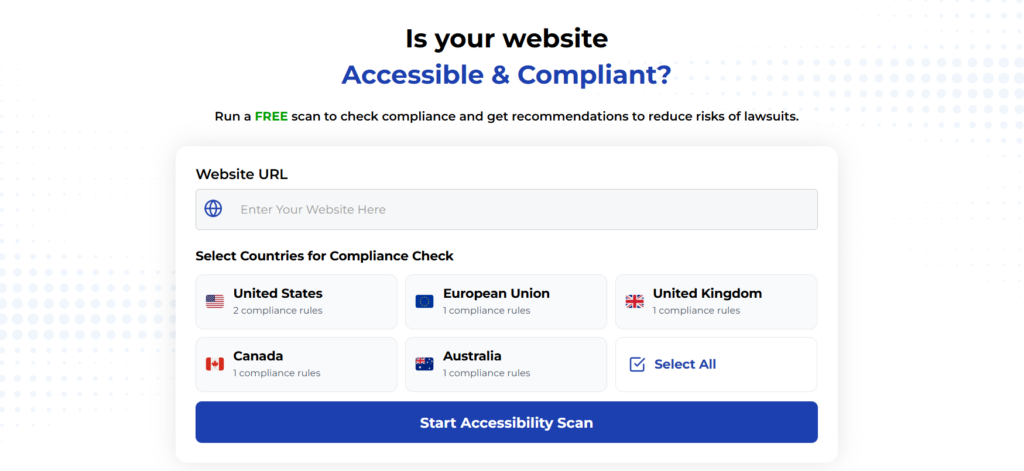
Run a FREE scan to check compliance and get recommendations to reduce risks of lawsuits
Final Thoughts
Have you considered how accessible your website is? Don’t let accessibility issues hold back your search rankings. Run a free scan today to check your website’s performance and get actionable recommendations. Identifying and fixing these problems is the first step toward building a more inclusive and more visible online presence.
Start your compliance journey, update your accessibility statement, and keep EAA top of mind in every project going forward.
Commit to accessibility testing today. The sooner you start, the sooner everyone can benefit from your content and services; no exceptions.
Run a Free Scan to Find E-commerce Accessibility Barriers
Want More Help?
Try our free website accessibility scanner to identify heading structure issues and other accessibility problems on your site. Our tool provides clear recommendations for fixes that can be implemented quickly.
Join our community of developers committed to accessibility. Share your experiences, ask questions, and learn from others who are working to make the web more accessible.