



Adding Accessibility Checks to Your Git Workflow in Under 20 Minutes
Integrating accessibility checks into your development process doesn’t need to be a complex or time-consuming task. With the right tools, you can start catching accessibility issues in your Git workflow in less than 20 minutes. This article will walk you through setting up Pa11y CI and AccessLint. Two lightweight tools designed to provide immediate feedback on your code. By adding these tools to your workflow, you can prevent accessibility regressions and help your team build more inclusive products without the overhead of heavy, complicated systems.
These tools are designed to fit seamlessly into the existing development process, they offer actionable feedback directly within pull requests. This approach helps create a culture of accessibility by making it a natural part of everyday work. Instead of feeling like a burden, accessibility becomes a shared responsibility. With developers receiving the information they need to fix issues before they ever reach production. This not only saves time and resources but also leads to a better user experience for everyone.
Why Lightweight Tools Work Better for Developer Adoption
When it comes to getting development teams on board with accessibility. The path of least resistance is often the most effective. Complex, cumbersome tools can create friction and lead to frustration. While lightweight solutions that integrate smoothly into existing workflows are more likely to be embraced. The key is to make accessibility testing a seamless and almost invisible part of the development cycle.
Minimal Setup Friction Means Better Compliance
The easier a tool is to set up, the more likely it is to be used. Pa11y CI and AccessLint are designed with this principle in mind. Pa11y CI can be run from the command line, and AccessLint integrates directly with GitHub. Making the initial setup a breeze. This low barrier to entry means that teams can start getting valuable feedback almost immediately, without having to invest a lot of time in configuration and training.
When accessibility checks are just another automated step in the CI/CD pipeline. Compliance becomes a natural part of the workflow rather than an extra task to be managed. This helps to build momentum and encourages developers to take ownership of accessibility. By removing the friction often associated with new tools. You can foster a more positive and proactive approach to building accessible products.
Focused Coverage vs. Overwhelming Noise
One of the biggest complaints about automated accessibility tools is the sheer volume of notifications they can generate. When developers are inundated with a long list of issues, many of which may be false positives or low-priority. It’s easy for them to become overwhelmed and start ignoring the results. This “notification fatigue” can undermine the effectiveness of any testing strategy.
Lightweight tools like AccessLint and Pa11y CI are designed to provide focused, actionable feedback. AccessLint, for example, comments directly on pull requests with specific information about the code that has been changed. This ensures that the feedback is relevant and timely. Pa11y CI can be configured to report on specific WCAG standards and to ignore issues that are not critical. Which helps to reduce noise and allows developers to concentrate on what matters most.
Pa11y CI Configuration for Real Projects
Pa11y CI is a powerful command-line tool that allows you to automate accessibility testing for your website. It’s designed to be used in a continuous integration environment. But it’s also a great tool for running local checks before you commit your code. By integrating Pa11y CI into your workflow, you can get a quick and accurate assessment of your site’s accessibility.
Installation and Basic Configuration Steps
Getting started with Pa11y CI is a straightforward process. You’ll need to have Node.js and npm installed on your system. Once you have those prerequisites, you can install Pa11y CI as a development dependency in your project. This allows you to run it as part of your local development and testing process.
After installation, you’ll need to create a configuration file, usually named .pa11yci, in the root of your project. This file is where you’ll specify which pages you want to test and the rules you want to apply. You can configure Pa11y CI to test a list of specific URLs. Or you can point it to a sitemap to test your entire site. This flexibility allows you to target the most important pages and features of your application. A basic configuration file might also specify the WCAG standard you want to test against. Such as WCAG 2.1 AA, and the format for the output, such as an HTML report that can be easily shared with your team.
Setting Thresholds That Don’t Block Valid Changes
One of the challenges of automated testing is finding the right balance between catching critical issues and avoiding unnecessary disruptions to the development process. Pa11y CI allows you to set thresholds for the number of errors, warnings, and notices that are considered acceptable. This means you can configure the tool to fail a build only when a certain number of critical errors are found, while still reporting on less severe issues.
This feature is particularly useful for teams that are new to accessibility testing. You can start with a more lenient threshold and gradually tighten the rules as your team becomes more proficient at identifying and fixing accessibility issues. This approach allows the tool to serve as a helpful guide rather than a gatekeeper. Which can lead to better adoption and a more positive attitude toward accessibility. You can also configure Pa1y CI to ignore certain rules that may not be relevant to your project, which helps to further reduce noise and focus on the issues that have the biggest impact on your users.
AccessLint GitHub Integration
AccessLint is a specialized tool that integrates directly into your GitHub workflow. It automatically reviews pull requests for accessibility issues and provides immediate feedback by leaving comments on the specific lines of code where problems are found. This approach makes it incredibly easy for developers to see, understand, and fix accessibility issues before they are merged into the main codebase.
Adding Automated PR Comments That Help
The real power of AccessLint lies in its ability to provide immediate and contextual feedback. As soon as a developer opens a pull request, AccessLint scans the changes and highlights any new accessibility issues. The comments it leaves are specific and often include links to further documentation, which helps developers not only to fix the problem but also to understand the underlying accessibility principles. This is an excellent way to catch common issues like missing alt text for images, improper use of ARIA attributes, or unlabeled form fields.
Because the feedback connects directly to the code changes, developers are more likely to address it promptly. It’s not a separate report they can easily overlook or forget; it’s an integral part of the code review process. This creates a sense of accountability and helps to make accessibility a shared responsibility among the entire development team.
Reducing Comment Noise While Keeping Value
A good CI tool should provide valuable information without becoming a source of distraction. The AccessLint team has refined the tool over time to reduce the amount of “noise” it generates in pull requests. It focuses on the most critical issues and avoids flagging items that are likely false positives. This helps developers to trust the feedback they receive and to focus their attention on the issues that have a real impact on users.
You can also configure AccessLint to some extent, allowing you to tailor its feedback to the specific needs of your project. The goal is to find a balance where the tool is providing useful insights without overwhelming the team with too many notifications. When developers are confident that the feedback they receive is both accurate and important, they are much more likely to engage with it in a meaningful way.
Teaching Accessibility Through PR Feedback
One of the most significant benefits of integrating accessibility testing into your pull request process is the opportunity it provides for continuous learning and skill development. It’s a practical, hands-on way to improve your team’s understanding of accessibility.
How Comments Can Level Up Team Knowledge
When a tool like AccessLint leaves a comment on a pull request, it’s doing more than just flagging an error; it’s creating a valuable teaching moment. The developer who wrote the code receives immediate, contextual feedback about an accessibility issue they might not have been aware of. This is often more effective than a formal training session because it’s directly related to the work they are doing at that moment.
Over time, as developers encounter and fix these issues, their knowledge and understanding of accessibility grow. They begin to internalize the principles and start to write more accessible code from the outset. This organic learning process can be a powerful way to build a strong culture of accessibility within a development team, leading to a more inclusive product and a more skilled and aware team.
Balancing Automation with Human Review
While automated tools are excellent for catching a wide range of common accessibility problems, they are not a complete solution. There are many nuances to accessibility that still require human judgment and evaluation. Automated tools can check for the presence of alt text, for example, but they can’t tell you if the alt text is meaningful and descriptive.
Using Automated Tools for Quick Insights (Accessibility-Test.org Scanner)
Automated testing tools provide a fast way to identify many common accessibility issues. They can quickly scan your website and point out problems that might be difficult for people with disabilities to overcome.
Visit Our Tools Comparison Page!
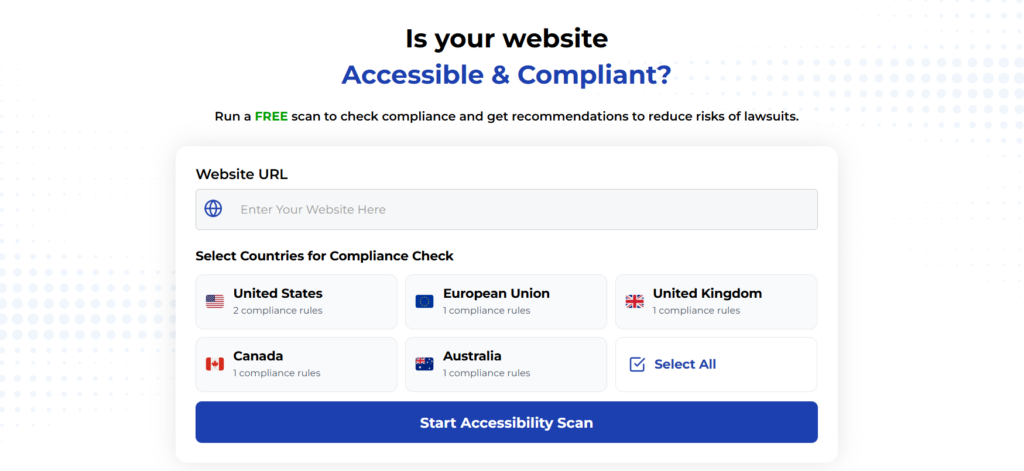
Run a FREE scan to check compliance and get recommendations to reduce risks of lawsuits
Final Thoughts
The feedback from automated tools should be considered a starting point for a more thorough accessibility review. It’s still essential to have a human review of new features, especially those with complex interactions. A combination of automated checks and manual testing is the most effective way to ensure that your website or application is truly usable by everyone. The goal is to use automation to handle the low-hanging fruit, which frees up human reviewers to focus on the more complex and subjective aspects of accessibility.
Ready to see where your own site stands? Start by running a check with our free website accessibility scanner to get a quick snapshot of your most pressing issues.
Start your compliance journey, update your accessibility statement, and keep EAA top of mind in every project going forward.
Run a Free Scan to Find E-commerce Accessibility Barriers
Want More Help?
Try our free website accessibility scanner to identify heading structure issues and other accessibility problems on your site. Our tool provides clear recommendations for fixes that can be implemented quickly.
Join our community of developers committed to accessibility. Share your experiences, ask questions, and learn from others who are working to make the web more accessible.