



Widget Solutions for Website Accessibility: What Really Works?
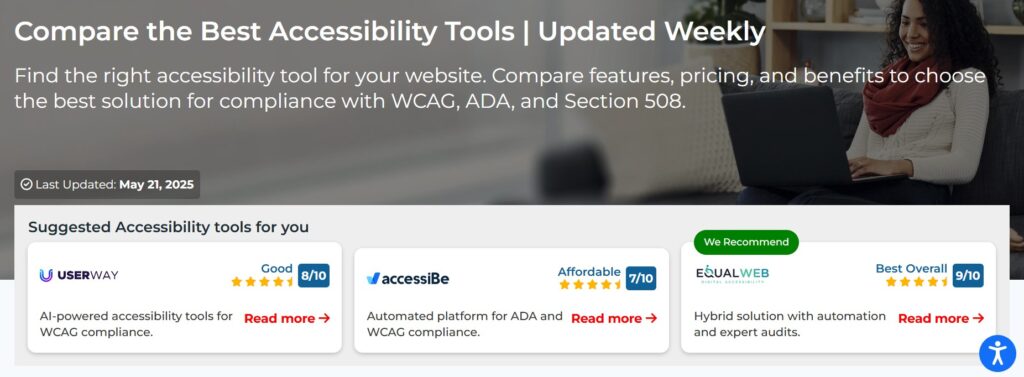
For any business with a digital presence, making your website accessible to people with disabilities isn’t just a good idea; it’s a necessity. It opens your doors to a wider audience and is increasingly a legal expectation. In the search for a quick fix, many website owners turn to accessibility widgets or overlays. Companies like UserWay, AccessiBe, and EqualWeb promise fast, automated solutions to meet compliance standards. Like the Web Content Accessibility Guidelines (WCAG).
But do these one-click solutions deliver on their promises? This article pulls back the curtain on accessibility widgets. We’ll look at how they work, compare the specific offerings of the three major players. Also discuss when a widget might be a helpful tool versus when it provides a false sense of security. Making your site usable for everyone is a serious goal. And you need to know if these tools are the right fit for the job.
How Accessibility Widgets Actually Function
At its core, an accessibility widget is a piece of code, usually JavaScript, that you add to your website. Once installed, it places an icon on your site, typically in the corner. When a visitor clicks this icon, it opens a menu of options designed to change the site’s appearance and behavior on their specific browser. The idea is to let users adjust the presentation of the page to better suit their needs.
These tools are often called “overlays” because they run on top of your existing website code without changing the source code itself. They apply a temporary layer of fixes and adjustments. The promise is simple: add one line of code and your website instantly becomes more usable for people with disabilities. Helping you meet legal standards. However, the reality of how these tools interact with a site’s structure is much more layered.
Real-Time Adjustments vs. Structural Template Fixes
Widgets excel at making real-time, cosmetic adjustments. A user can open the menu and choose to increase the font size. Change color contrast to a high-contrast mode, or stop animations from playing. Some widgets can add a focus ring around clickable elements to help users who navigate with a keyboard. These changes happen instantly for that user during their visit.
However, these are surface-level fixes. They don’t address deep, structural problems in your website’s code. For example, if your website’s forms are missing proper labels for screen readers, a widget might try to guess and add a label. But it can’t fix a confusing multi-page checkout process or illogical navigation flow. True accessibility is baked into the website’s foundation. The HTML structure, ARIA attributes, and how elements are coded to work with assistive technologies. Overlays apply a temporary patch on the front end, but the underlying structural issues remain unchanged.
User Controls That Help vs. Distract
The control panels offered by widgets present a mixed bag of utility. For some users, the ability to quickly get rid of a distracting background video or switch to a more readable font is genuinely helpful. These features can provide a degree of comfort and usability that the original site design lacked. For instance, a person with low vision might find an instant text-size adjuster to be a significant aid.
On the other hand, many disability advocates and users with disabilities find these menus to be more of a distraction. Some assistive technology users already have tools on their computers or browsers to manage these settings globally across the internet. A screen reader user, for example, already has software that reads the content. They don’t necessarily need another text-to-speech function from a widget. Furthermore, a cluttered menu with dozens of options can be overwhelming and create more problems than it solves. A phenomenon sometimes referred to as “accessibility theater.” The controls can give the appearance of action without offering meaningful, functional assistance to those who need it most.
UserWay Features and Pricing Breakdown
UserWay is one of the most visible players in the accessibility widget market. Offering a range of products from a free widget to more managed solutions. Their approach is based on a combination of AI-powered automation and options for human involvement, positioning themselves as a flexible choice for businesses of different sizes. Their widget is designed to scan a website and apply fixes for common issues. Like missing alt text and improper form labels.
The company’s offerings are tiered, allowing customers to choose a level of service that matches their budget and compliance needs. This flexibility is a key part of their market appeal. As it provides an entry point for those just beginning to address their site’s accessibility.
Widget Capabilities and Customization Options
UserWay’s widget offers a suite of more than 100 features that users can control. These include standard adjustments like contrast and text size modifications. But also more advanced options like a screen reader, dyslexia-friendly fonts, and tools to highlight links and headings. The widget itself can be customized to match a website’s branding, with options to change the color, size, and position of the accessibility icon.
For website owners, the AI-powered component of the widget works in the background. It scans the site’s code to identify accessibility gaps. For example, it attempts to write alternative text for images by analyzing the image content and adds labels to form fields that are missing them. These automated remediations are the core of the product’s value proposition, promising to handle many WCAG requirements without manual coding.
Hybrid Plans with Human Audit Components
Recognizing the limits of pure automation, UserWay also offers “hybrid” plans. These plans combine the automated widget with services performed by human accessibility experts. For example, a business can purchase a package that includes a professional accessibility audit conducted by the UserWay team. This audit provides a detailed report of issues that the widget cannot fix. Such as problems with site navigation logic or complex interactive elements.
These higher-tier plans also come with services like accessibility training for staff. And legal support programs to assist businesses facing demand letters or litigation. This hybrid model is an admission that widgets alone are not a complete solution. By pairing automation with human expertise, UserWay aims to offer a more thorough path toward making a website truly usable for all visitors and defending against legal challenges.
AccessiBe Approach: AI Automation and Monitoring
AccessiBe has marketed itself aggressively as an AI-powered, fully automated solution for website accessibility. Their core claim is that their technology can make a website compliant with WCAG 2.1 AA standards within 48 hours with minimal human intervention. This promise of a fast, hands-off fix has been very appealing to small businesses and organizations looking for a simple answer to a complex problem.
The company’s platform is built on two main components: an accessibility interface for user-facing adjustments and an AI-powered background process for screen-reader + keyboard navigation fixes. AccessiBe’s messaging leans heavily on the power of machine learning to solve accessibility issues. Issues that have traditionally required manual work from developers and auditors.
Machine Learning Claims vs. Real-World Results
AccessiBe claims its AI uses contextual understanding and computer vision to scan a website and fix accessibility issues. For screen readers, it’s designed to add ARIA attributes and descriptive alt text for images. For keyboard navigation, it aims to fix broken links and ensure all interactive elements are reachable using the tab key.
However, these claims have been met with significant skepticism from the accessibility community. Many experts and users with disabilities report that the automated fixes often fall short. For instance, AI-generated alt text can be comically wrong or lack the context a human would provide. A screen reader user might hear “image of a person smiling” instead of “a doctor reassuring a patient,” losing the image’s intended meaning. Similarly, automatically applied roles and attributes can sometimes conflict with a user’s own assistive technology, making the site less usable than it was before the widget was installed. Multiple sources argue that the technology is not yet advanced enough to understand the nuance of human language and context required for genuine accessibility.
Legal Risk Mitigation Features
A major part of AccessiBe’s pitch to businesses is the reduction of legal risk. The company suggests that by installing their tool, a business demonstrates a commitment to accessibility and can better defend itself against accessibility-related lawsuits. They offer litigation support packages and highlight their “Accessibility Statement” feature, which documents the remediations applied to the site.
Despite these assurances, there have been instances of companies being sued for accessibility violations even while using an overlay widget. Legal experts point out that true compliance is not about having a widget, but about ensuring the website is actually usable for people with disabilities. Since overlays can fail to fix underlying code issues and may even introduce new bugs, relying on them as a legal shield is a risky strategy. The presence of a widget does not guarantee that a site meets the legal requirements set forth by laws like the Americans with Disabilities Act (ADA).
EqualWeb’s Full-Service Model
EqualWeb takes a different tack compared to its competitors, positioning itself as a full-service accessibility partner rather than just a widget provider. While they do offer an automated accessibility widget with a free plan, their emphasis is on a hybrid model that deeply integrates human expertise into the process from the start. Their goal is to offer a solution that covers not just automated scans but also manual auditing, remediation, and ongoing support.
This approach acknowledges the inherent limitations of AI and automation in the accessibility space. EqualWeb’s sales and marketing materials often highlight their team of accessibility experts, programmers, and designers who work alongside the technology. They aim to provide a solution that is tailored to the specific needs of a website, rather than a one-size-fits-all overlay.
Human Expert Integration with Widget Technology
The centerpiece of EqualWeb’s model is the partnership between their automated tools and their human team. A typical engagement starts with their widget performing an initial scan to catch low-hanging fruit; the common, easily identifiable accessibility errors. The widget itself offers over 30 functions, including text readers, color adjustments, and keyboard navigation helpers, which can be customized by the website owner.
However, this is just the first step. EqualWeb’s experts then perform a manual audit of the website to identify the more complex issues that an automated scanner would miss. These can include problems with user flow, the accessibility of custom-built interactive components, or the logical structure of the content. Their team then works with the client’s developers to fix these issues in the source code, ensuring a permanent and more reliable solution. This blend of machine efficiency and human intelligence is designed to provide a much deeper level of remediation.
Compliance Documentation and Reporting
A key deliverable in EqualWeb’s service is its detailed compliance documentation. After the manual audit and remediation process, clients receive a formal Accessibility Statement and a Certificate of Performance. This documentation serves as evidence of the work that has been done to make the site accessible. It outlines the specific standards that have been met (e.g., WCAG 2.1 AA) and details the findings from both automated and manual tests.
This level of reporting is particularly important for businesses in regulated industries or those bidding for government contracts, where proof of compliance is often a requirement. By providing thorough documentation, EqualWeb helps organizations demonstrate their due diligence and commitment to accessibility, which can be a factor in procurement and in mitigating legal risks. The reporting goes beyond a simple dashboard, offering a formal record of the accessibility status of the site.
CWhen Widgets Help (and When They Don’t)
Accessibility widgets are not a universally good or bad solution; their usefulness depends heavily on the context in which they are used. For a small business or a non-profit with a very limited budget and no technical staff, a free or low-cost widget can be a starting point. It can fix some basic issues and provide user-facing controls that offer a marginal improvement in usability. For example, allowing a user to stop a distracting carousel or increase font size is a clear, if small, benefit.
However, these tools become problematic when they are seen as a final, complete solution. Over-reliance on a widget can create a dangerous sense of false security, leading a business to believe its site is fully accessible and legally compliant when it is not. The presence of a widget does not absolve a website owner of the responsibility to ensure their digital property is truly usable by everyone.
Overlay Limitations for Template and Flow Issues
The most significant weakness of overlay widgets is their inability to fix fundamental issues baked into a website’s template and user flow. An overlay can’t redesign a confusing navigation menu that sends users in circles. It cannot simplify a multi-step form that is difficult for anyone to complete, let alone someone using assistive technology. If a website has a video player without an option for captions, a widget cannot create those captions.
These core experience problems require manual intervention; a developer needs to rewrite the code, a designer needs to rethink the user journey, and a content creator needs to provide accessible media. Overlays can only apply patches to the surface. They cannot rebuild the foundation. For dynamic, application-like websites, such as online banking portals or e-commerce stores with complex filtering options, widgets are particularly ineffective because they cannot handle the intricate, state-dependent interactions involved.
ULegal and Procurement Considerations
From a legal standpoint, the use of accessibility widgets is a contentious issue. As mentioned, numerous companies have faced lawsuits under the ADA even while using an overlay tool. The Department of Justice (DOJ) and courts have consistently focused on whether a website is actually accessible, not on whether it has a particular piece of software installed. Relying on a widget as your sole accessibility strategy is unlikely to hold up as a strong defense in court.
In the context of procurement, especially for government contracts or B2B services, the presence of an overlay can be a red flag. Many large organizations and government agencies have sophisticated accessibility requirements. They often require a Voluntary Product Accessibility Template (VPAT) and evidence of thorough manual testing. They understand the limitations of widgets and may view a supplier’s reliance on them as a sign of an immature accessibility program. For these reasons, choosing an accessibility solution requires thinking beyond the marketing claims and considering the real-world expectations of both users and the law.
Making an Informed Decision
Choosing the right path for your website’s accessibility requires careful thought. If you are considering an accessibility widget, ask yourself a few key questions. What are my specific goals? Am I looking for a temporary stopgap while I work on deeper fixes, or am I searching for a comprehensive, long-term solution?
Evaluate your own resources. Do you have a development team that can implement manual fixes? What is your budget? For some, a hybrid approach that combines a widget with professional audits, like those offered by UserWay or EqualWeb, might strike the right balance. For others, investing directly in accessibility training for their team and manual remediation might be a more effective long-term strategy. The key is to see accessibility not as a technical problem to be solved with a single tool, but as an ongoing practice of inclusive design.
Using Automated Tools for Quick Insights (Accessibility-Test.org Scanner)
Automated testing tools provide a fast way to identify many common accessibility issues. They can quickly scan your website and point out problems that might be difficult for people with disabilities to overcome.
Visit Our Tools Comparison Page!
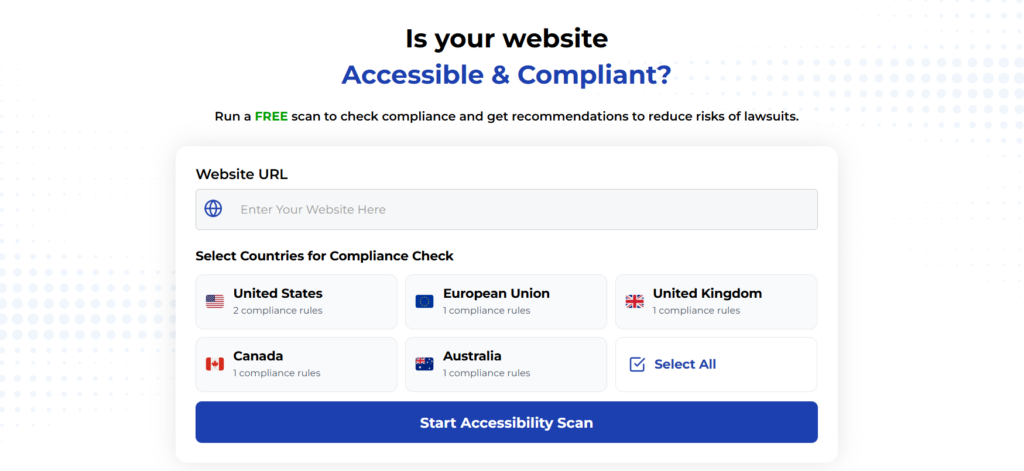
Run a FREE scan to check compliance and get recommendations to reduce risks of lawsuits
Final Thoughts
Have you considered how accessible your forms are? Or how a person using only a keyboard navigates your site? Answering these questions honestly will guide you toward a more meaningful and effective accessibility strategy than any single widget can offer. The best solution is one that prioritizes the real-world experience of users with disabilities over the simple promise of automated compliance. Explore our other articles to learn more about manual accessibility testing and building an inclusive web from the ground up.
Ready to see where your own site stands? Start by running a check with our free website accessibility scanner to get a quick snapshot of your most pressing issues.
Start your compliance journey, update your accessibility statement, and keep EAA top of mind in every project going forward.
Run a Free Scan to Find E-commerce Accessibility Barriers
Want More Help?
Try our free website accessibility scanner to identify heading structure issues and other accessibility problems on your site. Our tool provides clear recommendations for fixes that can be implemented quickly.
Join our community of developers committed to accessibility. Share your experiences, ask questions, and learn from others who are working to make the web more accessible.