



AI Captions and Audio Descriptions in 2025
Video is central to how we communicate, learn, and sell online. But is everyone in your audience getting the full picture? For years, making videos accessible to people with disabilities was a manual, time-consuming, and often expensive process. That’s changing fast. In 2025, artificial intelligence is no longer just a buzzword; it’s a practical tool that is reshaping how we create captions and audio descriptions, making video content open to all.
This shift isn’t just about technology. It’s happening alongside new legal standards and a growing understanding of the business benefits of an inclusive mindset. From Web Content Accessibility Guidelines (WCAG) 2.2 setting clear rules to search engines rewarding accessible content, the message is clear: video accessibility is no longer optional. This article breaks down the changes in AI technology, the legal requirements you need to know, and the practical steps you can take to make your video content accessible.
Video Accessibility Changes in 2025
The approach to video accessibility is seeing a major shift in 2025. It’s a mix of tougher legal standards, smarter technology, and a clearer view of the return on investment. Businesses are no longer asking if they should make videos accessible, but how to do it efficiently. The convergence of these factors means that accessibility is becoming a standard part of video production, not an afterthought.
WCAG 2.2 Video Requirements
The Web Content Accessibility Guidelines (WCAG) are the benchmark for digital accessibility, and the latest version, WCAG 2.2, provides specific rules for multimedia. These guidelines are not just suggestions; they are internationally recognized standards that form the basis of many accessibility laws. They require features like captions for prerecorded and live videos, as well as audio descriptions for visual content. Meeting these standards is the most direct way to make your videos compliant and available to everyone.
The 21% SEO Boost from Video Accessibility
Making videos accessible isn’t just about compliance; it’s also a smart move for search engine optimization (SEO). Studies have shown that adding accessibility features to videos can increase search traffic by up to 21%. Some reports even indicate that sites with high accessibility standards see an average organic traffic increase of 37%.
How does this work? Search engines like Google can’t “watch” a video to understand its content. They rely on text. When you provide a transcript or captions, you give search engines a keyword-rich text file to crawl and index. This makes your video understandable to them, helping it rank for a much wider array of search queries and boosting its visibility.
Legal Requirements for Video Content
The legal pressure to make digital content accessible has grown stronger. In Europe, the European Accessibility Act (EAA) sets a firm deadline of June 28, 2025, for many businesses to ensure their digital services, including video content, are accessible. This law applies to any company serving customers within the EU, regardless of where the business is based. Non-compliance can lead to significant fines and other penalties.
In the United States, laws like the Americans with Disabilities Act (ADA) and Section 508 have been interpreted by courts to apply to digital content, with WCAG often cited as the standard for compliance. These legal frameworks make video accessibility a matter of risk management as much as it is about inclusion.
AI-Powered Caption Generation: Tools and Accuracy
AI-driven captions are created using Automatic Speech Recognition (ASR), a technology that has improved dramatically. While manual captioning remains the gold standard for quality, AI tools now offer a fast and affordable way to make video content accessible from the start.
Automatic Speech Recognition Improvements
Modern ASR systems can achieve over 90% accuracy in ideal conditions, meaning clear audio with a single speaker. Platforms in 2025 use advanced neural networks that analyze contextual cues, not just sounds, to make better predictions about words. However, real-world accuracy can vary. Factors like background noise, accents, fast speech, and technical jargon can still cause errors. Because of this, even the best AI-generated captions should be reviewed and edited by a human to catch mistakes.
Multi-Language Caption Support
AI is breaking down language barriers. Many captioning tools now offer support for multiple languages, allowing content creators to reach a global audience. For instance, some AI tools can translate captions into dozens of languages, helping to make content accessible across different regions. Services like SendShort support 48 languages, while Captionfy supports over 80. This capability is particularly useful for educational institutions and international businesses.
Audio Description Technology Evolution
Audio description (AD) provides a narrated explanation of a video’s key visual elements, such as actions, settings, or on-screen text. It’s for viewers who are blind or have low vision. For a long time, producing AD was a specialized and costly process, but AI is starting to change that.
AI-Generated Audio Descriptions
The process for creating AI-powered audio descriptions involves several steps. First, an AI system analyzes the video to identify objects, actions, and scene changes. Next, it generates a written script describing this visual information. Finally, it uses text-to-speech technology to turn that script into a spoken voice track. This audio is then integrated into the video’s natural pauses in dialogue. New research projects are even creating large datasets to train AI models specifically for generating descriptions tailored to the needs of blind and low-vision users.
Voice Synthesis Quality Improvements
One of the biggest advances has been in the quality of synthetic voices. Early text-to-speech systems sounded robotic and were unpleasant to listen to for long periods. Modern neural voice synthesis uses deep learning to create voices that are much more natural and human-like. These systems can even mimic different tones and emotional nuances, making the audio descriptions far less distracting and more engaging for the listener.
Integration with Existing Video Platforms
Getting audio descriptions to users requires support from video players. While you can upload a second version of a video with the AD track permanently included, the best practice is to provide it as an optional track that users can turn on or off. Major platforms like YouTube and Vimeo have been slower to adopt AD compared to captions, but support is growing. Accessible video players must have controls that are operable by keyboard and screen readers, ensuring that users can actually access and enable the features you provide.
WCAG 2.2 Video Compliance Requirements Deep Dive
For any organization serious about accessibility, understanding the specific WCAG 2.2 success criteria for video is a must. These rules are divided into three levels of conformance: A (basic), AA (intermediate), and AAA (advanced). Most laws and standards point to Level AA as the target.
Success Criterion 1.2.1 through 1.2.5 Breakdown
Here is a simple breakdown of the core video accessibility requirements in WCAG:
- 1.2.1 Audio-only and Video-only (Prerecorded) (Level A): For audio-only content like a podcast, you must provide a text transcript. For video-only content (like a silent animation), you must provide a text alternative or an audio description.
- 1.2.2 Captions (Prerecorded) (Level A): All prerecorded videos with audio must have synchronized captions. This is a baseline requirement for accessibility.
- 1.2.3 Audio Description or Media Alternative (Prerecorded) (Level A): To meet this Level A criterion, you must provide either an audio description or a full text alternative that includes all dialogue and descriptions of important visual information.
- 1.2.4 Captions (Live) (Level AA): To meet Level AA, all live video content that has audio must include captions. This applies to webinars, live-streamed events, and broadcasts.
- 1.2.5 Audio Description (Prerecorded) (Level AA): At Level AA, the choice offered in 1.2.3 is removed. You must provide an audio description for all prerecorded video content. This makes AD a key feature for meeting modern accessibility standards.
Implementation Timelines and Exceptions
Laws like the European Accessibility Act set deadlines for compliance, but they don’t always require organizations to go back and fix every piece of old content immediately. Typically, any new content published after the deadline must be compliant from day one. This makes it important to build accessibility into your video production workflow now, so you’re not scrambling to catch up later.
Video Accessibility Tool Comparison and Integration
A variety of tools are available to help you implement video accessibility features, from free built-in options to professional third-party services.
Platform-Specific Solutions (YouTube, Vimeo, etc.)
Most major video hosting platforms offer free tools to help with accessibility.
- YouTube provides free automatic captioning in many languages. Its caption editor is straightforward, allowing you to correct errors and adjust timing easily.
- Vimeo also offers auto-captioning on its paid plans, along with an editor for making corrections.
These tools are an excellent starting point, but their output should always be reviewed by a human for accuracy.
Third-Party Caption and Description Services
For organizations that produce a large volume of video or need guaranteed accuracy, professional services are a great option.
- Rev offers both AI-powered and human-generated captioning services. While the AI option is faster and cheaper, the human service provides near-perfect accuracy.
- AutoCut is another tool that stands out for its automated captioning features designed to simplify the editing process.
These services can save your team a lot of time and ensure a high-quality, compliant result.
DIY Tools and Software Solutions
If you prefer to have more control over the captioning process, there are free software applications available. Tools like Subtitle Edit and Aegisub are powerful desktop editors that allow you to create, edit, and time captions from scratch. These are great options for detailed work but do require more of a time investment.
Quality Control: Testing Video Accessibility Features
Creating captions and audio descriptions is only half the battle. You also need to test them to make sure they work correctly and are helpful to users.
Manual Testing Procedures
Manual testing is the most reliable way to check the quality of your video accessibility features. This involves:
- Watching the video with captions enabled to check for accuracy, synchronization, and inclusion of non-speech sounds.
- Listening to the audio description to ensure it accurately describes the visual content without interfering with existing dialogue.
- Testing the video player itself. Can you play, pause, and control the volume using only a keyboard? Do the caption and audio description controls work with a screen reader ?
Automated Video Accessibility Scanning
Automated tools can’t tell you if your captions are accurate or if your audio description makes sense. However, they can perform quick checks to see if accessibility features are present. For example, an automated scanner can verify that a video has an associated caption track and that the video player follows accessibility best practices. These scans are a good first step, but they should always be followed by manual testing.
Business Impact: ROI of Video Accessibility Investment
Investing in video accessibility delivers returns that go far beyond just meeting legal requirements. The business case for accessibility is stronger than ever in 2025.
- Expanded Market Reach: Accessible videos can be understood by a wider audience. This includes people with disabilities, but also individuals in noisy environments, those watching with the sound off (85% of millennials on mobile ), and non-native speakers who benefit from reading captions.
- Improved SEO: As mentioned, accessible videos can lead to a significant boost in organic traffic, with some studies showing increases of 21% to 37%. The text from transcripts and captions makes your content more discoverable by search engines.
- Enhanced Brand Image: Committing to accessibility shows that your organization values inclusion. This can strengthen your brand reputation and build loyalty among customers who care about corporate social responsibility.
- Reduced Legal Risk: Proactively making your video content accessible is the best way to avoid costly lawsuits and fines related to non-compliance with laws like the EAA and ADA.
Implementation Roadmap: From Basic Captions to Full Compliance
Getting started with video accessibility doesn’t have to be overwhelming. You can begin with small steps and build toward full compliance over time. Here is a simple roadmap:
- Start with Auto-Captions: For all new videos you upload, use the free automatic captioning tools on platforms like YouTube. Take the extra 15 minutes to review and edit them for accuracy. This is the single most impactful first step you can take.
- Publish Transcripts: Once you have an accurate caption file, copy the text and post it on the same page as your video. This is a simple action that provides immediate SEO benefits and an alternative for users.
- Plan for Audio Descriptions: Identify your most important, visually rich videos. Begin creating audio descriptions for them to work toward WCAG 2.2 Level AA compliance. You can start with a script and use AI voice synthesis tools to generate the audio.
- Address Live Video: If your organization hosts live events, research a real-time captioning solution. Test out some AI-powered tools or budget for a professional CART service for high-stakes broadcasts.
- Audit and Prioritize: Take a look at your existing video library. Identify your most popular or important videos and create a plan to add accessibility features to them first.
Making your content accessible is a journey, not a destination. Start by running a free scan on Accessibility-Test.org to see where your website stands and to identify immediate opportunities for improvement.
Real-Time Caption Generation Tools
Live events like webinars and streams require real-time captioning to be accessible. The traditional method for this is Communication Access Real-time Translation (CART), where a human stenographer transcribes the audio live. While highly accurate, CART services can be costly.
Today, AI-powered real-time captioning tools offer a more scalable alternative. Platforms like Utell AI and Clevercast use AI to generate live captions with minimal delay. While they may not match the accuracy of a human CART provider, especially with complex audio, the technology is improving quickly and making live content more accessible than ever before.
Using Automated Tools for Quick Insights (Accessibility-Test.org Scanner)
Automated testing tools provide a fast way to identify many common accessibility issues. They can quickly scan your website and point out problems that might be difficult for people with disabilities to overcome.
Visit Our Tools Comparison Page!
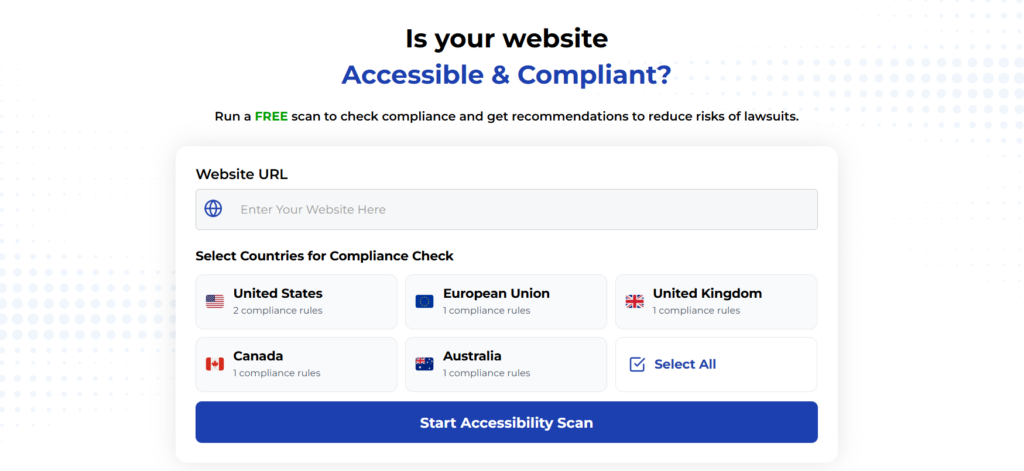
Run a FREE scan to check compliance and get recommendations to reduce risks of lawsuits
Final Thoughts
Ready to take the first step? Start your journey today by using a free website accessibility scanner to identify immediate opportunities for improvement on your site.
Run a Free Scan to Find E-commerce Accessibility Barriers
Want More Help?
Try our free website accessibility scanner to identify heading structure issues and other accessibility problems on your site. Our tool provides clear recommendations for fixes that can be implemented quickly.
Join our community of developers committed to accessibility. Share your experiences, ask questions, and learn from others who are working to make the web more accessible.