



European Accessibility Act 2025
Why the EAA Matters for Digital Accessibility in Europe
The European Accessibility Act (EAA) is about to change the digital experience for millions across Europe. If you run a business that serves customers in the EU, you can’t afford to ignore this law. By June 28, 2025, many products and services—especially digital ones—must meet strict accessibility requirements. This isn’t just another regulation; it’s a push for equal access, and it has teeth. Non-compliance can mean fines, legal trouble, and a damaged reputation. But let’s be honest: most business owners and developers don’t know where to start. So, what does the EAA actually require, and how can you make sure your business is ready?
Who Must Comply | Sectors, Business Sizes, and Cross-Border Reach
Which Businesses Fall Under the EAA?
The EAA casts a wide net. It applies to both public and private sector organizations that offer products or services in the EU market, regardless of where the business is based. If you sell to European consumers, you’re likely on the hook.
Covered Sectors:
- E-commerce platforms
- Banking and financial services
- Ticketing and transport services
- Telecommunication providers
- E-books and related software
- ATMs, payment terminals, and self-service kiosks
Does Size Matter?
Small businesses (microenterprises with fewer than 10 employees and annual turnover under €2 million) may be exempt from some requirements. But don’t breathe easy just yet—many small online shops, SaaS providers, and app developers still need to comply if their products reach EU consumers.
Cross-Border Implications
The EAA doesn’t care where your headquarters are. If your digital products or services are available in the EU, you must meet these standards. This means US-based, UK-based, or any non-EU business selling in Europe faces the same rules.
Quick Check:
- Do you sell digital products or services in the EU?
- Does your website or app serve European users?
- Are you in banking, e-commerce, transport, or telecom?
If you answered yes, keep reading.
Key EAA Requirements
WCAG Alignment
The EAA uses the Web Content Accessibility Guidelines (WCAG) as its technical baseline. Most digital services must meet at least WCAG 2.1 Level AA, though some countries may require WCAG 2.2 soon. This means your website, app, or digital kiosk must be usable by people with various disabilities—including those who use screen readers, keyboard navigation, or need high-contrast text.
Core WCAG Requirements:
- Text alternatives for images (alt text)
- Keyboard accessibility for all interactive elements
- Clear and logical heading structure
- Sufficient color contrast
- Captions for videos and transcripts for audio
Accessibility Statements
You must publish an accessibility statement on your website or app. This isn’t just a checkbox—your statement needs to outline:
- Which parts of your service are accessible
- Any known accessibility issues
- Contact details for users to report problems or request alternatives
Ongoing Monitoring
Accessibility isn’t a one-off project. The EAA expects businesses to monitor their digital products regularly. This means:
- Running periodic accessibility audits
- Fixing new barriers as they arise
- Keeping your accessibility statement up to date
Tip: Use both automated accessibility testing tools and manual checks with real users to catch issues that robots might miss.
Compliance Timeline: What Needs Attention Before June 28, 2025
Countdown to the Deadline
The EAA’s requirements come into force on June 28, 2025. That might sound far away, but making your digital products accessible can take months—sometimes longer, depending on your starting point.
Key Milestones:
- Now: Assess your current level of accessibility. Identify gaps.
- Next 3-6 Months: Start remediation—fix the most critical barriers first.
- 6-12 Months Before Deadline: Conduct a full accessibility audit. Train your team.
- 3 Months Before Deadline: Publish your accessibility statement. Double-check compliance.
- After June 28, 2025: Monitor, update, and respond to user feedback.
What If You Miss the Deadline?
Don’t wait until the last minute. The EAA allows users and advocacy groups to report non-compliance right away. Regulators can investigate as soon as the law takes effect.
Penalties for Non-Compliance – Fines, Legal Risks, and Brand Reputation
What Happens If You Ignore the EAA?
The risks go beyond a slap on the wrist. Each EU country enforces the EAA, but penalties can include:
- Fines (sometimes hefty, depending on the country and severity)
- Orders to fix accessibility barriers within a set timeframe
- Public naming and shaming by regulators
Legal Risks
Users and advocacy groups can file complaints. In some cases, you might face lawsuits or class actions. Legal costs can quickly outstrip the price of fixing your website or app.
Brand Reputation
Accessibility isn’t just a legal issue—it’s a trust issue. News of non-compliance can spread fast, especially on social media. Customers with disabilities, their families, and allies will notice. You might lose contracts, especially with public sector clients who need to prove their own compliance.
Ask yourself: Would you rather invest in accessibility now, or deal with a public relations crisis later?
Practical Steps to Prepare | Internal Audits, Team Training, Accessibility Testing Tools
Step 1: Run an Accessibility Audit
Start with a thorough review of your digital products. Use both automated accessibility testing tools and manual testing. Automated tools can catch obvious errors, but only manual checks will spot issues like poor alt text or confusing navigation.
Popular Accessibility Testing Tools:
- Axe
- WAVE
- Accessibility Checker (check out our own tool at Accessibility-Test.org)
Step 2: Train Your Team
Accessibility isn’t just the web developer’s job. Designers, content creators, and project managers all need to understand the basics. Hold workshops, bring in outside trainers, or use online courses.
Training Topics:
- WCAG requirements
- Creating accessible documents and PDFs
- Writing clear and descriptive link text
- Testing with screen readers
Step 3: Fix Barriers and Document Progress
Prioritize the most severe issues first—like missing alt text or keyboard traps. Document each fix, and update your accessibility statement as you go.
Step 4: Set Up Ongoing Monitoring
Accessibility isn’t “one and done.” Schedule regular audits, and encourage users to report barriers. Make it easy for them to contact you.
Actionable Checklist:
- Monitor and update regularly
- Audit your website and apps
- Train your staff
- Fix critical issues
- Publish an accessibility statement
Real-World Examples | How European Companies Are Adapting
Case Study 1: E-Commerce Platform
A mid-sized online retailer in Germany realized their checkout process wasn’t keyboard accessible. After running an accessibility audit, they found several barriers: missing form labels, poor color contrast, and inaccessible error messages. By fixing these issues, not only did they meet EAA requirements, but they also saw a drop in abandoned carts from users with disabilities.
Case Study 2: Banking App
A Spanish bank faced complaints from blind users who couldn’t use their mobile app. The bank brought in accessibility consultants, trained their development team, and started testing each release with screen readers. The result? Increased customer satisfaction and positive press coverage.
Case Study 3: Transport Provider
A French railway company updated its ticketing kiosks and website. They added voice guidance, tactile buttons, and ensured their digital content met WCAG standards. Complaints about accessibility dropped, and the company secured a contract with a major public sector client.
What’s the takeaway?
Companies that invest in accessibility don’t just avoid fines—they win new customers and contracts.
EAA and WCAG | How They Connect
The EAA isn’t just about ticking boxes. It’s about making sure everyone can use your digital products, regardless of ability. WCAG (Web Content Accessibility Guidelines) provides the technical details, but the EAA gives them legal force in Europe.
Key WCAG Principles:
- Perceivable: Information must be presented in ways users can perceive (e.g., alt text for images)
- Operable: All functionality must be available from a keyboard
- Understandable: Content must be clear and predictable
- Robust: Content must work with current and future assistive technologies
If you’re new to WCAG, start with the basics. Fix the most common issues first; like missing alt text, poor color contrast, and inaccessible forms. Then go deeper as your team’s skills grow.
Accessibility Statements | More Than a Legal Requirement
Your accessibility statement is your public promise. It tells users what they can expect and how to get help if they need it.
What to Include:
- A summary of your accessibility efforts
- Details about which parts of your site or app are accessible (and which aren’t)
- Contact information for feedback or alternative formats
- Date of the last update
Example Statement Snippet:
“We strive to make our website accessible to everyone. If you encounter a barrier, please contact us at accessibility@yourcompany.com. We aim to respond within two business days.”
Accessibility Testing Tools – Your Secret Weapon
Automated tools can scan your site in minutes and flag common issues. But don’t stop there; manual testing with real users is essential.
Popular Tools:
- Axe: Browser extension for quick checks
- WAVE: Visual feedback on accessibility errors
- Accessibility Checker: Our own tool at Accessibility-Test.org
Manual Testing Tips:
- Try navigating your site with only a keyboard
- Use a screen reader (NVDA or VoiceOver) to check for missing information
- Ask users with disabilities to test your site and give feedback
Internal Audits: How to Start
An internal audit doesn’t have to be overwhelming. Start small:
- Pick a few key pages (homepage, checkout, contact)
- Run automated scans
- Check for missing alt text, poor color contrast, and keyboard traps
- Document what you find and prioritize fixes
Pro Tip:
Make auditing a regular habit, not a one-off event.
Team Training | Building Accessibility Skills
You don’t need to turn everyone into a WCAG expert overnight. But everyone should know the basics.
- Designers should understand color contrast and font choices
- Developers need to know about semantic HTML and ARIA roles
- Content creators should write clear headings and descriptive links
Training Ideas:
- Lunch-and-learn sessions
- Online courses (many are free)
- Bringing in a guest speaker with lived experience
Ongoing Monitoring: Staying Compliant
Accessibility isn’t static. New content, updates, or features can break things.
- Schedule quarterly audits
- Encourage user feedback
- Update your accessibility statement regularly
Remember:
Accessibility is a journey, not a destination. Each step brings you closer to serving every customer.
Penalties and Legal Risks – What’s at Stake?
Ignoring the EAA isn’t just risky; it can get expensive.
- Fines vary by country, but can reach tens of thousands of euros
- Legal action from users or advocacy groups
- Public reports that can harm your brand
Real-World Example:
A large retailer in the Netherlands faced a €25,000 fine after users reported an inaccessible checkout process. The company also lost a major contract with a government agency that required EAA compliance.
Why Accessibility Is Good for Business
Let’s be real; accessibility isn’t just about avoiding fines.
- You reach more customers (1 in 5 people have a disability)
- You improve SEO (search engines reward accessible sites)
- You build trust with all users
Did You Know?
A WebAIM study found that accessible websites rank higher in search results and have lower bounce rates.
Common Accessibility Barriers (And How to Fix Them)
- Missing alt text: Add descriptions to all images.
- Poor color contrast: Use tools to check contrast ratios.
- Keyboard traps: Make sure all interactive elements work with a keyboard.
- Inaccessible forms: Label every field and provide clear error messages.
- Videos without captions: Add captions and transcripts.
Quick Fix Table:
| Barrier | Quick Fix |
| Missing alt text | Write short, descriptive alt text |
| Low color contrast | Adjust colors for better contrast |
| Keyboard traps | Test all features with a keyboard |
| Inaccessible forms | Add labels and error messages |
| No video captions | Provide captions and transcripts |
Frequently Asked Questions
Do I need to comply if my business is outside the EU?
Yes, if you sell digital products or services in the EU.
What if I only have a small website?
Microenterprises may be exempt, but most small businesses still need to comply.
How do I know if I’m compliant?
Run an accessibility audit, fix issues, and keep your accessibility statement up to date.
Using Automated Tools for Quick Insights (Accessibility-Test.org Scanner)
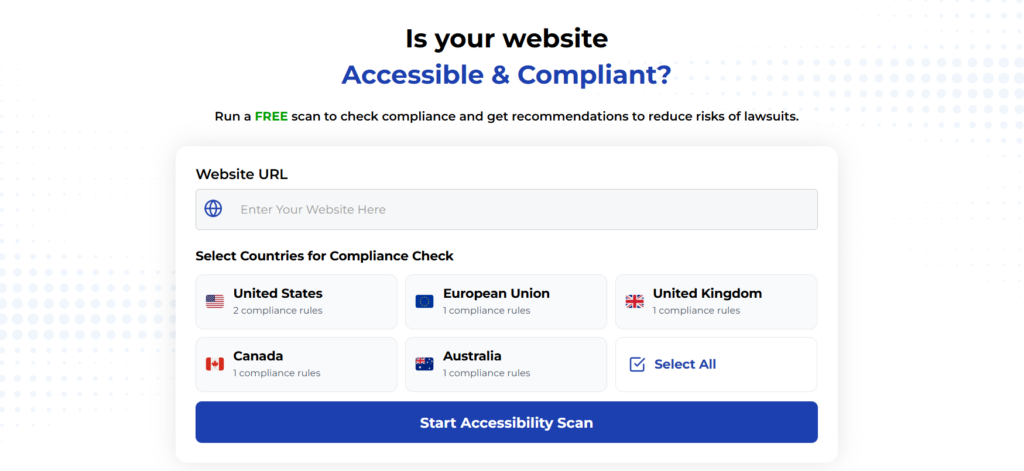
Automated testing tools provide a fast way to identify many common accessibility issues. They can quickly scan your website and point out problems that might be difficult for people with disabilities to overcome.
Visit Our Tools Comparison Page!
Run a FREE scan to check compliance and get recommendations to reduce risks of lawsuits
Final Thoughts
Don’t wait until the deadline is breathing down your neck. Start your EAA compliance check today with Accessibility-Test.org.
- Use our free accessibility checker to spot barriers
- Download our EAA compliance checklist
- Book a consultation with our experts
Ready to make your website accessible to everyone?
Start your compliance check now.Have you thought about how accessible your digital products really are? The EAA isn’t just another regulation; it’s a chance to serve every customer, boost your brand, and stay ahead of the curve. Take the first step today and join the movement for a more accessible Europe.
Want More Help?
Try our free website accessibility scanner to identify heading structure issues and other accessibility problems on your site. Our tool provides clear recommendations for fixes that can be implemented quickly.
Join our community of developers committed to accessibility. Share your experiences, ask questions, and learn from others who are working to make the web more accessible.