



Creating an Accessible Remote Workplace
Remote work is now a permanent part of how many businesses operate, and it brings with it both opportunities and challenges. For employees with disabilities, a thoughtfully designed digital workplace can mean the difference between inclusion and exclusion. Building an accessible remote environment isn’t just about meeting compliance standards; it’s about making sure every team member can do their best work, regardless of ability. This takes careful planning, the right tools, and an ongoing commitment to creating a welcoming space.
Accessible Video Conferencing | Connecting Everyone in Virtual Meetings
Video calls are often the heart of remote teamwork. To make sure these interactions are open to all, think about both the tools you use and the habits you build.
First, choose video conferencing platforms with accessibility at their core. Look for features like live, accurate captioning that can be turned on or off easily. Some platforms offer real-time transcription, which is a big help for people who are deaf or hard of hearing, or those who simply prefer to read along. Can users navigate the meeting controls—like muting, sharing screens, or raising a hand—using only a keyboard, without a mouse? This is important for folks who use assistive technology like screen readers or rely on keyboard navigation.
Next, consider your team’s practices during meetings. Encourage everyone to speak clearly and at a moderate pace. If someone is sharing visuals, like slides or a whiteboard, remind them to describe what’s on the screen. For example, instead of just saying, “As you can see here,” they might say, “On this slide, you’ll see a chart showing our quarterly sales growth.” This helps those who can’t see the screen or have low vision. Using the chat function for questions or quick comments can allow more participation, especially for people who might find it hard to jump into a spoken conversation. Also, ask people to mute their microphones when they aren’t speaking. This reduces background noise, which can be distracting and even painful for people with auditory sensitivities or those using hearing aids.
What happens after the meeting? Offer recordings with captions or transcripts. This way, if someone couldn’t attend because of a scheduling conflict, a disability-related appointment, or even just internet issues, they won’t miss out. Some teams find it helpful to assign a “notetaker” to capture key decisions and action items, sharing these notes with everyone afterward. This extra step helps reinforce information for people with cognitive disabilities or those who process information better by reading it. Have you ever joined a video call where you couldn’t quite hear what was being said, or struggled to find the mute button? Small adjustments can make these experiences much smoother for everyone.
Practical Tip: Before your next all-hands meeting, do a quick “accessibility check” of your video platform. Try navigating it with just your keyboard. Turn on captions and see how accurate they are. Could you follow along if you couldn’t see the screen? These quick checks can reveal areas for improvement.
Document Accessibility | Clear Information for Every Remote Teammate
In a remote setting, documents are your primary way to share information, from company policies to project plans. If these documents aren’t accessible, they can become barriers.
Start with the basics: clean, organized writing. Use clear headings (like Heading 1, Heading 2) to structure your content. This isn’t just for looks; screen readers use these headings to help users skim and jump through a document. Imagine trying to read a long report without any titles or subheadings—it’d be a wall of text. The same applies to screen reader users who rely on well-structured headings to understand the document’s flow.
Use simple, straightforward language. Avoid overly complex sentences or jargon where possible. If you must use technical terms, explain them the first time they appear. Keep paragraphs short, ideally no more than four or five sentences. This makes text easier to read for everyone, especially those with cognitive disabilities or reading difficulties. Lists (bullet points or numbered lists) are your friends; they break up text and make information scannable.
Color contrast is also key. Make sure your text stands out enough from the background. For example, light gray text on a white background can be very hard to read for people with low vision or certain color perception differences. Tools are available online that can help you check if your color combinations meet recommended standards.
Perhaps one of the most important aspects is alternative text for images. Anytime you include a picture, chart, or graphic, you need to provide a text description that conveys the meaning or purpose of that visual. A screen reader can then “read” this description aloud to someone who can’t see the image. Don’t just label it “image”; describe what it shows and why it’s there. If a chart shows “Q3 sales increase by 15%,” the alt text should say something similar.
Finally, think about the format you use. While PDFs can be convenient, they often create accessibility problems if not made properly. Always aim to produce “tagged PDFs” that retain the structure and accessibility features of the original document. Better yet, share documents in their original accessible formats, like a well-structured Word document or a Google Doc, which are generally more flexible for assistive technologies. Would someone using a screen reader be able to understand your latest project brief? If not, what small changes could make it easier?
Practical Tip: When creating a new document, build accessibility in from the start. Don’t wait until the end to add alt text or check headings. Using your word processor’s built-in accessibility checker can also catch many common issues early on.
Communication Strategies for Digital Workspaces
Effective communication is crucial for any team, but especially for remote ones. When part of your team has disabilities, your communication approach needs to be even more thoughtful.
First, prioritize clarity and directness. Use plain language in emails, chat messages, and shared documents. Avoid slang or idioms that might not be understood by everyone, especially if you have a diverse international team or team members with certain cognitive disabilities. Break down complex information into smaller, digestible chunks.
Offer multiple channels for communication. Some people process information better by reading, others by listening, and some prefer visual cues. So, while a video call might work for some, always follow up with written summaries. If you use a team chat tool, ensure it’s accessible. Some chat platforms have accessibility features that you can turn on, like high contrast modes or keyboard shortcuts.
Be mindful of response times and expectations. Not everyone can respond instantly, and pressuring quick replies can create stress. Set clear expectations for when responses are needed. This is particularly important for people with certain disabilities who might need more time to process information or formulate a response.
Encourage a culture where it’s okay to ask for clarification. If someone doesn’t understand something, they should feel comfortable speaking up without fear of judgment. As a team leader or colleague, be ready to rephrase, provide examples, or offer different ways of explaining information. Think about how you communicate important updates. Do you rely solely on a quick chat message, or do you also send a more detailed email? Offering different formats helps ensure everyone gets the message.
Practical Tip: Before hitting send on an important message, read it aloud to yourself. Does it flow well? Is it easy to understand? This simple trick can help you spot unclear wording or overly complicated sentences.
Assistive Technology Support for Remote Employees
Many people with disabilities rely on assistive technology (AT) to do their jobs. This can include screen readers, speech-to-text software, magnifiers, alternative input devices, and more. For remote teams, providing robust support for these tools is vital.
Start by making sure your company’s core software and platforms are compatible with commonly used assistive technologies. This means testing them out. Don’t just assume a tool is accessible; try using it with a screen reader like NVDA or JAWS, or a speech recognition program like Dragon NaturallySpeaking. This kind of testing helps uncover real-world problems before they impact an employee.
Beyond compatibility, think about providing direct support. When a new employee who uses AT joins your team, connect them with IT or an accessibility specialist who can help set up their tools and troubleshoot any issues. Offer training resources, and be ready to provide individualized support. For example, an employee might need specific settings adjusted on their screen reader to work with your project management software.
Recognize that flexibility is often needed when it comes to AT. Some employees might need a specific type of keyboard or a larger monitor. Others might need to use their own personal AT devices if company-provided ones aren’t suitable. Be open to these requests and find ways to accommodate them.
Also, create a clear channel for employees to report accessibility issues they encounter with software or systems. When a problem is reported, act on it quickly. Nothing is more frustrating than a barrier that prevents someone from doing their job, especially when they rely on AT. Have you ever tried to work with a program that just didn’t “click” with your usual way of doing things? That’s how it can feel when AT doesn’t work well with a system.
Practical Tip: Work with your IT department to create a list of company-approved software and note any known accessibility features or limitations for each. This helps managers and employees make informed choices.
Building Accessibility into Remote Work Policies
Making your remote workplace truly inclusive means baking accessibility into the very structure of your company’s operations. This involves more than just tools; it’s about culture and policy.
Start by writing clear accessibility statements and policies. These documents should outline your company’s commitment to accessibility, explain what employees can expect, and detail how they can request accommodations or report issues. Make these policies easy to find, perhaps on your internal knowledge base.
Offer ongoing training. It’s not enough to just say you support accessibility; you need to educate your team. Provide regular training sessions on topics like creating accessible documents, using inclusive communication, and understanding how different disabilities might impact remote work. This can be short modules, lunch-and-learns, or more in-depth workshops. Remember, everyone plays a part in creating an inclusive environment.
Set up a process for managing accommodation requests. This process should be straightforward, respectful, and confidential. Employees should know who to contact, what information they need to provide, and what the timeline for a decision will be. Having a designated accessibility coordinator or HR contact can help here.
Finally, embed accessibility into your company’s values and performance reviews. When hiring, talk about your commitment to an accessible workplace. When reviewing employee or team performance, consider how well they contribute to an inclusive environment. This shows that accessibility isn’t just a compliance item; it’s a core value. Does your company’s employee handbook mention accessibility? If not, adding it can send a strong message.
Practical Tip: Host a “remote accessibility awareness” month where different team members share personal experiences or useful tips for making remote work more inclusive. This helps build empathy and shared understanding.
Beyond Compliance | Creating a Truly Inclusive Digital Culture
While meeting standards like WCAG and ADA is a good starting point, building a genuinely accessible remote workplace goes deeper. It’s about recognizing that every employee brings unique strengths and needs. It’s about creating a space where everyone feels valued, supported, and able to contribute fully.
Think about how you onboard new remote employees. Is your onboarding process accessible? Are all training materials available in multiple formats? What about team-building activities? Can everyone participate in them, regardless of their abilities or the assistive technology they use? For instance, if you have a virtual team social, make sure the games or activities don’t rely solely on visual cues or quick reflexes.
Encourage an open dialogue. The best way to understand what employees need is to ask them. Create channels for feedback and make it clear that feedback on accessibility is always welcome and will be taken seriously. This might be an anonymous suggestion box, regular check-ins, or dedicated accessibility feedback sessions. Sometimes, the simplest solutions come directly from those who experience the challenges firsthand.
An accessible remote workplace is a dynamic one. Technology changes, and so do the needs of your team members. This means your approach to accessibility should also be ready to change and adapt. Regularly review your tools, policies, and practices. Stay informed about new accessibility features in software you use and new best practices in remote work.
Using Automated Tools for Quick Insights (Accessibility-Test.org Scanner)
Automated testing tools provide a fast way to identify many common accessibility issues. They can quickly scan your website and point out problems that might be difficult for people with disabilities to overcome.
Visit Our Tools Comparison Page!
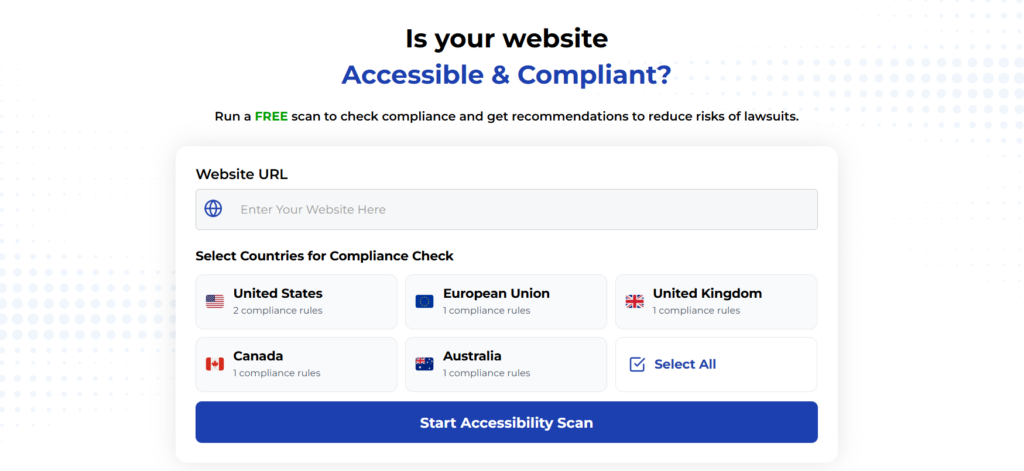
Run a FREE scan to check compliance and get recommendations to reduce risks of lawsuits
Final Thoughts
Building an inclusive remote environment is an ongoing commitment, not a one-time project. It’s about creating a work setting where everyone can do their best, feel like they belong, and contribute to the team’s shared goals. By prioritizing accessibility, your organization not only acts ethically but also taps into a broader pool of talent and benefits from the diverse perspectives that an inclusive team brings.
Start by making one small change this week. Perhaps you’ll review your next shared document for alt text, or you’ll ask about captioning options in your video conferencing tool. Every step, big or small, moves you closer to a remote workplace that truly welcomes all. For more ideas and actionable strategies, explore other resources on Accessibility-Test.org.
Want More Help?
Try our free website accessibility scanner to identify heading structure issues and other accessibility problems on your site. Our tool provides clear recommendations for fixes that can be implemented quickly.
Join our community of developers committed to accessibility. Share your experiences, ask questions, and learn from others who are working to make the web more accessible.