



Healthcare Website Accessibility Compliance
Healthcare websites aren’t just digital brochures anymore—they’re lifelines connecting patients to care . When these platforms fail to meet accessibility standards, they don’t just risk lawsuits; they deny essential services to the 25% of adults living with disabilities . Let’s examine how medical practices and hospitals can create inclusive digital experiences while meeting strict compliance requirements .
Healthcare Accessibility Legal Requirements Overview
The legal requirements for healthcare website accessibility are becoming stricter each year . The Americans with Disabilities Act doesn’t explicitly mention websites, but courts consistently rule that digital properties must provide equal access . In 2020 alone, more than 3,000 digital accessibility lawsuits were filed—a 23% increase from the previous year .
Healthcare organizations face a unique challenge because they must comply with multiple regulations simultaneously . The Department of Health and Human Services issued new Section 504 regulations in May 2024, establishing WCAG 2 .1 Level AA as the standard for digital accessibility . These rules apply to any healthcare provider receiving federal funding, which includes most hospitals and many medical practices .
Section 508 compliance requirements extend beyond basic web accessibility . Government healthcare facilities and federally funded organizations must ensure their entire digital ecosystem meets specific technical standards . This includes patient portals, telehealth platforms, and even emergency communication systems .
The consequences of non-compliance go beyond legal fees . Healthcare organizations that ignore accessibility requirements risk losing patient trust and excluding vulnerable populations from essential services . More importantly, inaccessible healthcare websites contribute to health disparities that can have life-threatening consequences .
Patient Portal Accessibility Implementation
Patient portals serve millions of Americans, but many fail basic accessibility tests . When a portal can’t be navigated with a keyboard or doesn’t work with screen readers, it effectively bars disabled patients from accessing their medical records, appointment scheduling, and test results .
Screen Reader Compatibility Issues
Screen readers depend on properly structured content to function correctly . Patient portals often struggle with this basic requirement because they prioritize visual design over semantic markup . Forms without proper labels become impossible to complete, while dynamic content updates go unannounced to assistive technology users .
A 34-year-old blind patient from Minneapolis shared his experience with an inaccessible patient portal: “I couldn’t even log in because the CAPTCHA had no audio alternative” . These barriers force disabled patients to rely on phone calls or in-person visits, defeating the portal’s purpose of providing convenient access to care .
Healthcare organizations should prioritize label associations for all form fields and ensure dynamic content updates are announced to screen readers . Alternative text for medical images and charts must be descriptive enough to convey the same information available to sighted users .
Mobile Accessibility Challenges
Many patients access portals through smartphones, especially those who lack computer access at home . However, mobile interfaces often present additional accessibility barriers . Touch targets that are too small, inadequate color contrast in bright sunlight, and complex navigation patterns can make portals unusable for people with motor or visual impairments .
The Health IT Playbook recommends ensuring portal pages load quickly for users with limited data connections . This consideration particularly affects patients in rural areas or those with lower incomes who may rely on basic cellular data plans .
Medical Form and Appointment Booking Accessibility
Healthcare forms collect sensitive information that patients need to provide accurately . When these forms aren’t accessible, the consequences extend beyond user frustration to potential medical errors and care delays .
Form Structure and Error Handling
Medical forms often ask for complex information—insurance details, medication lists, symptom descriptions . Patients using screen readers need clear instructions and proper error identification when they make mistakes . Generic error messages like “Please fix the errors below” don’t help users understand what went wrong or how to correct it .
Accessible forms require descriptive labels, logical tab order, and clear error messages that identify specific problems . When a patient enters an invalid insurance ID number, the error message should specify which field needs correction and what format is required .
Appointment Scheduling Systems
Online appointment booking systems present unique accessibility challenges . Calendar interfaces must work with keyboard navigation, and available time slots need clear labels that screen readers can announce . Many systems rely on visual cues like color coding to indicate availability, which doesn’t help users who can’t perceive these differences .
A healthcare portal that streamlined its appointment booking process saw significant improvements in patient satisfaction . By simplifying navigation, improving color contrast, and ensuring mobile compatibility, they reduced phone inquiries and increased online booking rates .
Telehealth Platform Accessibility Considerations
The rapid expansion of telehealth during the pandemic highlighted major accessibility gaps in virtual care platforms . Many telehealth systems weren’t designed with disabled users in mind, creating barriers that prevented equitable access to remote healthcare services .
Video Conference Accessibility
Telehealth platforms must accommodate patients with various disabilities . Deaf and hard-of-hearing patients need closed captioning or sign language interpreter integration . Patients with cognitive disabilities benefit from simplified interfaces and clear instructions for joining virtual appointments .
Screen reader users face particular challenges with video conferencing software that wasn’t designed with accessibility in mind . Platform controls must be keyboard accessible, and important visual information needs alternative text descriptions or audio announcements .
Emergency Communication Systems
Emergency situations require immediate communication access . Traditional 911 systems that only accept voice calls exclude deaf and hard-of-hearing individuals from emergency services . Healthcare facilities must ensure their emergency communication methods work for all patients, including those using assistive technologies .
The European Emergency Number Association reports that 9% of Europe’s population is deaf or hard of hearing . Healthcare organizations need text-based emergency communication options and video calling capabilities for sign language users .
HIPAA Compliance and Accessibility Intersection
HIPAA requirements add complexity to healthcare website accessibility efforts . Patient privacy protections must be maintained while ensuring disabled users can access their health information . This balance requires careful attention to how accessibility features handle sensitive data .
Privacy-Compliant Accessibility Features
Screen reader users need access to their medical information, but this data must remain secure . Accessibility widgets that read content aloud could potentially expose private health information to others nearby . Healthcare websites need privacy controls that let patients choose how their information is presented .
Two-factor authentication systems must accommodate users with various disabilities . Visual verification methods need audio alternatives, while complex authentication processes can create barriers for patients with cognitive disabilities .
Secure Portal Design
Patient portals handle some of the most sensitive personal information imaginable . Accessibility features can’t compromise security, but security measures shouldn’t create accessibility barriers . Session timeouts need adequate warnings for users who might need more time to complete tasks due to their disabilities .
Healthcare organizations must ensure that third-party accessibility tools comply with HIPAA requirements . Any widget or service that processes patient health information needs a Business Associate Agreement and appropriate security safeguards .
Emergency Information Accessibility Requirements
During medical emergencies, accessible information delivery can mean the difference between life and death . Emergency departments, urgent care centers, and hospital websites must present critical information in formats that work for all users .
Crisis Communication Standards
Emergency health information must be available in multiple formats . Text-only announcements exclude deaf users, while audio-only alerts don’t reach those with hearing impairments . Visual emergency alerts need sufficient color contrast and can’t rely solely on color to convey urgency .
Hospital emergency department websites should provide real-time wait times, directions, and preparation instructions in accessible formats . When someone is experiencing a medical emergency, complex navigation or inaccessible content can delay critical care .
Multilingual Accessibility Support
Healthcare organizations serving diverse communities must consider both language translation and accessibility features . Spanish-language content needs the same accessibility standards as English content, and screen readers must properly pronounce medical terminology in multiple languages .
Emergency information in particular requires careful attention to cultural and linguistic accessibility . Health conditions affect different communities disproportionately, and emergency resources must be both linguistically and technologically accessible to serve all patients effectively .
Testing Healthcare Website Accessibility
Regular accessibility testing prevents problems before they affect patients . Healthcare websites require more frequent testing than other sites because of their critical nature and complex functionality .
Automated Testing Limitations
Automated accessibility testing tools can quickly identify many common problems, but they miss context-dependent issues that are particularly important in healthcare settings . A form field might have a proper label, but if the label doesn’t clearly explain what medical information is required, patients can still make errors that affect their care .
Healthcare websites need both automated scanning and manual testing by accessibility experts . User testing with disabled patients provides the most accurate assessment of real-world usability .
Ongoing Monitoring Requirements
Healthcare websites change frequently as organizations add new services, update patient portals, and modify appointment systems . Each change can introduce new accessibility barriers . Regular monitoring helps catch problems before they affect patient care .
The Department of Health and Human Services’ new accessibility requirements include ongoing compliance monitoring . Healthcare organizations can’t simply achieve compliance once and forget about it—they need systems for maintaining accessibility as their websites evolve .
Real-World Healthcare Accessibility Success Stories
Several healthcare organizations have demonstrated that accessible websites benefit all patients, not just those with disabilities . A regional healthcare network that migrated to an accessible content management system saw improved patient satisfaction scores and reduced support calls related to website navigation .
A large healthcare provider improved their website accessibility by upgrading their patient portal technology . The changes resulted in a 28% increase in patient portal registrations and fewer phone calls requesting help with online services . These improvements benefited patients with disabilities while making the system easier for everyone to use .
Cost-Benefit Analysis of Healthcare Accessibility
Investing in website accessibility might seem expensive initially, but healthcare organizations typically see positive returns through improved efficiency and reduced support costs . Accessible websites reduce the number of patient phone calls and in-person visits for tasks that can be completed online .
More importantly, accessible healthcare websites help organizations serve the entire community effectively . The Centers for Disease Control and Prevention reports that up to 1 in 4 adults in the United States have some form of disability—a significant patient population that accessible websites can better serve .
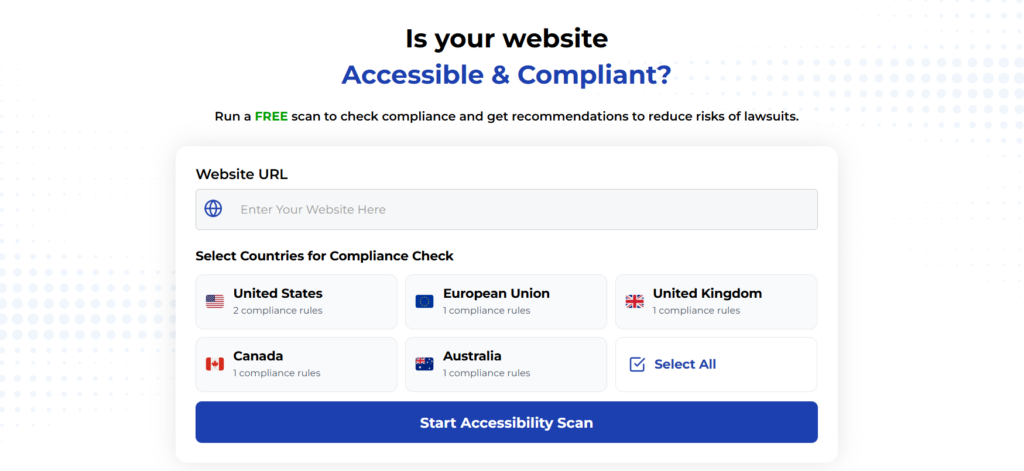
Using Automated Tools for Quick Insights (Accessibility-Test.org Scanner)
Automated testing tools provide a fast way to identify many common accessibility issues. They can quickly scan your website and point out problems that might be difficult for people with disabilities to overcome.
Visit Our Tools Comparison Page!
Run a FREE scan to check compliance and get recommendations to reduce risks of lawsuits
Final Thoughts
Healthcare accessibility isn’t just about avoiding lawsuits or checking compliance boxes . It’s about ensuring that every patient can access the care they need through digital channels . As healthcare continues to digitize, accessibility becomes increasingly important for equitable patient care .
The new HHS regulations taking effect in 2026 will require healthcare organizations to meet WCAG 2 .1 Level AA standards . Organizations that start planning now will have time to make thoughtful improvements rather than rushing to meet deadlines .
Healthcare websites that prioritize accessibility often find that the improvements benefit all users . Clearer forms, better navigation, and improved mobile experiences help everyone access healthcare services more efficiently .
Ready to audit your healthcare website’s accessibility? Start by testing your patient portal with keyboard navigation only—can you complete common tasks without using a mouse? Check whether your appointment booking system provides clear error messages and works with screen readers . These simple tests reveal many common accessibility barriers that could be preventing patients from accessing your services online .
The goal isn’t perfect compliance overnight, but steady progress toward inclusive healthcare experiences that serve your entire community . Every accessibility improvement you make helps ensure that all patients can access the care they need, when they need it .
Want More Help?
Try our free website accessibility scanner to identify heading structure issues and other accessibility problems on your site. Our tool provides clear recommendations for fixes that can be implemented quickly.
Join our community of developers committed to accessibility. Share your experiences, ask questions, and learn from others who are working to make the web more accessible.