



Preparing for the Shift to WCAG 3.0
The world of web accessibility is constantly moving forward. As technology changes, so do the standards that ensure everyone, regardless of ability, can use the web. For years, the Web Content Accessibility Guidelines (WCAG) have been the benchmark for digital inclusion. Now, with WCAG 3.0 on the horizon, it’s time to look ahead and prepare for the next stage of web accessibility.
This new version of WCAG represents a shift in thinking;moving beyond a simple pass/fail checklist to a more nuanced, user-focused approach. Getting ready for WCAG 3.0 isn’t just about future compliance; it’s about building a better, more inclusive web today. For developers, designers, and business owners, understanding these changes is the first step toward creating digital experiences that work for everyone.
WCAG 3.0 Preparation Strategies and Timeline
The upcoming WCAG 3.0 is set to redefine how we measure digital accessibility. Unlike its predecessors, which relied on a strict pass/fail system, WCAG 3.0 will introduce a more flexible scoring model . This change is designed to give organizations a clearer picture of their accessibility, encouraging gradual improvements rather than an all-or-nothing approach .
A New Way of Thinking | Outcomes and Scoring
Instead of just “Success Criteria,” WCAG 3.0 will focus on “Outcomes” . These are plain-language statements about what users with disabilities need to achieve. For instance, an outcome might relate to a user’s ability to easily find information on a page. Each outcome is then rated on a scale from 0 (very poor) to 4 (excellent), allowing for a more detailed assessment of how well a site serves its users .
This new model means a website could reach a certain level of conformance even if it still has some issues to fix, something not possible under the WCAG 2.x framework . The goal is to focus on the practical experience of real people, especially those with cognitive disabilities, who are a major point of emphasis in the new guidelines.
The conformance structure itself is also changing. It will be built on a few core components:
- Foundational Requirements: These will be the essential accessibility practices that all websites must meet for a basic level of conformance, which is expected to be comparable to WCAG 2.2 Level AA .
- Supplemental Requirements and Assertions: To achieve higher levels of accessibility, websites will need to meet additional requirements. The W3C is exploring whether this will be based on a points system, percentages, or predefined sets of rules .
When Is WCAG 3.0 Arriving?
It’s important to know that WCAG 3.0 is still a work in progress. It isn’t expected to be finalized before 2028, and some experts think it might not be released until 2030 . This gives organizations plenty of time to prepare. In the meantime, WCAG 2.2 remains the current, official recommendation, and achieving compliance with it is the best way to get ready for what’s next .
You don’t have to wait for WCAG 3.0 to be published to start preparing. Here are some actionable steps you can take today:
Format Content for People: Simple formatting makes content easier for everyone to read, especially users with cognitive disabilities. Using bolded headlines, breaking text into short paragraphs, and using bulleted lists are good practices that align with the goals of WCAG 3.0 .
Master WCAG 2.2: The principles of WCAG 2.2 are the foundation for WCAG 3.0. By meeting the current guidelines, you’ll be in a great position for the future. Pay close attention to recent updates in WCAG 2.2, such as the minimum touch target size of 44×44 pixels for interactive elements, enhanced focus indicators for keyboard navigation, and clearer error prevention methods to help users with cognitive disabilities .
What You Can Do to Prepare Now
Conduct Regular Audits: Start examining your digital properties now. Use a combination of automated testing tools like Axe and WAVE to catch common issues and perform manual audits to check things like keyboard navigation and screen reader compatibility . A thorough accessibility audit will give you a clear baseline to work from .
Adopt a User-Centered Mindset: The philosophy behind WCAG 3.0 is all about the user. Start shifting your team’s focus from just checking off compliance boxes to thinking about the actual experiences of people with different disabilities . Ask questions like, “Can a screen reader user easily understand this chart?” or “Is this form easy to fill out for someone with a motor impairment?”
Keep Up with Developments: The W3C regularly releases public working drafts of WCAG 3.0. Following these updates and reading through the feedback can give you a better sense of where the guidelines are heading .
Emerging Accessibility Standards and Technologies
While WCAG is a global benchmark, it’s not the only set of rules. Different regions have their own laws, and new technologies are constantly creating new possibilities for accessibility. Staying on top of these trends is part of future-proofing your work.
Laws and Standards You Should Know
Around the world, governments are strengthening their digital accessibility laws. This puts more pressure on businesses to ensure their websites and apps are usable by everyone .
Here are a couple of major ones:
- European Accessibility Act (EAA): The EAA sets a common set of accessibility rules for products and services in the EU. The deadline for compliance is June 2025, by which time companies must align with standards based on WCAG 2.1 AA .
- Americans with Disabilities Act (ADA): In the U.S., the ADA has been increasingly applied to digital spaces. Recent updates to Title II of the act now require state and local government websites and mobile apps to meet WCAG 2.1 AA standards . For businesses, ADA website requirements mean that failing to provide an accessible experience can lead to lawsuits .
Technology Shaping the Future of Access
New technologies are not just creating challenges; they are also offering powerful new tools to make the digital world more inclusive .
Advanced Voice Navigation: Thanks to improvements in Natural Language Processing (NLP), voice-controlled systems are becoming more sophisticated. Users can interact with websites and apps using natural voice commands, providing a much more intuitive experience for people who have difficulty with traditional interfaces .
Artificial Intelligence (AI) and Machine Learning (ML): AI is already making a big impact. It can power automated accessibility testing tools that quickly scan websites to find problems . AI can also create more personalized experiences by adapting a website’s interface based on a user’s needs in real time . Some AI tools can even automatically generate alt text for images or create captions for videos, saving time and improving access for people who use screen readers .
Extended Reality (XR): Virtual reality (VR) and augmented reality (AR) are new frontiers for accessibility. Developers are finding ways to make these immersive experiences accessible, such as using haptic feedback (vibrations) to guide users with visual impairments or adding audio descriptions to help with navigation . XR can offer people with mobility limitations a chance to explore places and have experiences that might otherwise be out of reach .
Internet of Things (IoT): IoT connects everyday devices, creating smart environments that can adapt to a person’s needs. For example, a smart home could automatically adjust lighting, room temperature, or other features based on a user’s preferences, making physical spaces more inclusive .
Future-Proofing Accessibility Implementation Strategies
To keep up with changing standards and technologies, you need a solid strategy. Future-proofing your accessibility work means moving from a reactive approach;fixing problems as they come up;to a proactive one where accessibility is built-in from the start.
Building a Culture of Accessibility
True accessibility isn’t the job of one person; it’s a team effort . Creating a culture where everyone values accessibility is the most effective long-term strategy.
Work with Experts: If you don’t have accessibility skills in-house, consider partnering with accessibility consultants. They can provide expert guidance, conduct thorough evaluations, and help you create a plan that fits your needs .
Educate Your Team: Invest in accessibility training for your entire team, including developers, designers, content writers, and project managers . When everyone understands the “why” behind accessibility, they can contribute to the “how.”
Integrate Accessibility Early: Don’t wait until the end of a project to think about accessibility. It should be a consideration from the very first design mockups and a part of every stage of development. This “shift left” approach saves time and money by preventing costly fixes later on.
Document Everything: Maintain clear records of your accessibility efforts. This can include an official accessibility statement on your website, which shows your commitment to users . If you use third-party tools or services, ask for their Voluntary Product Accessibility Template (VPAT) to understand their level of compliance .
Practical Steps for Strong Implementation
A good culture needs to be supported by good practices. Here’s what that looks like on the ground:
Use Semantic HTML: This is a foundational practice. Using the correct HTML elements for headings, lists, and forms makes your content more understandable for assistive technologies and improves your SEO .
Combine Automated and Manual Testing: Automated tools are great for finding many common accessibility issues quickly. But they can’t catch everything. Manual testing is essential to assess the real user experience. This includes keyboard-only navigation testing, testing with different screen readers, and checking for clear focus indicators .
Test with Real Users: The best way to know if your website is truly accessible is to have people with disabilities use it. User testing provides invaluable feedback that you can’t get any other way . It helps you understand the real-world barriers people face.
Manage Your Vendors: Your website’s accessibility depends on all of its parts, including third-party content and plugins. Make sure your vendor contracts include accessibility requirements, like WCAG 2.1 AA compliance. And don’t just take their word for it;test their components yourself to be sure .
Industry Trend Analysis for Accessibility Evolution
The push for web accessibility is part of a broader movement toward more inclusive design in all areas of life. Looking at these wider trends can give us clues about the future of digital accessibility.
A Deeper Focus on Neurodiversity
There’s a growing recognition that people experience and interact with the world in many different ways. This has led to a greater focus on designing for neurodiversity;accommodating users with cognitive differences like autism, ADHD, and dyslexia . In web design, this can mean using plain language, creating predictable and consistent layouts, and avoiding cognitive overload. For example, features that reduce distractions, like Duolingo’s “Focus Mode,” have been praised for helping neurodivergent users learn more effectively .
Inclusive Design for Everyone
The idea of inclusive design is becoming a core principle in the design world. It’s about creating products that are usable by as many people as possible, without the need for special adaptations. This considers the full range of human diversity, including ability, age, language, and culture . For example, as the global population ages, there’s more attention on designing for seniors. Features like larger fonts, simple navigation, and high-contrast color schemes not only help older users but often result in a better experience for everyone .
Tighter Legal and Regulatory Standards
Unfortunately, a large portion of the internet remains inaccessible. Some studies show that over 95% of web pages have WCAG 2 compliance failures . In response, governments are passing stricter laws and enforcing them more seriously . This legal pressure is a major driver for companies to take accessibility seriously, as non-compliance can lead to expensive lawsuits and damage to a brand’s reputation .
Accessibility Beyond the Website
The conversation is also expanding beyond traditional websites.
Physical and Outdoor Spaces: The principles of accessibility are also being applied to enhance access to parks, trails, and other recreational areas, with a demand for durable, weather-resistant solutions like modular ramps .
Workplace Accessibility: Companies are now focused on creating inclusive workplaces, which includes accessible digital tools for remote and hybrid work environments .
Mobile Accessibility: With so much of our digital life happening on phones, mobile accessibility is a top priority. This is reflected in the updates in WCAG 2.2, which has new criteria specifically for touch-based devices .
Long-Term Accessibility Planning and Strategy Development
Accessibility is not a one-time project; it’s an ongoing commitment. To be successful in the long run, you need a sustainable plan and a clear strategy.
Creating Your Accessibility Program
A formal accessibility program helps turn good intentions into consistent action.
- Get Leadership Support: For any program to succeed, it needs buy-in from the top. When leadership understands the value of accessibility, they are more likely to provide the necessary resources, including time, budget, and staff.
- Establish Clear Goals: Define what you want to achieve with your accessibility program. Are you aiming for WCAG 2.2 AA compliance? Do you want to reduce accessibility-related customer support tickets by a certain percentage? Clear, measurable goals will help you track your progress.
- Budget for Success: Be realistic about the costs. Your budget should account for training, testing tools, potential consultant fees, and the staff time needed for remediation and ongoing maintenance.
- Build a Roadmap: You can’t fix everything at once. Start by conducting an accessibility audit to understand where you are now . Use the results to create a roadmap, prioritizing fixes for the most critical issues and the most high-traffic areas of your site first.
A Continuous Process
Your accessibility plan should be integrated into your normal business operations.
Think Holistically: Your accessibility efforts shouldn’t stop at your website. Consider all your digital touchpoints, including mobile apps, PDFs and other documents, social media, and internal tools. A truly inclusive experience is consistent everywhere a customer interacts with your brand.
Integrate into Your Workflow: Make accessibility a standard part of your design and development lifecycle. Create checklists and add accessibility reviews to your quality assurance process.
Monitor and Report: Accessibility can break over time as new content and features are added. Set up a process for ongoing accessibility monitoring to catch new issues as they appear . Regularly report on your progress to stakeholders to maintain momentum.
Using Automated Tools for Quick Insights (Accessibility-Test.org Scanner)
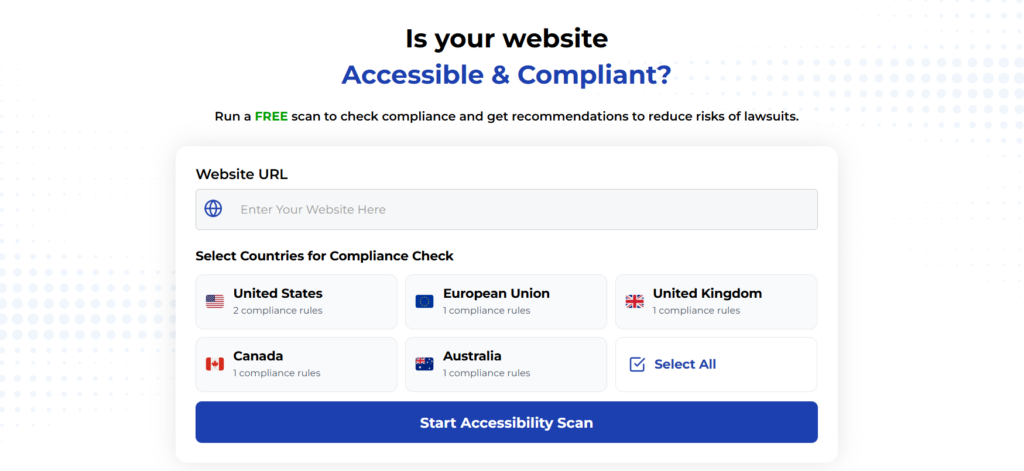
Automated testing tools provide a fast way to identify many common accessibility issues. They can quickly scan your website and point out problems that might be difficult for people with disabilities to overcome.
Visit Our Tools Comparison Page!
Run a FREE scan to check compliance and get recommendations to reduce risks of lawsuits
Final Thoughts
The road to a more accessible web is a journey, not a destination. While WCAG 3.0 may still be a few years away, the work you do today to embrace the principles of WCAG 2.2 and adopt a user-first mindset will set you up for success. By combining a strong internal culture with practical testing and implementation strategies, you can create digital experiences that are not only compliant but truly welcoming to all.
Ready to see where your website stands? An accessibility audit is the perfect first step to understanding your current performance and identifying the best opportunities for improvement. Get started today to build a more inclusive digital future for everyone.
Want More Help?
Try our free website accessibility scanner to identify heading structure issues and other accessibility problems on your site. Our tool provides clear recommendations for fixes that can be implemented quickly.
Join our community of developers committed to accessibility. Share your experiences, ask questions, and learn from others who are working to make the web more accessible.