



What Your Business Faces for Non-Compliance in 2025
The European business world changed dramatically when the European Accessibility Act (EAA) came into force in 2025. Companies across the EU now face real financial consequences for websites and digital services that don’t meet accessibility standards. These aren’t just theoretical penalties anymore enforcement agencies actively monitor compliance and issue substantial fines to businesses that fail to make their digital properties accessible to users with disabilities.
Many business owners still don’t realize how serious these penalties have become. The EAA doesn’t just suggest accessibility improvements; it mandates them with teeth. Countries across Europe have established their own enforcement mechanisms, and the financial penalties vary dramatically from nation to nation. Some impose fixed fines, while others calculate penalties based on annual turnover, making non-compliance potentially devastating for larger organizations.
The stakes extend far beyond monetary penalties. Companies face reputational damage, exclusion from lucrative public contracts, and potential civil lawsuits from users who can’t access their services. Smart businesses are already taking proactive steps to address these risks before enforcement agencies come knocking.
The European Legal Framework for Digital Accessibility
The European Accessibility Act creates binding obligations for businesses operating digital services within the EU. Unlike previous voluntary accessibility recommendations, the EAA carries legal weight backed by national enforcement authorities in each member state. The Act covers e-commerce platforms, banking services, audiovisual media services, and electronic communication services; essentially any business with a significant digital presence.
Each EU country has established its own enforcement body responsible for monitoring compliance and issuing penalties. These agencies don’t wait for complaints to start investigating. They actively scan websites, test mobile applications, and evaluate digital services for accessibility barriers. When they find violations, they move quickly to issue penalties and demand corrective action.
The enforcement approach varies significantly between countries. Some focus on education and gradual compliance, giving businesses time to address issues before imposing fines. Others take a more aggressive stance, issuing penalties immediately upon discovering violations. This inconsistency makes it challenging for businesses operating across multiple EU markets to predict their risk exposure.
Germany – Leading Europe in Accessibility Enforcement
German authorities take accessibility violations seriously, with fines reaching up to €500,000 for serious breaches of the EAA. The Federal Office for Information Security (BSI) leads enforcement efforts, working closely with state-level authorities to monitor compliance across different sectors.
German enforcement focuses heavily on e-commerce platforms and financial services. The authorities conduct regular audits of major online retailers, checking everything from keyboard navigation to screen reader compatibility. When they find violations, they don’t hesitate to impose substantial penalties. Recent cases have seen online retailers fined €150,000 for inadequate alt text on product images and €200,000 for forms that screen readers couldn’t properly interpret.
The German approach emphasizes repeat offenses. Companies that receive initial warnings but fail to address accessibility issues within the specified timeframe face escalating penalties. This creates strong incentives for businesses to take accessibility seriously from the start rather than treating initial violations as minor compliance issues.
Italy – Percentage-Based Penalties That Scale With Business Size
Italian accessibility enforcement takes a different approach, calculating penalties as a percentage of annual turnover rather than fixed amounts. The Italian Communications Authority (AGCOM) can impose fines up to 5% of a company’s annual revenue for serious accessibility violations. This percentage-based system means larger companies face proportionally higher penalties.
For a major e-commerce platform with €100 million in annual revenue, a 5% penalty would result in a €5 million fine; far exceeding the fixed penalties imposed in other EU countries. This approach reflects Italy’s belief that accessibility penalties should hurt enough to change corporate behavior, regardless of company size.
Italian authorities focus particularly on banking and financial services websites. They’ve issued several high-profile penalties to banks whose online platforms failed to meet accessibility standards. One major Italian bank faced a €2.3 million fine for accessibility violations that prevented customers with visual impairments from accessing their online banking services.
Belgium – Structured Penalties for Different Violation Types
Belgium has established a tiered penalty system that varies based on the type and severity of accessibility violations. The Belgian Institute for Postal Services and Telecommunications (BIPT) can impose fines ranging from €25,000 for minor violations to €150,000 for serious breaches that completely prevent access for users with disabilities.
Belgian enforcement distinguishes between technical violations and access-blocking violations. Technical issues like missing ARIA labels or improper heading structures typically result in lower fines, while problems that completely prevent users from accessing services face maximum penalties. This nuanced approach encourages businesses to prioritize the most impactful accessibility improvements.
The Belgian system also includes escalating penalties for repeat violations. Companies that fail to address accessibility issues within 90 days of receiving initial notices face doubled penalties. This creates strong incentives for quick remediation while giving businesses reasonable time to implement necessary changes.
France – Comprehensive Monitoring Across All Sectors
Country’s accessibility enforcement operates through the General Directorate for Enterprise (DGE), which monitors compliance across all sectors covered by the EAA. French penalties can reach €25,000 for individual violations, but authorities often issue multiple penalties for different accessibility issues on the same website or application.
French enforcement takes a particularly detailed approach to accessibility auditing. They evaluate websites against specific WCAG 2.1 success criteria and issue separate penalties for each category of violation. A single website might face penalties for color contrast issues, keyboard navigation problems, and missing alternative text; resulting in cumulative fines that can exceed €100,000.
The French system emphasizes public transparency. They publish detailed reports of accessibility violations and penalties on government websites, creating additional reputational pressure for non-compliant businesses. This public naming approach has proven effective in encouraging voluntary compliance among businesses that want to avoid negative publicity.
Netherlands – Focus on User Impact and Business Responsibility
Dutch accessibility enforcement prioritizes violations that have the greatest impact on users with disabilities. The Netherlands Authority for Consumers and Markets (ACM) evaluates penalties based on how severely accessibility barriers affect real users rather than just technical compliance metrics.
Dutch authorities regularly consult with disability advocacy groups to understand which accessibility issues cause the most significant problems for users. They then prioritize enforcement actions against businesses whose violations create the greatest barriers to access. This user-centered approach means that businesses can’t simply focus on technical compliance; they need to consider the actual user experience for people with disabilities.
Dutch penalties typically range from €10,000 to €100,000, but authorities can impose additional daily fines for ongoing violations. This creates strong incentives for rapid remediation once violations are identified. The daily fine structure means that businesses can’t simply budget for one-time penalties and continue operating non-compliant services.
Case Studies | Real Companies Facing Real Consequences
Several high-profile cases demonstrate how accessibility penalties affect real businesses across Europe. A major German online retailer faced €300,000 in fines after disability rights advocates filed complaints about their checkout process. The website’s payment forms couldn’t be completed using only keyboard navigation, effectively excluding users who can’t use a mouse.
An Italian telecommunications company received a €1.8 million penalty for accessibility violations across their customer service portal. The fine represented 2.1% of their annual revenue, demonstrating how percentage-based penalties can create substantial financial impact. The company had to redesign their entire customer interface and implement ongoing accessibility monitoring to avoid future violations.
A French streaming service faced €45,000 in penalties for multiple accessibility violations, including inadequate video captions and navigation issues that prevented screen reader users from browsing content. The cumulative nature of French penalties meant that what started as minor technical issues resulted in substantial financial consequences.
Beyond Financial Penalties – The Hidden Costs of Non-Compliance
Accessibility penalties represent just the tip of the iceberg for non-compliant businesses. Companies face significant additional costs that often exceed the direct financial penalties imposed by enforcement authorities.
Reputational damage can be particularly devastating in today’s social media environment. News of accessibility violations spreads quickly through disability advocacy networks and mainstream media. Companies that receive accessibility penalties often face boycotts, negative reviews, and social media campaigns that can damage their brand for years.
Public sector contracts represent another major risk area. Many EU countries now require accessibility compliance as a prerequisite for government contracts. Companies with accessibility violations on their record find themselves excluded from lucrative public sector opportunities, representing millions in lost revenue potential.
Legal costs also mount quickly when accessibility violations lead to civil lawsuits. While the EAA primarily focuses on regulatory penalties, it also strengthens the legal position of individuals who face discrimination due to inaccessible digital services. Companies often spend more on legal defense than they would have spent on proactive accessibility improvements.
Risk Assessment | Identifying Your Vulnerability
Smart businesses conduct regular accessibility risk assessments to identify potential violation areas before enforcement authorities discover them. This proactive approach helps companies prioritize their accessibility investments and avoid surprise penalties.
Start by evaluating your most critical user journeys. Can users complete your primary business processes using only keyboard navigation? Do your forms work properly with screen readers? Can users with visual impairments access all essential information on your website? These fundamental questions help identify the highest-risk areas for potential violations.
Consider your business sector’s specific requirements. E-commerce platforms face different accessibility obligations than financial services or media companies. Understanding your sector’s specific requirements helps focus your compliance efforts on the areas most likely to attract enforcement attention.
Evaluate your current accessibility testing processes. Many companies discover they have significant accessibility gaps simply because they’ve never systematically tested their digital properties with assistive technologies. Regular testing with screen readers, keyboard-only navigation, and other assistive tools reveals issues before enforcement authorities find them.
Building Effective Compliance Strategies
Successful accessibility compliance requires ongoing commitment rather than one-time fixes. Companies that avoid penalties typically integrate accessibility considerations into their regular development and content creation processes.
Staff training plays a critical role in maintaining compliance. Developers, designers, and content creators need to understand basic accessibility principles and how their work affects users with disabilities. Regular training sessions help teams identify and address accessibility issues before they become compliance problems.
Establish clear accessibility policies and procedures for your organization. Document your accessibility standards, testing procedures, and remediation processes. Having written policies demonstrates good faith compliance efforts and can help reduce penalties if violations do occur.
Consider working with accessibility specialists who understand both technical requirements and enforcement trends. External experts can provide objective assessments of your accessibility posture and help prioritize improvements based on actual risk levels rather than theoretical compliance checklists.
Monitoring and Ongoing Compliance
Accessibility compliance isn’t a one-time achievement; it requires ongoing monitoring and maintenance. Websites and applications change constantly, and new accessibility barriers can appear with each update or content addition.
Implement automated accessibility scanning tools that can identify common violations before they reach your live website. While automated tools can’t catch every accessibility issue, they provide valuable early warning systems for technical problems like missing alt text or color contrast violations.
Establish regular manual testing procedures using actual assistive technologies. Automated tools miss many real-world accessibility barriers that only become apparent when users try to complete actual tasks with screen readers or other assistive devices.
Create feedback mechanisms that allow users with disabilities to report accessibility issues directly to your organization. Many accessibility problems only become apparent through actual user experience, and having direct feedback channels helps you identify and address issues quickly.
Preparing for Future Enforcement Trends
Accessibility enforcement continues to evolve across Europe, with authorities becoming more sophisticated in their monitoring and penalty approaches. Companies that want to stay ahead of enforcement trends should pay attention to several emerging patterns.
Enforcement authorities increasingly focus on mobile accessibility as smartphone usage continues to grow. Many companies that have addressed desktop accessibility still have significant mobile accessibility gaps that could result in future penalties.
Artificial intelligence and automated content creation present new accessibility challenges that enforcement authorities are beginning to address. Companies using AI-generated content need to ensure their automated systems don’t create accessibility barriers.
Cross-border enforcement cooperation is increasing, with EU authorities sharing information about violations and coordinating penalty approaches. Companies operating in multiple EU countries can no longer assume that violations in one country won’t affect their standing in others.
Taking Action | Your Next Steps
The European accessibility penalty environment demands immediate attention from businesses operating digital services within the EU. Waiting for enforcement action puts your organization at unnecessary financial and reputational risk.
Start with a thorough accessibility audit of your most important digital properties. Focus on user journeys that generate revenue or provide essential services. Identify the accessibility barriers that would prevent users with disabilities from completing these critical tasks.
Develop a remediation plan that prioritizes the most serious accessibility violations first. Address issues that completely block access before tackling less severe technical violations. This approach reduces your risk exposure while demonstrating good faith compliance efforts.
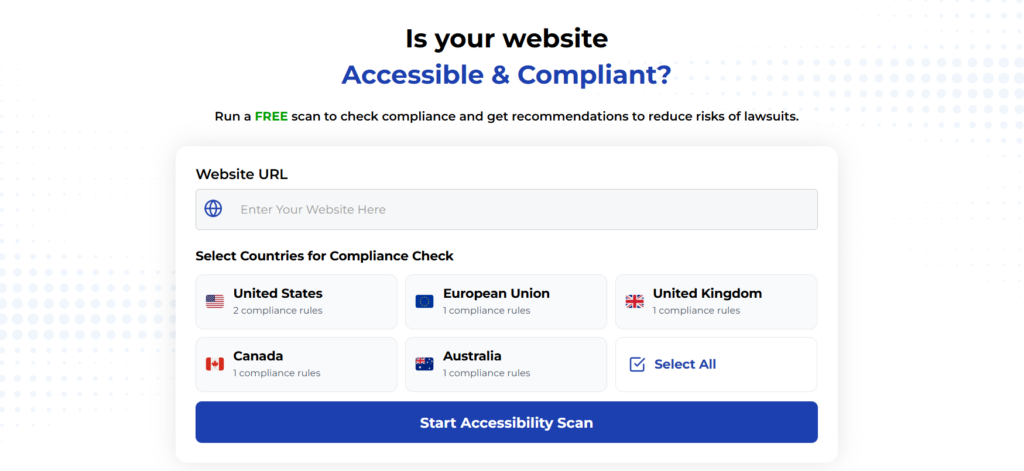
Using Automated Tools for Quick Insights (Accessibility-Test.org Scanner)
Automated testing tools provide a fast way to identify many common accessibility issues. They can quickly scan your website and point out problems that might be difficult for people with disabilities to overcome.
Visit Our Tools Comparison Page!
Run a FREE scan to check compliance and get recommendations to reduce risks of lawsuits
Final Thoughts
Don’t try to address accessibility compliance alone. The technical and legal requirements are complex, and the penalty environment continues to evolve. Working with accessibility specialists helps ensure your compliance efforts focus on the areas that matter most for both user experience and regulatory requirements.
Ready to assess your accessibility risk and protect your business from European penalties? Start with a free accessibility scan from Accessibility-Test.org to identify immediate compliance issues and develop a plan for addressing them before enforcement authorities come calling. Your business’s financial health and reputation depend on taking accessibility seriously; and the time to act is now.
Want More Help?
Try our free website accessibility scanner to identify heading structure issues and other accessibility problems on your site. Our tool provides clear recommendations for fixes that can be implemented quickly.
Join our community of developers committed to accessibility. Share your experiences, ask questions, and learn from others who are working to make the web more accessible.