




What Your Business Must Do Now the European Accessibility Act is Law
The deadline for the European Accessibility Act (EAA) has passed. As of June 28, 2025, the rules are no longer a future concern; they are a present-day legal requirement for businesses operating within the European Union. This isn’t just another regulation; it’s a shift in how digital products and services must be designed and maintained. Active monitoring by enforcement bodies is beginning, and the penalties for non-compliance are real.
For years, businesses had time to prepare. Now, that time is up. If your website, mobile app, or e-commerce platform isn’t accessible, it’s now officially non-compliant. This creates immediate legal and financial risks. The focus must switch from planning to action. This article lays out the steps you need to take right now to understand your position and protect your business.
Your Immediate 3-Step Action Plan
With the enforcement date active, procrastination is no longer an option. You need a straightforward plan to assess your current risk. Here are the first three things you should do immediately.
Step 1: Conduct a High-Risk Compliance Audit
Your first move should be to run a targeted accessibility audit on the most critical parts of your digital presence. Don’t try to boil the ocean and test everything at once. Instead, focus on high-risk user journeys. These are the processes where a lack of accessibility can cause the most harm to users and expose your business to the most danger.
Think about your primary business functions. For an e-commerce site, the checkout process is a perfect example. Can a person using a screen reader complete a purchase? For an online bank, can a user with low vision transfer money or check their balance? These are the areas that regulators will likely scrutinize first. Identify these essential pathways; like signing up for a service, filling out a contact form, or using a customer portal; and test them thoroughly. This focused audit will give you a quick, clear picture of your biggest problems.
Step 2: Validate Your Accessibility Statement
An accessibility statement is a public document that explains how accessible your website or app is. Under the EAA, this is not optional; it’s a required piece of documentation. Your statement must be accurate, detailed, and up-to-date. If you don’t have one, you need to create one immediately. If you do have one, you need to review it right now to make sure it reflects the current state of your site.
Does your statement clearly mention your commitment to accessibility? Does it list the standards you’re following, such as the WCAG 2.2 guidelines? Most importantly, does it honestly describe any known accessibility issues and provide a way for users to report problems or request information in an accessible format? An outdated or inaccurate statement is a red flag for regulators and can undermine user trust. It’s a simple but necessary piece of your digital accessibility compliance puzzle.
Step 3: Review and Document Third-Party Content
Many websites rely on third-party tools for functions like video players, live chat widgets, or payment processing. While you didn’t code these tools yourself, you are often still responsible for their accessibility if they are part of your service. The EAA is clear that your product or service as a whole needs to be accessible.
Make a list of all the third-party content and tools integrated into your site. Check their accessibility documentation or contact their support teams to ask about their EAA compliance. Document your findings. If a tool is not accessible, you need to have a record showing you’ve identified the issue and have a plan to address it, either by pressuring the vendor for a fix or by looking for an accessible alternative. Ignoring the accessibility of these integrations is a common mistake that can lead to unexpected compliance failures.
Deepening Your Initial Audit
A quick, high-risk audit is a great start, but the EAA’s reach is broad. To be truly prepared, you need to look beyond your main website journeys and consider all your digital assets.
Beyond the Basics: Checking Digital Documents
The EAA doesn’t just apply to websites and apps. It also covers digital documents that are part of your service offering. This includes things like PDF invoices, instruction manuals, e-books, and promotional flyers. Any document a customer needs to use your product or service should be accessible.
For example, can a screen reader understand the structure of your PDF reports? Do they have proper tags and headings? Is the text selectable, or is it just a flat image? These are common failure points. Go through your most important documents and run some basic checks. Simple things, like ensuring your documents have descriptive filenames and proper content structure, can make a big difference. This is an often-overlooked area of compliance that could easily trip you up.
Mobile App Accessibility Under the EAA
If your business has a mobile application, it falls squarely under the EAA’s rules. Your app must be usable by people with disabilities, which means paying close attention to mobile accessibility. The principles are similar to web accessibility but with some unique considerations for touch-based interfaces.
For instance, are all your interactive elements, like buttons and sliders, large enough to be easily tapped? Do they work with mobile screen readers like VoiceOver on iOS and TalkBack on Android? Does your app support different screen orientations and text resizing? Testing on actual mobile devices is essential. Don’t assume that a compliant website means you have a compliant app. They are separate platforms and require their own dedicated accessibility testing.
Evaluating Your Customer Service Channels
How do your customers get help? Your support channels, whether they are contact forms, live chat systems, or help desk portals, must also be accessible. If a customer with a disability can’t submit a support ticket, you have a serious problem. This isn’t just a compliance issue; it’s a customer service failure.
Review every touchpoint where a customer might interact with your support team. Can forms be filled out using only a keyboard? Are error messages clearly communicated? If you use a chatbot, is it screen reader compatible? Training your support staff on how to handle accessibility-related inquiries is also part of this process. They need to know how to respond when a user reports a barrier and who to escalate the issue to.
Understanding the Real Cost of Non-Compliance in 2025
Ignoring the EAA is a gamble with high stakes. The financial penalties are just one part of the picture. The damage to your brand’s reputation and the loss of business opportunities can be even more severe.
A Patchwork of Penalties Across the EU
The EAA sets the accessibility requirements, but it’s up to each EU member state to decide on the specific penalties for non-compliance. This means the consequences can vary depending on where you do business. Enforcement agencies in each country now have the power to investigate complaints, audit websites and apps, and issue sanctions.
These sanctions aren’t just fines. They can include official orders demanding you fix the accessibility issues by a certain date. In some cases, authorities can issue daily penalties that accumulate until you are compliant. They can also publicly name companies that fail to meet their obligations, leading to negative press and public shaming. The enforcement landscape is new, but it is active.
Spotlight on Fines: Germany and Italy
To understand how serious this is, let’s look at a couple of examples. The penalties are not trivial and show a clear intent to enforce the law.
- In Germany, fines for serious violations can reach up to €100,000. This shows a strong financial deterrent for companies that don’t take their accessibility obligations seriously.
- In Italy, the consequences can be even more drastic. Penalties can be as high as 5% of a company’s annual turnover. For a medium or large business, this could be a crippling amount, far exceeding the cost of making their services accessible in the first place.
These figures demonstrate that non-compliance is a major financial liability. It’s a risk that no business can afford to ignore in the current regulatory environment.
The Hidden Costs: More Than Just Fines
The direct financial penalties are scary enough, but the indirect costs of non-compliance can be just as damaging. Your brand’s reputation is on the line. In today’s market, customers increasingly prefer to do business with ethical and inclusive companies. An accessibility lawsuit or a public finding of non-compliance can severely tarnish your brand image and drive customers to your competitors.
Furthermore, being non-compliant can lock you out of valuable business opportunities. Many public sector contracts and tenders in the EU now require bidders to prove their digital services meet accessibility standards. If you can’t, you’re not even eligible to apply. This can mean losing out on millions of euros in potential revenue. Add in the legal fees and the internal staff time required to deal with complaints, and the true cost of inaction becomes clear.
Building a Sustainable Compliance Strategy
The EAA isn’t a one-and-done checklist. The law requires ongoing maintenance because digital products are constantly changing. A quick fix might solve today’s problem, but it won’t protect you tomorrow. You need a long-term strategy.
Why a One-Time Fix Is a Losing Game
Your website is not a static brochure. You add new blog posts, update product pages, and launch marketing campaigns. Every piece of new content and every new feature can introduce new accessibility barriers. A single non-accessible image or a poorly coded form can break an entire user journey and put you in a state of non-compliance.
This is why a one-time accessibility audit is not enough. True compliance requires thinking about accessibility as a continuous process, not a one-off project. It needs to be part of your company’s regular operations, just like security or performance monitoring. Without this mindset, you’ll find yourself constantly falling behind and putting your business at risk again and again.
Integrating Accessibility into Your Workflows
The most effective way to maintain compliance is to make accessibility part of your everyday development and content creation processes. This is often called a “shift-left” approach. Instead of waiting until the end of a project to test for accessibility, you build it in from the very beginning.
This means providing your designers with accessibility training so they create inclusive layouts and color schemes. It means giving your developers access to accessibility testing tools and checklists so they can write clean, semantic code. It means teaching your content creators how to write good alt text for images and use proper heading structures. When accessibility is part of the workflow, it becomes much easier and cheaper to manage in the long run. It stops being a last-minute emergency and starts being a standard part of doing good work.
Training Your Teams: The First Line of Defense
Your employees are central to your accessibility efforts. A well-trained team can prevent accessibility issues from ever going live. This goes beyond just your developers and designers. Your marketing team needs to know how to create accessible campaigns. Your HR department needs to ensure your online job application portal is usable by everyone.
Customer support teams are especially important. They are often the first point of contact for users who encounter an accessibility barrier. They need to be trained to recognize accessibility issues, respond empathetically, and know how to report the problem to the correct internal team for resolution. Investing in accessibility training for all your relevant staff is one of the best ways to build a sustainable compliance culture and reduce your long-term risk.
Practical Steps for Long-Term Success
A sustainable strategy is built on practical, repeatable actions. It’s about creating a culture and a set of processes that make accessibility a natural part of how your business operates.
Creating an Accessibility-First Culture
For accessibility to stick, it needs to be more than just a line item on a project plan. It needs to become part of your company’s culture. This starts with getting buy-in from leadership. When leaders talk about the importance of accessibility and allocate resources to it, everyone else takes it more seriously.
Appointing an accessibility champion or creating a small, dedicated team can also make a huge difference. These individuals can act as internal experts, answer questions, and keep the momentum going. Celebrate your accessibility wins, share positive feedback from users with disabilities, and regularly communicate your progress. When people see that their efforts matter, they are more likely to stay committed to the goal.
Documentation and Reporting
In the world of compliance, if it isn’t documented, it didn’t happen. Keeping good records is essential for managing your accessibility efforts and protecting yourself in case of a legal challenge. You should document the results of every accessibility audit, including the issues found and the steps taken to fix them.
Keep records of your accessibility training sessions. Document your policies and procedures related to accessibility. Your accessibility statement is a key piece of public documentation, but your internal records are just as important for accountability and continuous improvement. This documentation creates a clear trail of your good-faith efforts to comply with the law, which can be invaluable if your practices are ever questioned.
Supplier and Vendor Management
Your company’s accessibility depends on the tools and platforms you use. When you choose a new content management system, email marketing service, or HR platform, you need to consider its accessibility. Make accessibility a requirement in your procurement process.
Ask potential vendors for their accessibility statement or a conformance report. Include accessibility clauses in your contracts that require them to maintain compliance with WCAG standards. If an existing vendor’s product is not accessible, you need to push them for a timeline on when it will be fixed. You are responsible for the accessibility of your service, and that includes the parts you delegate to outside suppliers.
The Role of Testing: Automated and Manual Audits
You can’t fix what you don’t know is broken. Regular testing is the only way to find and address accessibility barriers. A good testing strategy uses a combination of automated tools and manual checks to get a full picture of your compliance status.
Automated Tools: Your First Look
Automated accessibility testing tools, often called accessibility checkers or scanners, are a great starting point. They can quickly scan your website and identify many common issues related to WCAG compliance. These tools are excellent at catching problems like missing alt text on images, low-contrast text, or empty links.
Running an automated scan can give you a fast, high-level overview of your site’s health and help you catch some of the low-hanging fruit. It’s a quick win that can find a surprising number of issues. However, automated tools have serious limitations. It’s estimated they can only detect about 30-40% of all possible accessibility issues. They are a valuable part of the process, but they are not a complete solution on their own.
Manual Testing: The Human Element
To find the issues that automated tools miss, you need to perform manual testing. This is where a human tester systematically goes through your website using the same techniques and technologies that a person with a disability would use. This is a non-negotiable step for any serious web accessibility testing effort.
Manual testing involves things like trying to use the entire website with only a keyboard, checking the heading structure for logical order, and making sure all form fields are properly labeled. It also involves testing with a screen reader to ensure the content makes sense when read aloud. This human perspective is essential for determining if a site is not just technically compliant, but actually usable.
Involving Users with Disabilities: The Gold Standard
The best way to know if your website or app is usable for people with disabilities is to ask them. Usability testing with individuals who have a range of disabilities is the gold standard of accessibility testing. This process can uncover issues that even expert manual testers might miss because it centers the real-life experiences of your users.
Watching someone who is blind try to navigate your checkout process with a screen reader, or someone with a motor impairment try to use your mobile app, provides powerful and undeniable feedback. It moves the conversation beyond technical compliance and into the realm of human experience. This kind of testing not only helps you build a better product but also fosters empathy within your teams.
A Closer Look at Auditing Methods
A proper accessibility audit is a structured process that combines different methods to create a detailed report of a site’s compliance. It’s more than just a quick scan; it’s a deep dive into the technical and functional aspects of your digital property.
WCAG Compliance: The Technical Standard Behind the EAA
The European Accessibility Act itself doesn’t list hundreds of technical rules. Instead, it points to an existing, internationally recognized set of standards: the Web Content Accessibility Guidelines (WCAG). For the most part, being compliant with the EAA means being compliant with WCAG, typically at the Level AA standard.
WCAG is organized around four main principles: content must be Perceivable, Operable, Understandable, and Robust (POUR). These principles are broken down into specific, testable success criteria. For example, there are criteria for color contrast, keyboard navigation, and descriptive page titles. Your audit process should be built around testing your site against these WCAG criteria to check for WCAG compliance.
What Does an Accessibility Audit Actually Involve?
A professional accessibility audit usually follows several steps. It typically starts with an automated scan to get a baseline. Then, testers conduct a thorough manual review of the key pages and templates of the website. This involves code inspection and testing with assistive technologies like screen readers.
Next, the auditors test the most important user journeys from start to finish. For an e-commerce site, this would mean testing everything from searching for a product to adding it to the cart and completing the purchase. Finally, all the findings are compiled into a detailed report that lists each issue, explains where to find it, describes why it’s a problem, and recommends how to fix it. This report becomes your roadmap for remediation.
From Audit to Action: Remediation Planning
Receiving an audit report filled with issues can feel overwhelming. The key is to turn that audit into an actionable plan. This is where remediation planning comes in. You need to prioritize the fixes based on their severity and how much impact they have on users. A problem that completely blocks a user from completing a task, like a checkout button that doesn’t work with a keyboard, should be fixed before a minor issue on an unimportant page.
Work with your development team to estimate the effort required for each fix and create a realistic timeline. Document this plan. This process of auditing, planning, and fixing is known as accessibility remediation. It’s a cycle of continuous improvement that will help you not only become compliant but also stay compliant over time.
Using Automated Tools for Quick Insights (Accessibility-Test.org Scanner)
Automated testing tools provide a fast way to identify many common accessibility issues. They can quickly scan your website and point out problems that might be difficult for people with disabilities to overcome.
Visit Our Tools Comparison Page!
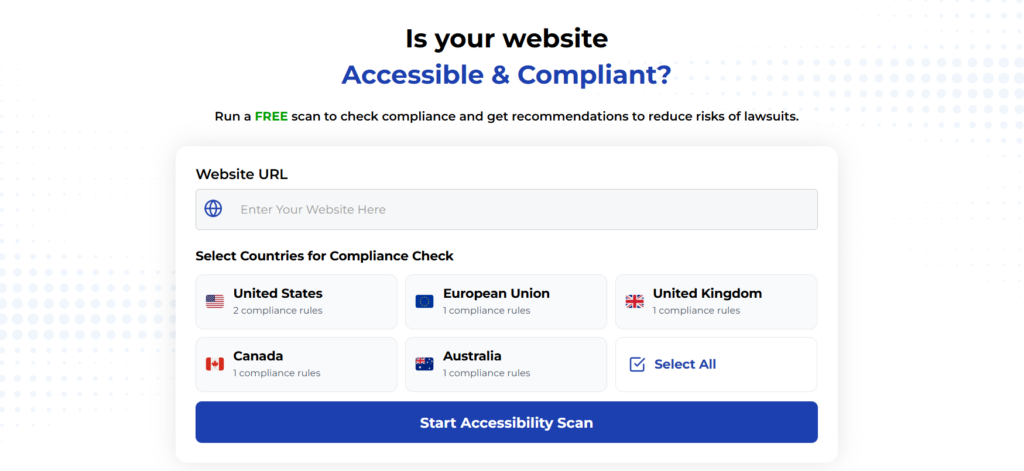
Run a FREE scan to check compliance and get recommendations to reduce risks of lawsuits
Final Thoughts
The European Accessibility Act is now the law. The time for waiting is over, and the risks of non-compliance are real and immediate. Every day that your digital products have accessibility barriers, your business is exposed to potential fines, legal action, and reputational damage. You need to know where you stand right now.
Don’t wait for a customer complaint or a letter from a regulatory body to force your hand. Be proactive. We encourage you to run an immediate scan of your website to identify the most pressing compliance gaps. Let Accessibility-Test.org be your partner in this new regulatory environment. Our tools and expertise can help you understand your risks, protect your business, and start on the path to making your digital world open to everyone.
Want More Help?
Try our free website accessibility scanner to identify heading structure issues and other accessibility problems on your site. Our tool provides clear recommendations for fixes that can be implemented quickly.
Join our community of developers committed to accessibility. Share your experiences, ask questions, and learn from others who are working to make the web more accessible.