



Creating Accessible PDFs, Emails, and Social Posts
When we talk about digital accessibility, the conversation often centers on websites. And for good reason; your website is your digital front door. But what about all the other ways you communicate online? Every PDF report, email newsletter, and social media update is a chance to either include or exclude people. Vulnerability regulations are increasingly looking beyond the website to all forms of digital communication.
Think about it. You might have a perfectly compliant website, but if your latest marketing report is an untagged PDF, it’s a brick wall for someone using a screen reader. If your promotional email has unreadable text because of poor color choices, your message is lost. Accessibility isn’t a single checkbox for your website; it’s a mindset that should apply to everything you create.
This is about making every message count. It’s about ensuring your brilliant ideas, important updates, and community-building efforts reach everyone, regardless of their ability. Let’s walk through how to apply accessibility principles to your PDFs, emails, and social media.
Making Your PDFs Reach Everyone
PDFs are everywhere in the business world; reports, whitepapers, invoices, and more. Unfortunately, a huge number of them are completely inaccessible. A common mistake is saving a document as an “image” PDF, which is just a picture of text. For a screen reader, that’s a total blank. To make your PDFs work for all users, you need to focus on a few core practices.
The Foundation: Starting with a Clean Document
The easiest way to create an accessible PDF is to start with an accessible source document. Whether you’re working in Microsoft Word, Google Docs, or Adobe InDesign, building accessibility in from the start saves a ton of time.
This means using proper heading structures (Heading 1, Heading 2, etc.) to organize your content. It means adding alternative text (alt text) to your images right there in the source file. It also means using built-in list functions for bulleted and numbered lists instead of just typing dashes or numbers. When you create the document with a clear, logical structure, that structure can be carried over when you convert it to a PDF. It’s far easier than trying to add the structure back in after the fact.
What Are PDF Tags and Why Do They Matter?
Think of tags like the hidden structural labels in a document. They tell assistive technologies what each piece of content is. A tag can say “this is a main heading,” “this is a paragraph,” “this is an image,” or “this is a data table.” Without these tags, a screen reader sees a sea of undifferentiated text and has no way to present it to the user in a logical order.
When a PDF is properly tagged, a screen reader user can navigate it efficiently. They can jump between headings to find the section they need, just as a sighted user would scan the page. They can understand the structure of tables and identify lists. A tagged PDF is a usable PDF. Most modern creation software (like Word or InDesign) has options to “Create Tagged PDF” when you export. Always make sure that box is checked.
Setting a Logical Reading Order
Have you ever seen a document with multiple columns, sidebars, and images? A sighted person can easily follow the flow of the text. But a screen reader needs instructions. The reading order determines the sequence in which the screen reader presents the content. If the order is wrong, the user might hear the main text, then a sidebar, then a figure caption, then the rest of the main text; a completely jumbled and confusing experience.
When you create a tagged PDF, the software usually does a decent job of guessing the reading order. But you should always check it. Tools like Adobe Acrobat Pro have a reading order panel that lets you see and adjust the sequence. You can drag and drop elements to ensure the flow makes sense, moving from the title to the main text, to any related images or sidebars in an order that’s logical.
Writing Meaningful Alt Text for Images
Alt text is the description of an image that a screen reader reads aloud. It’s also what appears if an image fails to load. Writing good alt text is an art. It needs to be concise but descriptive enough to convey the meaning of the image. Ask yourself: what information is this image trying to communicate?
If it’s a picture of your team, you could write, “The marketing team of five people smiling in a modern office.” If it’s a bar chart showing Q3 sales growth, you need to describe the data: “Bar chart showing sales growth. Q1: $10,000, Q2: $15,000, Q3: $25,000.” Avoid starting with “an image of” or “a picture of”; the screen reader already announces that it’s an image. And if an image is purely decorative, like a swirly line, you can mark it as a decorative artifact in your PDF editor so screen readers will ignore it.
Crafting Emails for All Your Subscribers
Email marketing is a direct line to your audience. But if your emails aren’t accessible, you’re cutting that line for a portion of your subscribers. An inaccessible email can be just as frustrating as an inaccessible website. From color contrast to structure, let’s break down how to make your email campaigns welcoming to everyone.
Building on a Solid Foundation: Semantic Structure
Just like with PDFs, a well-structured email is an accessible email. This comes from using semantic HTML. Now, you don’t need to be a coder to understand this. It simply means using the right elements for the right job. Use heading elements for your headlines and subheadings. Instead pick paragraph elements for your text. Use list elements for your bullet points.
Most modern email marketing platforms have drag-and-drop editors that do this for you. When you drag a “Headline” block into your email, it creates a proper heading in the code. This structure allows screen reader users to navigate the email efficiently. They can skip from heading to heading to get a sense of the content, just like a sighted user would. Avoid creating “fake” headings by just making text bold and larger. It may look like a heading, but it doesn’t provide the structural information assistive technologies need.
Is Your Color Palette Readable?
Brand colors are important, but not at the expense of readability. Low color contrast between text and its background is one of the most common accessibility failures in email. It can make your message difficult or impossible to read for people with low vision or color blindness. Imagine light gray text on a white background; it’s a nightmare for many people.
The Web Content Accessibility Guidelines (WCAG) have specific ratios for text-to-background contrast. The good news is you don’t have to guess. There are many free online tools, like WebAIM’s Color Contrast Checker, where you can input your text and background colors to see if they pass. Test your brand’s colors. If they don’t pass, you may need to adjust them for your emails. This applies to text on images, too. If you place text over a busy photo, make sure it has a solid background or a strong enough drop shadow to be readable.
Links and Buttons: Clarity is Everything
How many times have you seen a link that just says “Click Here”? For a screen reader user tabbing through the links in an email, a list of “click here, click here, click here” is completely useless. Link text needs to be descriptive. It should tell the user where the link will take them. Instead of “For our new report, click here,” try “Read our new Q3 marketing report.”
The same idea applies to buttons. A button’s text should clearly state its action. “Download Now,” “Subscribe,” or “Read More” are all good, clear calls to action. Also, make sure your links and buttons are large enough to be easily tapped on a mobile device. Fumbling to hit a tiny link is frustrating for everyone, but especially for users with motor impairments.
Making Your Social Media Truly Social
Social media is all about connection. But are you connecting with everyone? Platforms like X, Instagram, and LinkedIn are highly visual, which can create barriers for people who can’t see the images or hear the audio in videos. The good news is that all these platforms have built-in features to make your content more accessible. You just have to use them.
Writing Great Image Descriptions
Alt text isn’t just for websites and PDFs. It’s a central part of accessible social media. Writing a good image description allows people who are blind or have low vision to participate in the visual culture of social platforms.
- On X (formerly Twitter): When you upload an image, there’s an “Add description” or “ALT” button. Use it. Describe the content of the image clearly.
- On Instagram: After you select a filter and are on the caption screen, scroll down to “Advanced Settings.” You’ll find a field to “Write Alt Text.” If you forget, you can also edit the post later and add it. Since Instagram is so visual, it’s also a good practice to put a description in the caption itself, often preceded by “[Image description: …]”.
- On LinkedIn: When you add a photo to a post, click “Add alt text” to describe the image. This is especially important for infographics or charts, where the visual information is the whole point.
The principles are the same as with PDFs: be descriptive but concise. Convey the mood and context of the photo. What is the story the picture is telling?
Making Video Content Work for Everyone
Video is a powerful medium, but it’s exclusionary if you don’t consider users with different abilities. Captions are essential for people who are deaf or hard of hearing, but they’re also used by millions of people who watch videos with the sound off.
- Always Add Captions: Don’t rely on auto-captions! Automatic captioning services have gotten better, but they are still frequently wrong. They misspell names, mangle technical terms, and miss punctuation. This can change the meaning of your message entirely. Always review and edit auto-captions for accuracy. Platforms like YouTube and LinkedIn have built-in caption editors that make this process straightforward.
- Consider Audio Descriptions: For video where the visuals are providing information that isn’t spoken, an audio description is needed. This is a separate audio track where a narrator describes the key visual elements. For example, if your video shows a presenter and then cuts to a chart, the audio description would explain what the chart shows. While more involved to produce, it’s the only way to make the visual information accessible to people who are blind.
Little Things That Make a Big Difference
A few other simple habits can greatly improve your social media accessibility.
One is using CamelCase for hashtags. That means capitalizing the first letter of each word, like #DigitalInclusion instead of #digitalinclusion. For a screen reader, the first version is read as “Digital Inclusion.” The second is read as a jumble of letters. Another is to avoid using emojis to replace words, especially in the middle of sentences. Screen readers announce emojis, and it can be very disruptive. For example, “Come to our 🌲 sale!” would be read as “Come to our evergreen tree sale!” It’s often better to place emojis at the end of your posts.
Helpful Tools for Your Accessibility Checks
You don’t have to be a seasoned expert to check your work. There are many user-friendly tools that can help you spot accessibility issues in your documents and campaigns.
- Adobe Acrobat Pro: If you work with PDFs regularly, the built-in Accessibility Checker in Acrobat Pro is your best friend. It runs a check on your document and flags issues like missing tags, poor color contrast, and lack of alt text. It even provides links on how to fix the problems.
- Microsoft Office Accessibility Checker: Word, PowerPoint, and Excel all have a built-in accessibility checker. You can find it under the “Review” tab. It’s a great way to catch and fix issues in your source document before you even think about converting it to a PDF.
- Color Contrast Analyzers: There are dozens of free web-based tools and browser extensions that check for color contrast. The WebAIM Contrast Checker and TPGi’s Colour Contrast Analyser are two of the most popular and reliable options.
- Social Media Schedulers: Some social media scheduling tools are now building accessibility features directly into their workflow. For example, some platforms will remind you to add alt text to your images before you can schedule the post.
Using these tools regularly can help you turn accessibility from an afterthought into a habit.
Using Automated Tools for Quick Insights (Accessibility-Test.org Scanner)
Automated testing tools provide a fast way to identify many common accessibility issues. They can quickly scan your website and point out problems that might be difficult for people with disabilities to overcome.
Visit Our Tools Comparison Page!
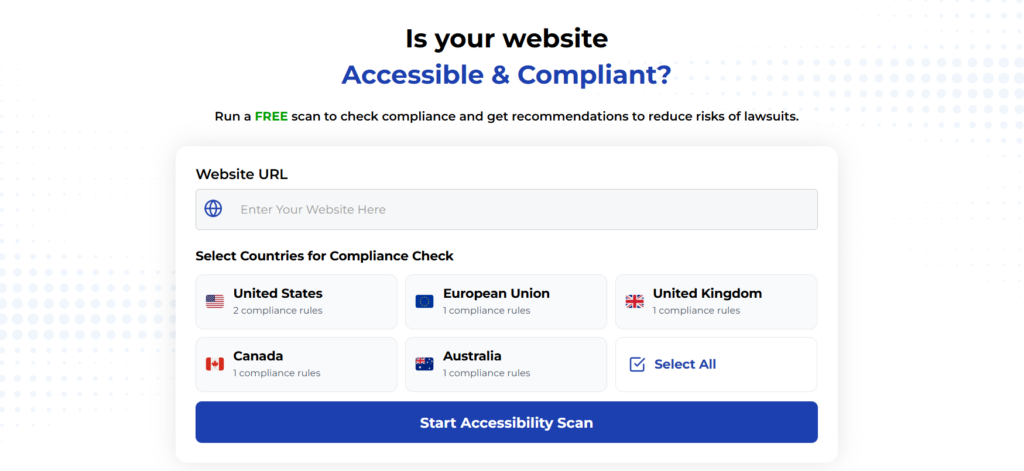
Run a FREE scan to check compliance and get recommendations to reduce risks of lawsuits
Final Thoughts
Making your digital communications accessible isn’t a one-person job. It requires a shift in how your whole team thinks about creating content. It’s about building a culture where accessibility is considered from the very beginning of a project, not as a final compliance check.
This starts with education. Your content creators, social media managers, and graphic designers all need to understand the “why” behind accessibility. They need to know the basic techniques for creating accessible documents, emails, and posts. Create shared resources and checklists that make it easy for everyone to follow best practices.
Most importantly, listen to feedback from people with disabilities. Invite them to review your content and tell you what works and what doesn’t. Their lived experience is more valuable than any automated checking tool. By making accessibility a shared responsibility and a continuous learning process, you can ensure your organization’s voice is heard by everyone.
Run a Free Scan to Find E-commerce Accessibility Barriers
Curious about where your site stands? An automated scan is a great first step to identify potential accessibility issues on your e-commerce platform. Run a free scan on our website today to get an initial report on your site’s accessibility health.
Want More Help?
Try our free website accessibility scanner to identify heading structure issues and other accessibility problems on your site. Our tool provides clear recommendations for fixes that can be implemented quickly.
Join our community of developers committed to accessibility. Share your experiences, ask questions, and learn from others who are working to make the web more accessible.